
Data Center Final Construction Closeout
Learn the critical civil engineering steps for data center construction closeout, including punch lists, as-builts, utility acceptance, and stormwater certification. A guide for developers.
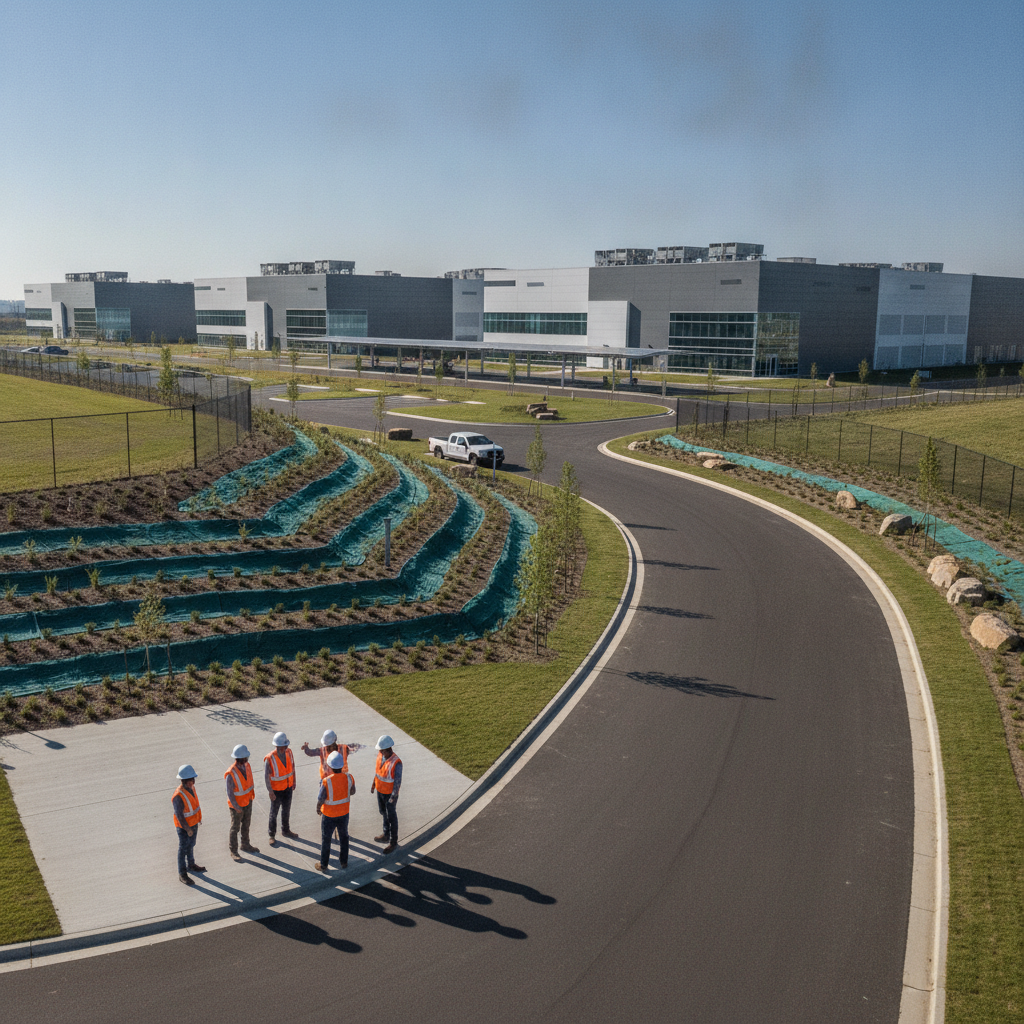
Punch List Development and Resolution
The civil site work punch list is the definitive catalog of items requiring correction or completion before the project is accepted. This process begins with a comprehensive site walk involving the owner’s representative, the civil engineer, and the general contractor. The goal is to identify any discrepancies between the constructed site and the approved civil engineering plans. This includes inspecting pavement for proper finish and slope, checking curb and gutter installations, verifying signage and striping, and ensuring landscape elements are correctly installed. Effective punch list management requires clear documentation, photographic evidence of deficiencies, and a systematic tracking system. Each item is assigned to a responsible party with a deadline for resolution. The civil engineer plays a crucial role in this construction administration phase, verifying that corrective work meets the design specifications and quality standards before recommending final acceptance. A thorough and diligently managed punch list process prevents minor construction flaws from becoming long-term operational problems.
Final Grading, Stabilization, and Landscaping
Key Civil Closeout Deliverables and Verifications
| Deliverable | Purpose | Key Verification Step |
|---|---|---|
| Resolved Punch List | Confirms all contracted work is complete and meets quality standards. | Final walkthrough and sign-off by owner, engineer, and contractor. |
| Record Drawings | Provides an accurate map of as-built site infrastructure for future use. | Engineer's review of as-built survey data and certification of the final drawings. |
| Stormwater Certification | Fulfills regulatory requirement that the stormwater system was built per plan. | Signed and sealed certification letter from a Professional Engineer submitted to the agency. |
| Utility Acceptance Letters | Formally transfers ownership and maintenance of public utilities. | Receiving official written confirmation of acceptance from each utility provider. |
| Recorded Maintenance Agreements & Easements | Legally establishes owner's maintenance duties and utility access rights. | Confirmation of document recordation in the official public records. |
| NPDES Notice of Termination (NOT) | Closes out the construction general permit and ends monitoring requirements. | Submitting the NOT form after final site stabilization is achieved and verified. |
Achieving final grading and stabilization is paramount for the site’s long-term health, particularly for stormwater management. The civil engineer verifies that all surfaces—including parking lots, access roads, and landscaped areas—are graded to the precise elevations shown on the plans. This ensures that stormwater flows predictably to inlets, swales, and detention or retention facilities, preventing ponding, erosion, and potential flooding. Permanent site stabilization involves the final application of seed, sod, or other ground cover to prevent soil erosion. This step is often a final requirement for terminating the project’s construction general permit under the National Pollutant Discharge Elimination System (NPDES). The engineer inspects these measures to confirm they are established and effective, ensuring the site is compliant with environmental regulations and that the drainage design will function correctly without being compromised by sediment.
As-Built Survey and Record Drawing Preparation
As construction concludes, it is essential to document the final, as-constructed condition of the site. This is accomplished through as-built surveys, which are field surveys conducted by a licensed surveyor to capture the precise horizontal and vertical locations of all new site infrastructure. This data includes the final location and elevation of utility lines (water, sewer, storm, communications), stormwater structures, pavement, and other critical features. The civil engineer then uses this raw survey data to create record drawings. Unlike the original design plans, record drawings represent the final constructed reality of the project. These documents are an invaluable asset for the facility owner, providing an accurate map for future maintenance, repairs, and site expansions. Accurate record drawings prevent costly and dangerous utility strikes and provide a baseline for any future site development modifications.
Utility Acceptance and Easement Dedication
For a data center to become operational, newly installed public utilities like water mains, sanitary sewers, and major storm drainage systems must be formally accepted by the local utility provider or public works department. This process, known as utility acceptance, transfers the responsibility for operation and maintenance from the developer to the public entity. The process typically requires rigorous testing, including pressure tests for water lines and infiltration/exfiltration tests for sewer lines, followed by a final inspection by the utility’s representatives. Concurrent with acceptance is the legal process of easement dedication. This involves recording legal documents that grant the utility provider the right to access the infrastructure on the private property for maintenance and repairs. These acceptance protocols and permitting requirements vary by jurisdiction, and it is essential to confirm the specific procedures with the applicable local, state, and regional authorities early in the design process. A Professional Engineer from one of the top Civil Engineering firms can guide this process to ensure all documentation is correctly prepared and submitted, preventing delays in bringing the facility online.
Stormwater Facility Certification and Maintenance Agreements
Modern data center sites feature complex stormwater management systems, such as detention ponds, underground storage vaults, and bioretention areas. Before project closeout, these facilities must be certified. This typically requires a Professional Engineer to inspect the completed system and certify in writing to the regulatory agency that it was constructed in substantial conformance with the approved plans and permits. This stormwater facility certification is a critical regulatory milestone. Furthermore, jurisdictions almost always require the property owner to enter into a legally binding maintenance agreement. This document outlines the owner’s perpetual responsibility for inspecting, maintaining, and repairing the stormwater system to ensure it functions as designed. This agreement is recorded in public records and runs with the land, binding all future owners of the property. Finalizing this step is often necessary to close out the environmental permits associated with the project.
Final Inspections and Certificate of Occupancy
The final step before a data center can be legally occupied and operated is obtaining the Certificate of Occupancy (CO) from the local building department. The civil engineer’s role is crucial in this stage, as the site must pass a final inspection from the authority having jurisdiction. This inspection verifies that all site-related life-safety and accessibility requirements are met. Key items on the inspector’s checklist include ADA compliance for all pedestrian routes, parking spaces, and building entrances; clear and unobstructed fire lane access for emergency vehicles; proper installation of site lighting; and confirmation that final grading and drainage direct water away from the building. The civil engineer coordinates with the project team to address any final comments from the inspector, ensuring that all civil components are approved so the CO can be issued without delay.
How RSP Engineers Manages the Closeout Process
At RSP Engineers, we view construction closeout not as an endpoint, but as a critical phase planned from the very beginning. Our proactive approach to construction administration involves developing a closeout strategy during the design phase to anticipate regulatory hurdles and documentation needs. We conduct regular site visits throughout construction to identify potential issues before they become punch list items, facilitating a smoother final walkthrough. Our team leverages detailed checklists and collaborative platforms to manage the punch list, track deficiencies, and communicate progress to all stakeholders. We act as a dedicated liaison between the client, contractor, surveyor, and multiple reviewing agencies, streamlining the submission and approval of as-builts, certifications, and acceptance letters. Our experience with complex site development projects ensures a systematic and efficient closeout, protecting your investment and enabling a timely transition to full operation.
Common Challenges in Data Center Site Closeout
Even with careful planning, the closeout phase can present challenges. Understanding these common issues can help project teams mitigate risks and avoid costly delays. Some frequent hurdles include: Incomplete As-Built Information: Contractors may fail to track utility locations accurately during installation, leading to expensive and time-consuming survey work at the end of the project. Disputes Over Punch List Items: Disagreements between the owner and contractor over the scope or quality of work can stall the resolution of punch list items, delaying final payment and acceptance. Utility Provider Delays: The administrative process for utility acceptance can be slow. Delays in scheduling final inspections or processing paperwork by the utility can hold up the entire project closeout. Final Stabilization Failures: Poor weather or improper installation can cause permanent seeding or sod to fail, preventing the termination of the NPDES permit and delaying the release of financial assurances. Unforeseen Geotechnical Engineering Issues: Sometimes, final grading reveals soil conditions that were not anticipated, requiring last-minute remediation and design changes to ensure long-term stability. Frequently Asked Questions About Data Center Civil Closeout What is the difference between an as-built survey and a record drawing? An as-built survey is the raw data collected by a surveyor showing the final location of site features. A record drawing is prepared by the design engineer, who takes that survey data and incorporates it into the original design plans, adding notes and context to create a final, official record of the completed project. Why is stormwater facility certification so critical? This certification is a legal requirement in most jurisdictions. It provides regulatory agencies with assurance from a Professional Engineer that the stormwater management system was built correctly to protect water quality and prevent flooding. Failure to certify the system can result in fines, compliance orders, and the inability to obtain a Certificate of Occupancy. Who is responsible for resolving punch list items? The general contractor is contractually obligated to resolve all punch list items. This may involve their own crews or managing the subcontractors responsible for the specific work that needs correction. The civil engineer’s role is to verify that the correction meets the design intent and industry standards. Can we get a temporary Certificate of Occupancy (TCO) if some minor site work is incomplete? This depends entirely on the authority having jurisdiction. A TCO may be issued if the remaining work (e.g., final layer of asphalt, some landscaping) does not impact life safety, accessibility, or critical functions like fire access and primary drainage. However, the owner often must provide a financial guarantee (like a bond) to ensure the work will be completed.
Your Partner in Mission-Critical Site Development
From initial due diligence and site plan design to final closeout, RSP Engineers provides the comprehensive civil engineering and site development expertise needed for complex data center projects. Our team of experienced Civil Engineers excels at navigating the complexities of permitting, utility acceptance, and construction administration to ensure your project crosses the finish line successfully. We provide a full suite of site engineering services to support your mission-critical facility’s lifecycle. Contact us today to discuss how we can ensure a seamless and successful project closeout.
Conclusion: Ensuring Long-Term Asset Value
A well-executed civil construction closeout is a non-negotiable component of a successful data center development. It is the final quality control gate that validates the integrity of the site’s infrastructure and ensures compliance with a web of regulatory requirements. By focusing on meticulous documentation, proactive construction administration, and clear utility coordination, developers can protect their investment, minimize future risks, and ensure the long-term operational readiness of their mission-critical asset. This final phase solidifies the foundation for a reliable and resilient data center for years to come.
FAQs
-
Data Center Final Construction Closeout requires careful planning, qualified engineering, and compliance with the applicable codes and permits.
-
Getting Data Center Final Construction Closeout right protects safety, supports regulatory compliance, and avoids costly redesigns or delays.
-
RSP Engineers provides licensed expertise and end-to-end support for Data Center Final Construction Closeout, from early planning through permitting.