
Data Center Erosion Control Design
A technical guide to erosion control for data center sites. Learn about SWPPP, slope stabilization, and stormwater management from RSP Engineers.
The Unique Erosion Control Challenges of Data Center Sites
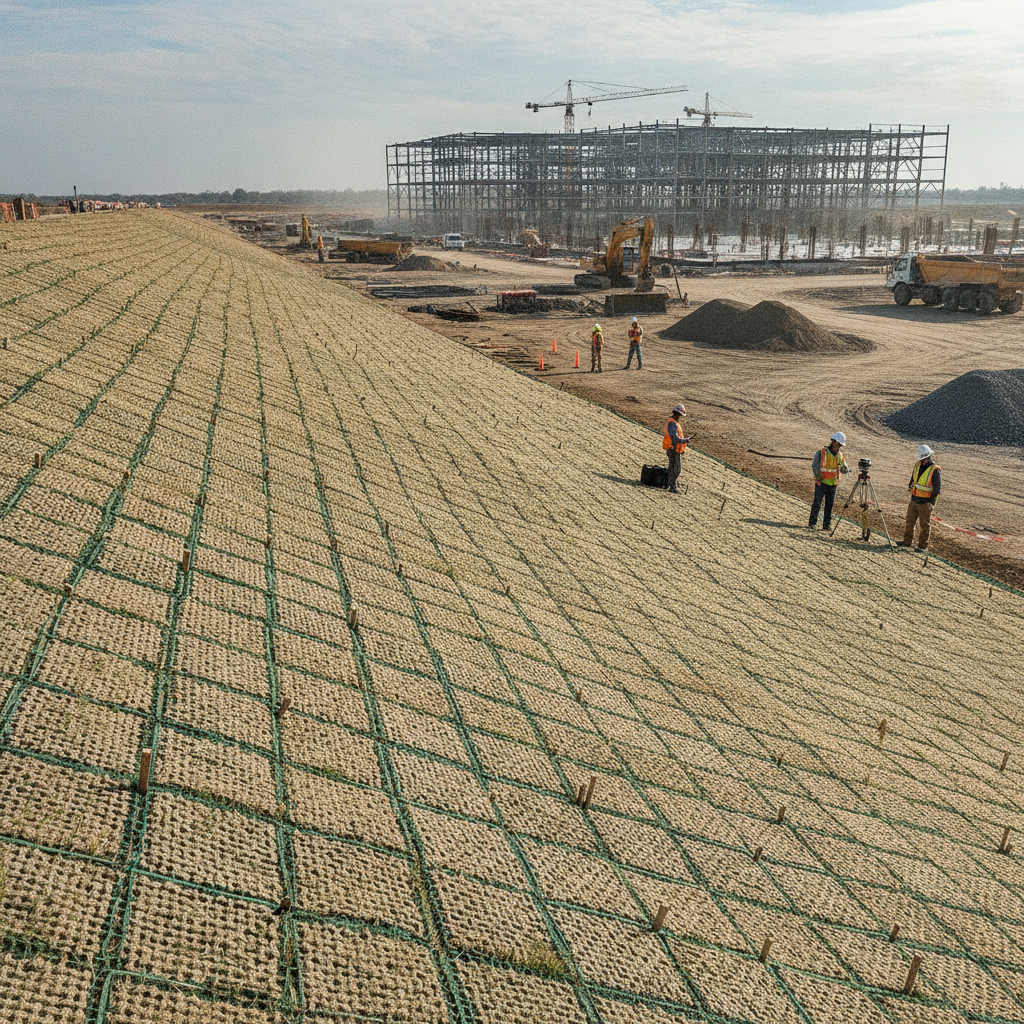
Unlike typical commercial projects, data center sites present a unique combination of risk factors. The sheer footprint means that the ‘bare-earth’ window—the time from initial clearing to final stabilization—can last for 12 to 24 months or more. This extended exposure dramatically increases the potential for soil erosion from intense rainfall events. The scale of grading often creates long, engineered slopes that are highly susceptible to rill and gully erosion if not properly protected. This necessitates a comprehensive Stormwater Pollution Prevention Plan (SWPPP) that is meticulously designed and implemented. Furthermore, the infrastructure itself creates challenges. The massive, impervious rooftops and sprawling parking areas concentrate stormwater into high-velocity flows. These flows can easily overwhelm standard erosion control measures, requiring specialized drainage design and energy dissipation structures. A key part of the permitting process with agencies like the Department of Environmental Protection (FDEP) and local Water Management Districts is demonstrating that both sediment and the rate of runoff will be controlled. Failure to maintain compliance with the site’s NPDES permit can result in stop-work orders, halting a time-sensitive project in its tracks.
Phased Erosion and Sediment Control Planning
Data Center Erosion Control BMP Selection Matrix
| BMP Type | Primary Application on Data Center Sites | Key Design Consideration | Typical Project Phase |
|---|---|---|---|
| Heavy-Duty Silt Fence | Perimeter control for large, disturbed areas; toe of slope protection. | Proper trenching and staking; reinforcement for long runs of fence. | Initial and Intermediate |
| Erosion Control Blanket (ECB) | Stabilization of newly seeded slopes (3:1 to 2:1); channel protection with low flow. | Ensure intimate soil contact; select appropriate material (straw/coconut) for desired longevity. | Intermediate and Final |
| Turf Reinforcement Mat (TRM) | Permanent stabilization for steep slopes and high-flow drainage channels. | Shear stress rating must exceed calculated hydraulic forces; proper anchoring is critical. | Final |
| Rip-Rap Channel Lining | Lining permanent channels designed for high-velocity concentrated flows. | Stone size (e.g., D50) must be engineered based on channel velocity and slope; geotextile underlayment required. | Final |
| Temporary Seeding | Short-term stabilization of stockpiles and graded areas inactive for >14 days. | Use of fast-germinating annual species; may require irrigation for establishment. | Initial and Intermediate |
| Construction Entrance/Exit | Minimizing sediment track-out onto public roadways from a large site. | Must be sized for heavy truck traffic; requires regular maintenance and top-dressing with fresh stone. | All Phases |
A static erosion control plan is destined to fail on a dynamic data center construction site. A successful strategy must be phased to correspond with major construction activities. A Professional Engineer experienced in large-scale land development will segment the plan into logical stages. This phased approach ensures that the right Best Management Practices (BMPs) are in place at the right time, optimizing cost and effectiveness while maintaining regulatory zoning compliance. The initial phase focuses on perimeter controls and protecting sensitive areas during mass grading. This includes the correct installation of super silt fencing, construction entrances to prevent track-out, and temporary sediment traps. The second phase addresses the challenges of building construction and deep utility trenching, where soil is constantly being disturbed and stockpiled. This requires active management of spoil piles and robust inlet protection for the newly installed storm sewer system. The final phase transitions from temporary measures to permanent stabilization, such as final grading, permanent seeding, and the installation of turf reinforcement mats in high-flow drainage channels.
Slope Stabilization Techniques for Large-Scale Grading
Data center construction often involves significant cut-and-fill operations to create the large, level building pads required. This results in newly engineered slopes that are vulnerable to erosion. The primary goal is to protect the soil surface from raindrop impact and prevent sheet flow from concentrating into erosive rills. The selection of a stabilization method depends on the slope’s steepness, length, soil type, and the required duration of protection. A geotechnical soil report is essential for informing these design decisions. For gentle to moderate slopes requiring protection for up to 12 months, biodegradable erosion control blankets (ECBs) made of straw or coconut fiber are a common solution. They shield the soil, slow runoff velocity, and promote seed germination. For steeper slopes, longer-term protection, or areas with concentrated flow, turf reinforcement mats (TRMs) are specified. These permanent, non-degradable mats create an anchored matrix that allows vegetation to establish while providing a high level of shear stress protection. Proper anchoring and soil contact are critical for the performance of any rolled erosion control product.
Managing Concentrated Flows: Channel Lining and Velocity Dissipation
The vast impervious surfaces of a completed data center campus will generate significant stormwater runoff with high velocity. The drainage design must account for this energy and prevent it from eroding swales, channels, and outfalls. This is where hardened structures and velocity dissipation devices become critical components of the overall stormwater management system. These measures are designed to absorb and reduce the erosive power of water before it can cause damage. Common solutions include lining channels with rip-rap (angular stone), which is effective at slowing water and resisting scour. In areas with extremely high velocities, more robust solutions like articulated concrete blocks (ACBs) or gabion mattresses may be required. At pipe outlets and discharge points, energy dissipators such as rip-rap aprons or engineered plunge pools are installed to transition high-velocity pipe flow to slower, non-erosive sheet flow. The design of these features is a key aspect of the civil engineering plans submitted for agency review.
Seeding Strategies for Temporary and Permanent Stabilization
Vegetation is the most effective form of long-term erosion control, but establishing it on a massive, disturbed site takes a strategic approach. The plan must differentiate between temporary and permanent stabilization goals. Temporary seeding, typically using fast-germinating annual grasses like rye or millet, is used to provide quick cover on areas that will be disturbed again later in the project. This is a cost-effective way to meet NPDES permit requirements for soil stabilization on inactive areas. Permanent seeding is the final step and is designed for long-term, sustainable cover. The seed mix should be carefully selected based on climate, soil conditions, and long-term maintenance expectations, often favoring native, drought-tolerant species. Application methods like hydroseeding, which applies a slurry of seed, mulch, fertilizer, and a tackifier, are highly effective for large or sloped areas. Proper soil preparation, including amending and de-compacting the soil, is crucial for the successful establishment of a permanent vegetative cover as part of the final site development.
The Role of Diversion Berms and Swales
Proactive water management is a core principle of effective erosion control. Instead of just reacting to erosion after it occurs, the design should actively manage runoff. Diversion berms and temporary swales are simple but powerful earthwork features used to intercept sheet flow from large, graded areas and direct it away from vulnerable slopes or towards a sediment basin. This prevents the accumulation of water and the formation of rills and gullies. These features are strategically placed across long slopes to break them into smaller, more manageable drainage areas. The design, including the height, spacing, and grade of the berm, is a calculated part of the civil engineering plan. They are often used in conjunction with other BMPs, such as directing flow from a diversion berm to a temporary slope drain to carry it safely down a steep embankment. This integrated approach is fundamental to a resilient stormwater management system during construction.
RSP Engineers’ Approach to Data Center Site Stabilization
At RSP Engineers, our approach to erosion control for mission-critical facilities is proactive and integrated. We begin with a thorough site analysis and develop a comprehensive Stormwater Pollution Prevention Plan (SWPPP) that serves as the project’s roadmap. Our process involves designing a phased BMP strategy that aligns with the construction schedule, ensuring the site remains compliant and protected from initial clearing to final stabilization. We handle the complex permitting with all relevant agencies, ensuring our designs meet their stringent requirements. Our team of Licensed Engineers collaborates closely with the developer and contractor throughout the project. We integrate the erosion control plan directly into the overall site plan design, avoiding conflicts with utilities and future infrastructure. During construction, we provide essential construction administration services, including site inspections and SWPPP updates, to adapt the plan to changing conditions and help our clients navigate agency reviews. This hands-on approach minimizes risk and helps keep the project on schedule.
Common Pitfalls in Data Center Erosion Control
Even with a well-designed plan, issues can arise during construction. One of the most common pitfalls is failing to properly maintain BMPs. A silt fence that is knocked down or full of sediment is ineffective. Another issue is failing to adapt the SWPPP as the site evolves; a plan created for mass grading is not sufficient once building foundations and utility trenches are open. This requires diligent inspection and documentation. Underestimating the erosive force of concentrated runoff from temporary construction roads or building pads can also lead to major site damage. Furthermore, neglecting inlet protection can allow sediment to enter and clog the permanent storm sewer system, leading to expensive cleanout costs before project closeout. Proactive communication between the site superintendent and the design engineer is crucial to identifying and addressing these potential issues before they become costly problems or compliance violations.
Your Partner for Mission-Critical Site Development
Navigating the complexities of data center erosion control requires specialized expertise. The stakes are too high for a generic approach. RSP Engineers provides the expert civil engineering, strategic planning, and regulatory support needed to protect your investment. From initial SWPPP development and permitting to final stabilization and construction administration, our team is equipped to manage the unique challenges of your mission-critical project. Contact us to discuss how we can ensure your site is compliant, stable, and ready for development.
Conclusion
Effective erosion control is a non-negotiable element of successful data center development. It is a discipline that blends proactive civil engineering, a deep understanding of environmental regulations, and practical construction-phase knowledge. By implementing a phased, dynamic Stormwater Pollution Prevention Plan (SWPPP) and selecting the appropriate BMPs for slope stabilization and velocity control, developers can mitigate the risks of fines, delays, and environmental impact. Ultimately, a well-executed erosion control strategy is a critical investment in the long-term stability and success of any mission-critical site development project.
FAQs
-
You should engage a civil engineering firm during the earliest stages of due diligence and site planning. Proactive erosion control design that is integrated with the overall site grading and drainage design is far more effective and economical than reacting to problems during construction. Early engagement allows for the development of a comprehensive SWPPP before any soil is disturbed.
-
The primary risks involve non-compliance with your National Pollutant Discharge Elimination System (NPDES) permit. This can lead to significant fines from the DEP and local agencies. Another major risk is receiving a stop-work order due to uncontrolled sediment leaving your site, which can cause severe project delays for a time-sensitive data center build.
-
Yes, this is a common and effective strategy. The permanent stormwater management pond is often excavated early in the project and used as a temporary sediment basin during construction. However, it must be designed with adequate capacity for sediment storage, and the accumulated sediment must be removed and the pond restored to its final design specifications before project closeout. This requires careful planning within the stormwater management plan.