
Data Center Drainage Inspection Best Practices
A technical guide for data center developers on best practices for drainage and stormwater system inspections in Florida. Learn about routine vs. post-storm checks, CCTV, and permit compliance.
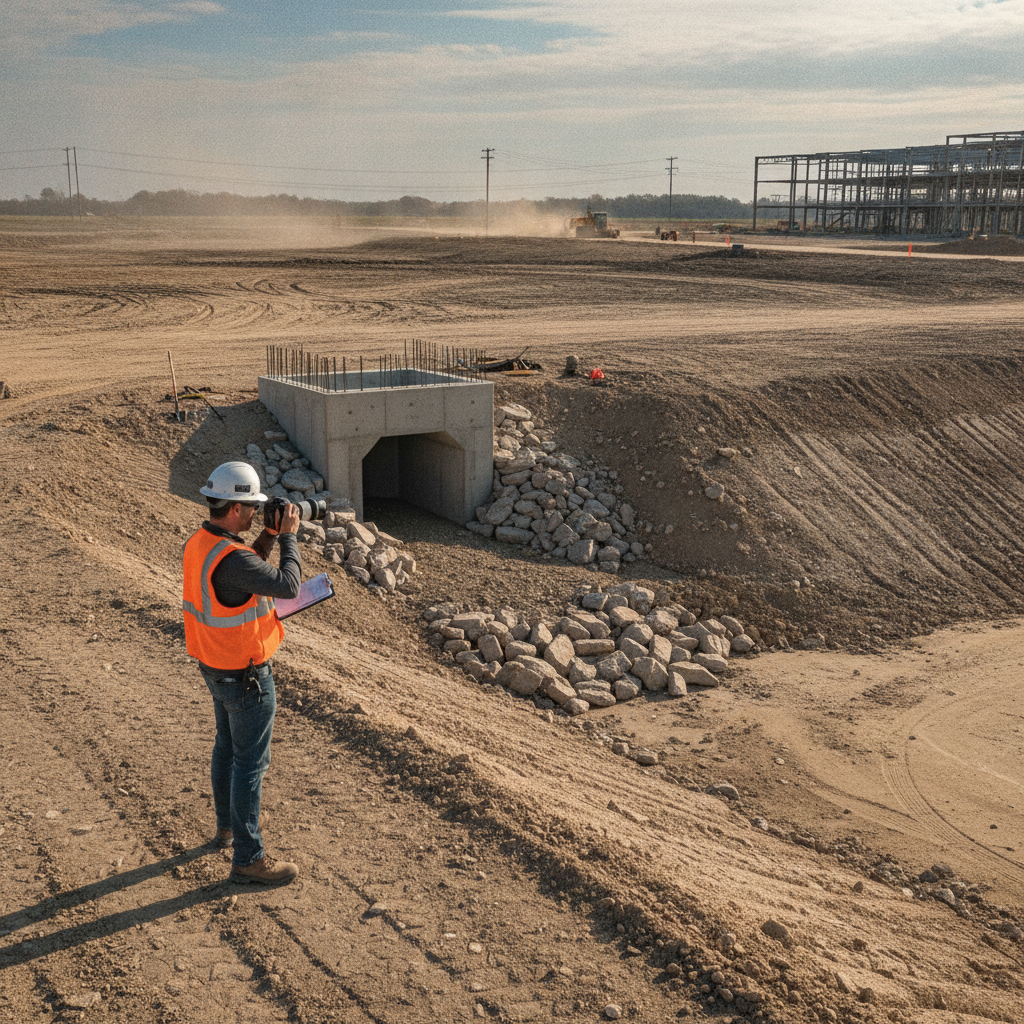
The Critical Role of Stormwater Management for Data Center Uptime
A data center’s site development plan is meticulously engineered to handle significant environmental stresses, with stormwater being a primary concern in Florida. The drainage system is designed not only to prevent flooding on the property but also to comply with stringent local and state regulations, including those from Water Management Districts (WMDs) and the Florida Department of Environmental Protection (FDEP). The failure of a single component—a clogged inlet, a collapsed pipe, or an overgrown outfall—can have cascading effects, jeopardizing the very infrastructure it was designed to protect. Effective drainage design ensures that stormwater is collected, conveyed, and treated according to the permitted plans. This protects building foundations, electrical yards, and critical access roadways from inundation. For a data center, where cooling systems and backup generators are often located at or below grade, even minor flooding can be catastrophic. A robust inspection and maintenance program ensures the system performs as designed, preserving the integrity of the civil engineering plans and safeguarding the facility against predictable weather events.
Routine vs. Post-Storm Event Inspections: A Proactive Approach
Data Center Drainage Inspection Checklist
| Component | Key Inspection Points | Common Failure Modes |
|---|---|---|
| Storm Inlets / Catch Basins | Grate condition, curb opening clarity, sediment depth in sump, structural integrity (cracks, spalls). | Clogged with debris/sediment, broken grate, structural failure of concrete box. |
| Conveyance Pipes | Evidence of surface depressions or sinkholes above alignment, end-section condition, signs of blockage at outlets. | Joint separation, pipe collapse, root intrusion, significant sediment buildup. |
| Stormwater Ponds (Retention/Detention) | Water level at design elevation, side slope stability, vegetation health (no nuisance species), littoral zone condition. | Erosion on banks, excessive sedimentation, overgrown with invasive vegetation, clogged outfall. |
| Outfall Control Structure | Skimmer integrity, weir/orifice clear of debris, structural condition of concrete, functionality of any valves. | Clogged orifice/weir, broken skimmer, structural cracks or spalling. |
| Swales & Overland Flow Paths | Proper grade, uniform vegetation, absence of erosion or sediment bars, no obstructions. | Erosion rills, sediment accumulation, dense/woody vegetation impeding flow. |
| Outfall Discharge Point | Clear of obstructions, no signs of scour or erosion at the discharge location, rip-rap or energy dissipator intact. | Erosion undermining the pipe, blockage from downstream vegetation or sediment. |
A comprehensive inspection strategy includes two primary types of assessments: routine (preventative) and post-storm (responsive). Each serves a distinct but complementary purpose in maintaining the health of the site’s drainage infrastructure. This dual approach is fundamental to effective stormwater management and long-term asset protection. Routine inspections are typically conducted on a semi-annual or annual basis. The goal is to identify and address minor issues before they become major problems. This includes clearing debris from inlets, managing vegetation in swales and ponds, and identifying early signs of erosion or structural wear. These inspections are crucial for budgeting and scheduling maintenance and ensuring ongoing zoning compliance with long-term operational permits. In contrast, post-storm inspections are performed immediately following a significant rainfall event (e.g., a tropical storm or a 25-year storm event). Their purpose is to assess the system’s performance under stress and identify any damage, blockages, or areas of overwhelming capacity that require immediate attention.
Inspecting Key Drainage System Components: Inlets, Pipes, and Swales
A thorough inspection requires a systematic evaluation of every component in the drainage network. Inspectors must look beyond superficial cleanliness and assess the structural and functional integrity of each element. This level of detail is critical for a successful site development maintenance plan. For storm drain inlets and catch basins, inspectors should check for accumulated sediment, trash, and vegetative debris that can restrict flow. The grate, curb opening, and internal structure must be examined for cracks, spalls, or displacement. Underground conveyance pipes are the arteries of the system; while their condition is not always visible from the surface, inspectors can look for signs of trouble like sinkholes or depressions along the pipe alignment, which may indicate a joint failure or pipe collapse. Grassed swales and overland flow paths must be checked for erosion, sediment buildup, and unwanted vegetation (like cattails or nuisance trees) that can impede the sheet flow of water, a key part of the original drainage design.
Evaluating Stormwater Ponds and Outfall Structures
Stormwater ponds—whether designed for detention or retention—are the heart of a data center’s stormwater management system. Their inspection is a critical task that directly relates to permit compliance. Inspectors must verify that the pond’s water level is at its design elevation, indicating proper drawdown and soil percolation. The side slopes should be stable, well-vegetated, and free from erosion rills or animal burrows that can compromise the embankment. The outfall structure, which controls the rate of discharge from the pond into a downstream system, requires special attention. This includes the skimmer (which prevents floating debris and oils from escaping), the weir or orifice, and the outfall pipe itself. Any blockages or structural damage here can cause the pond to overfill, leading to upstream flooding. The final discharge point must also be inspected to ensure it is clear of obstructions and that there is no erosion occurring where the system discharges, which is a common focus during an agency review.
Advanced Diagnostics: The Role of CCTV Pipe Inspection
For a definitive assessment of underground storm sewer pipes, a Closed-Circuit Television (CCTV) inspection is the industry standard. This process involves sending a remotely operated camera through the pipe network to provide a clear visual record of its internal condition. It is an invaluable tool for identifying issues that are impossible to detect from the surface, making it a cornerstone of modern utility coordination and maintenance. CCTV inspections can pinpoint the exact location of cracks, joint separations, root intrusion, and blockages. This data allows for targeted repairs, avoiding costly and disruptive exploratory excavation. For data center owners, this technology provides a high degree of certainty in assessing the condition of their buried infrastructure. The resulting report, which includes video footage and a detailed log of observations, serves as critical documentation for maintenance planning and demonstrating due diligence for permit submittals or compliance audits.
Documenting Deficiencies and Prioritizing Corrective Actions
Thorough documentation is as important as the inspection itself. Every observation should be recorded with photographs, detailed notes, and precise locations. This creates an objective record that can be used to track the system’s condition over time and justify maintenance expenditures. A formal inspection report should be prepared by a qualified professional, such as a Professional Engineer, to ensure accuracy and compliance. Once deficiencies are documented, they must be prioritized. Issues are typically categorized by severity: critical (e.g., a collapsed pipe threatening a roadway), high (e.g., a blocked outfall structure causing ponding), medium (e.g., moderate bank erosion), and low (e.g., minor sediment in an inlet). This prioritization allows facility managers to allocate resources effectively, addressing the most significant risks first. This process is a key component of any responsible construction administration and long-term site management plan.
RSP Engineers’ Approach to Drainage System Stewardship
At RSP Engineers, we view drainage inspection as a critical component of lifecycle asset management for mission-critical facilities. Our process begins with a thorough review of the original permitted civil engineering drawings and the associated stormwater permit to understand the system’s design intent and legal obligations. Our field teams, led by experienced engineers, then conduct a comprehensive site inspection using a detailed checklist tailored to the specific features of the property. We utilize advanced tools, including CCTV cameras and survey-grade GPS, to accurately document the condition and location of all assets. Deficiencies are logged, photographed, and categorized by severity. We then deliver a clear, actionable report that not only identifies problems but also provides recommended corrective actions, cost estimates, and a prioritized maintenance schedule. Our goal is to empower data center owners with the technical insights needed to ensure permit compliance, mitigate risks, and protect their critical infrastructure investment.
Common Issues in Data Center Drainage Systems
Even with state-of-the-art design, data center drainage systems can face common issues over time. One of the most frequent problems is sediment and debris accumulation in pipes and inlets, which reduces hydraulic capacity and can lead to localized flooding. This is often exacerbated by ongoing construction in the vicinity or immature landscape stabilization. Another common issue is erosion along pond banks or in swales, which can compromise structural integrity and contribute to downstream sedimentation. We also frequently encounter issues related to permit compliance, where required maintenance activities have been overlooked. This can include failure to remove nuisance vegetation from stormwater ponds or not maintaining access roads for inspection equipment. Finally, structural failures, such as cracked concrete in control structures or joint separation in older pipes, can occur. Identifying these issues early through a proactive inspection program is essential to avoiding costly emergency repairs and potential regulatory penalties.
Protect Your Mission-Critical Investment with RSP Engineers
Your data center’s operational resilience depends on the performance of its underlying site infrastructure. Don’t let a preventable drainage failure compromise your uptime. The team at RSP Engineers provides expert, certified stormwater system inspections and site engineering services for mission-critical facilities across Florida. We help you navigate permit compliance, prioritize maintenance, and implement cost-effective solutions. Contact us today to schedule a comprehensive site assessment and ensure your drainage design continues to protect your investment for years to come.
Conclusion
A proactive, technically rigorous drainage inspection program is not an operational expense; it is a fundamental investment in the long-term resilience and uptime of a data center. By implementing a schedule of routine and post-storm inspections, leveraging advanced diagnostics like CCTV, and maintaining meticulous records, facility owners can ensure their stormwater management system functions as designed. This approach mitigates physical risks, ensures continuous permit compliance, and protects the integrity of the critical digital infrastructure housed within. Ultimately, a well-maintained site is a reliable site.
FAQs
-
We recommend a full inspection by a qualified professional at least once per year, with additional inspections after any major storm event (e. g. , a hurricane or a named tropical storm). Some Water Management District permits may specify a different frequency, so it’s critical to review your specific permit compliance documents.
-
Failing to conduct and document required inspections can lead to notices of violation from the governing Water Management District (WMD). This can result in fines, mandated corrective actions, and potentially complicate future permitting for site expansions. Consistent documentation is your best defense during an agency review.
-
While facility staff can perform routine visual checks for obvious blockages, formal certification inspections required by many permits must be conducted under the supervision of, and certified by, a Florida-licensed Professional Engineer. A civil engineering firm near me like RSP can provide these certified inspection services.