
Data Center Drainage Easements Explained
A technical guide for data center developers on navigating public and private drainage easements in Florida. Learn about width, access, maintenance, and permitting from RSP Engineers.
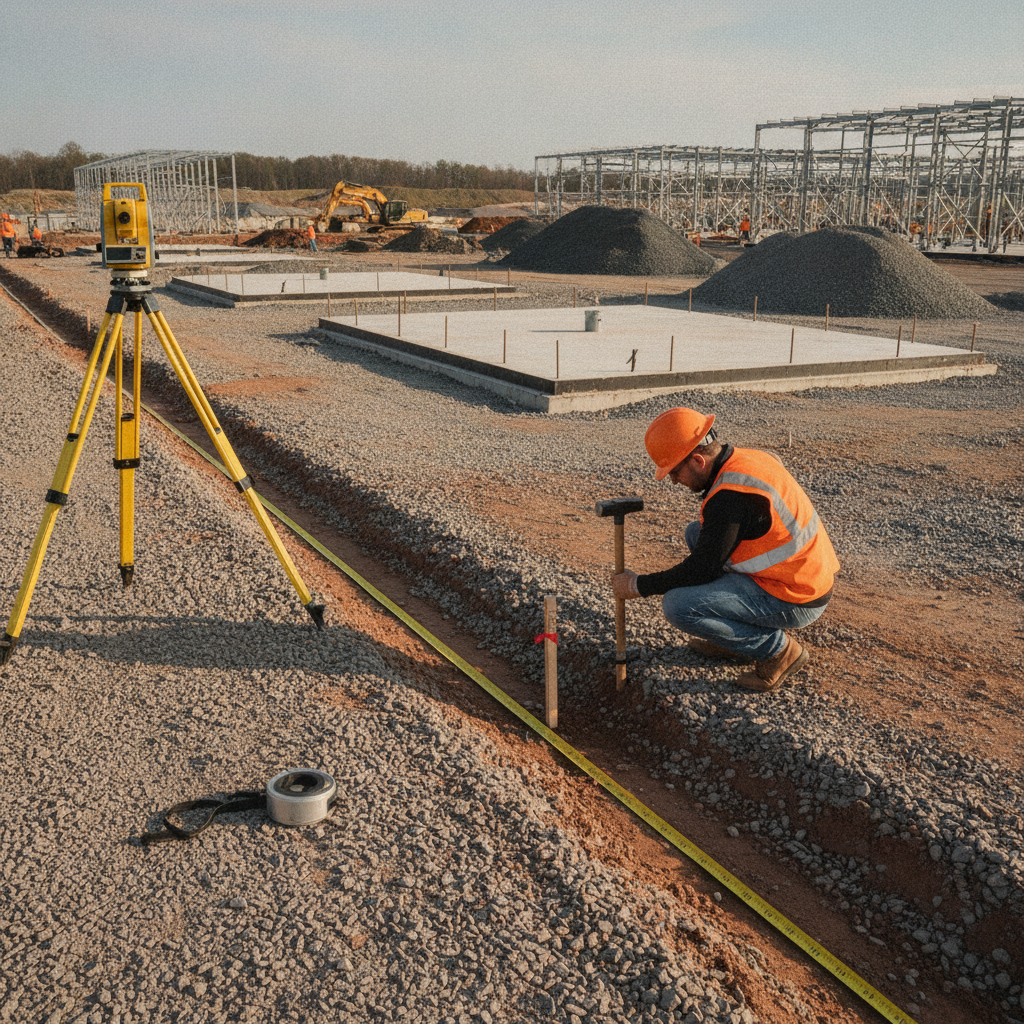
The Unique Stormwater Demands of Data Center Sites
Data centers are uniquely vulnerable to surface water flooding. Any interruption can lead to catastrophic downtime, making robust stormwater management a non-negotiable aspect of site development. These facilities often feature large, impervious footprints from rooftops and parking areas, which dramatically increases the volume and velocity of stormwater runoff. This runoff must be collected, treated, and conveyed to a legal point of discharge in a controlled manner that complies with local, state, and water management district regulations. Effective drainage design for these sites involves more than just pipes and ponds; it requires a comprehensive strategy that accounts for extreme weather events, future climate considerations, and the legal framework ensuring the system can function in perpetuity. The civil engineering approach must be conservative, prioritizing the protection of high-value assets. This is where drainage easements become a cornerstone of the design, providing the legal authority to maintain and operate the stormwater system beyond the immediate building footprint.
Public vs. Private Drainage Easements: Critical Distinctions
Drainage Easement Comparison for Data Center Development
| Feature | Public Easement | Private On-Site Easement | Private Off-Site Easement |
|---|---|---|---|
| Grantee / Beneficiary | Governmental Entity (City, County, WMD) | Property Owner's Association or another internal entity | An adjacent property owner granting rights to the developer |
| Maintenance Responsibility | Typically the governmental entity, but must be verified | Defined by a recorded maintenance agreement; usually the developer/owner | Defined by the easement agreement; often the developer (grantee) |
| Access Rights | Public entity has the right to enter for inspection and maintenance | Limited to the parties named in the agreement | Limited to the developer for the express purpose of drainage |
| Permit Jurisdiction | Subject to review and approval by the grantee entity | Governed by local and state permits; agreement reviewed by agencies | Requires consent of a third party; complicates agency review |
| Acquisition Complexity | Part of the standard platting or permit submittal process | Internal legal document creation | High complexity; requires negotiation, legal fees, and title work |
| Impact on Future Use | Highly restrictive; use is dictated by the public entity | Restrictive, but terms can be controlled by the developer | Creates a dependency on a third party for a critical system |
Drainage easements are generally categorized as either public or private, and the distinction has significant implications for developers. A public drainage easement is dedicated to a governmental entity, such as a city, county, or Water Management District. Once dedicated, that entity typically holds the rights to access and, in many cases, maintain the drainage infrastructure within the easement. This can be advantageous, as it may shift the long-term maintenance burden, but it also means the public entity has control over that strip of land for drainage purposes. A private drainage easement, conversely, is an agreement between private parties. This is common in master-planned developments or when runoff from one property must cross an adjacent property to reach a discharge point. The terms of a private easement are negotiable and must be explicitly detailed in a recorded legal document, covering rights of access, maintenance responsibilities, and any restrictions on the use of the easement area. For data center developers, private easements require careful legal review to avoid future disputes over maintenance responsibility or access rights, which could impact facility operations.
Determining Easement Width and Access Requirements
The width of a drainage easement is not arbitrary; it is a calculated dimension based on several engineering and logistical factors. The primary driver is the physical size of the drainage conveyance itself—be it a large-diameter pipe, a concrete channel, or a grassed swale. The calculation must account for the system’s hydraulic capacity needed to handle a design storm event, as specified by agency review criteria. For open channels, this includes the top width of the channel plus any required freeboard. Beyond the conveyance, the easement must be wide enough to accommodate maintenance vehicle access. Equipment like Vactor trucks for cleaning pipes or long-reach excavators for dredging swales requires significant operational space. A common mistake is to grant an easement that is too narrow, making future maintenance impossible without encroaching on adjacent property. A thorough civil engineering analysis will model these access requirements, including turning radii and stable ground conditions, to ensure the easement is functional for the entire life of the project.
Offsite Easements: Securing a Legal Point of Discharge
A data center site is not an island. Its stormwater must ultimately discharge to a legally recognized outfall, such as a municipal storm sewer system, a county drainage canal, or a natural water body. If the project site is not directly adjacent to such an outfall, an offsite easement is required to convey the water across intervening properties. Securing these offsite rights is one of the most significant risks in the land development process. It involves identifying the optimal drainage route, performing a title search on the affected properties, and negotiating a legal agreement with one or more neighboring landowners. This process can be time-consuming and expensive, as the developer has little leverage. Unlike a public utility, a private developer cannot use eminent domain. The success of the entire project can hinge on the willingness of an offsite property owner to grant an easement. Therefore, identifying the need for and feasibility of acquiring offsite drainage easements must be a top priority during the initial due diligence phase, long before the property is acquired.
Maintenance Agreements and Long-Term Obligations
An easement is a perpetual encumbrance on land, and with it comes a perpetual responsibility for maintenance. A clearly defined maintenance agreement is crucial to prevent future conflicts and ensure the drainage system functions as designed. This agreement, which should be a recorded legal document, explicitly states which party is responsible for tasks like mowing grass, removing sediment and debris, repairing erosion, and ensuring the structural integrity of pipes and control structures. This is a critical component of any stormwater permit application. For public easements, the responsibility often falls to the governing agency, but this is not always the case. For private easements, the responsibility must be clearly assigned. In a multi-phase data center campus, for example, a cross-easement and shared maintenance agreement may be necessary. Failure to properly maintain a drainage system can lead to flooding, property damage, and non-compliance with permits, posing a direct threat to the operational continuity of a mission-critical facility.
How Easements Constrain Site Layout and Future Expansion
For a developer, land is the most valuable asset. Drainage easements can significantly constrain its use, effectively sterilizing portions of a property. A wide easement for a major conveyance channel can dictate the location of the main building, limit parking field layouts, and complicate the routing of other critical infrastructure like fiber optic ducts and power feeds. The site plan design must treat easement locations as hard boundaries from the earliest conceptual stages. Furthermore, easements have a major impact on future expansion plans. A drainage easement established for Phase 1 may run directly through the ideal location for a Phase 2 building pad. Relocating an existing, functioning drainage system is an extremely complex and expensive process that requires re-permitting and construction within an active campus. Proactive master planning, guided by a knowledgeable civil engineering firm, is essential to position easements strategically along property lines or in other areas that preserve prime real estate for future revenue-generating facilities.
The RSP Engineers Approach to Easement Strategy
At RSP Engineers, we treat easement planning as a foundational element of our site development strategy. Our process begins during the due diligence phase, where we conduct a thorough review of the property’s title commitment to identify existing recorded easements and perform a constraints analysis to map out potential drainage pathways. We work closely with surveyors and legal counsel to determine the most efficient route for both on-site and potential off-site conveyance. Our drainage design process includes detailed hydraulic modeling to justify easement widths and proactive agency coordination to ensure our proposed easement structure aligns with jurisdictional requirements. We prepare all necessary legal descriptions and exhibits required for platting or standalone easement documents. This integrated approach minimizes surprises during permitting and construction, protecting our clients’ timelines and investments by ensuring a legally sound and fully functional stormwater management system.
Common Pitfalls in Data Center Drainage Easement Planning
Even experienced developers can encounter significant challenges with drainage easements. One of the most common issues is underestimating the time and cost required to acquire an offsite easement, which can delay a project for months or even years. Another frequent pitfall is discovering a pre-existing, unrecorded prescriptive easement during construction, which can force a costly redesign. Poorly written or vague maintenance agreements are another source of conflict, leading to disputes over responsibilities long after the project is complete. Finally, conflicts between different types of easements can create major headaches. For example, a proposed drainage easement may conflict with an existing high-voltage power line easement, requiring extensive utility coordination and negotiation with the power company. A proactive approach to due diligence and design is the best defense against these common and costly problems. Frequently Asked Questions What happens if an existing, unrecorded easement is found on our property? If an unrecorded easement (often a ‘prescriptive easement’ established through long-term use) is discovered, it can cloud the property’s title and may require legal action to resolve. It is critical to identify any such potential claims during the ALTA/NSPS Land Title Survey phase of site development due diligence. Can we place utilities or parking lots within a drainage easement? Generally, no. The purpose of a drainage easement is to preserve the land for stormwater conveyance and maintenance access. Most jurisdictions prohibit the placement of permanent structures, pavement, or even significant landscaping within the easement boundaries. Utility crossings are sometimes permitted but require specific approval and design considerations to prevent conflict with the drainage design. Who is responsible for maintaining a public drainage easement dedicated to the county? While the county typically assumes maintenance for public easements it accepts, this should never be assumed. The specific terms of the dedication, local ordinances, and the development order will dictate the final maintenance responsibility. This must be clarified in writing during the permitting process. How long does it take to acquire an offsite drainage easement? The timeline is highly variable and depends on the willingness of the other party to negotiate. A simple, amicable agreement might take a few months. A complex or contentious negotiation can take over a year or fail entirely. This is a critical path item that must be addressed at the very beginning of a project’s lifecycle. Does a drainage easement affect our property taxes? While an easement restricts the use of the land, the underlying property is still owned by you and is typically taxable. In some cases, the restricted use and diminished value of the land within the easement may be a basis for appealing the property’s assessed value, but this depends on local tax authority rules.
Secure Your Mission-Critical Investment with Expert Civil Engineering
Navigating the complexities of drainage easements is fundamental to the success of any data center project in Florida. A flawed strategy can lead to permitting delays, construction conflicts, and long-term operational risks. Secure your mission-critical investment with expert guidance. RSP Engineers provides comprehensive site development services, including meticulous drainage design, strategic permitting, and thorough utility coordination to ensure your project is built on a solid, legally sound foundation. Contact us today to discuss your project’s easement and stormwater management strategy.
Conclusion: Easements as a Foundational Asset
In conclusion, drainage easements should be viewed not as a bureaucratic hurdle, but as a foundational asset that protects a data center from its most persistent threat: water. A well-planned and legally sound easement strategy is a core component of risk mitigation. By understanding the differences between easement types, planning for maintenance and access, and addressing offsite requirements early, developers can ensure the long-term resilience and value of their investment. Proactive and detailed civil engineering is the key to transforming these legal instruments from a liability into a cornerstone of a successful land development project. Related Articles Navigating Florida’s Environmental Resource Permitting (ERP) for Large-Scale Developments Utility Coordination Challenges for Mission-Critical Facilities The Developer’s Guide to Site Due Diligence in Florida
FAQs
-
Data Center Drainage Easements Explained requires careful planning, qualified engineering, and compliance with the applicable codes and permits.
-
Getting Data Center Drainage Easements Explained right protects safety, supports regulatory compliance, and avoids costly redesigns or delays.
-
RSP Engineers provides licensed expertise and end-to-end support for Data Center Drainage Easements Explained, from early planning through permitting.