
Data Center Construction Sequencing for Faster Project Delivery
Learn the critical civil engineering sequencing for data center construction in Florida. Our guide covers site work, utility coordination, and permitting for faster project delivery.
Phase 1: Pre-Construction, Permitting, and Due Diligence
The fastest way to build is to plan correctly from the start. The pre-construction phase is arguably the most critical for a data center project’s schedule. This is where foundational risks are identified and mitigated. A thorough due diligence process involves more than just a boundary survey; it requires a deep dive into geotechnical conditions, environmental constraints, and, most importantly, utility availability. We conduct detailed utility capacity analysis to confirm that the immense power, water, and fiber requirements can be met by local providers without requiring cost-prohibitive off-site improvements. Simultaneously, our team engages in aggressive zoning compliance and entitlement efforts. We work with local municipalities to understand specific land use regulations, setback requirements, and noise ordinances that could impact the site layout. Early engagement with permitting agencies, including Water Management Districts and the FDEP, is crucial for establishing a clear path for the Environmental Resource Permit (ERP) and other key approvals. A proactive permitting strategy, initiated during due diligence, ensures that the project can break ground as soon as the design is ready, preventing months of potential delays waiting for agency approvals.
Phase 2: Critical Path Site Work and Mass Grading
Data Center Utility Sequencing Priorities
| Priority Level | Utility System | Key Sequencing Consideration | Potential Delay Impact if Sequenced Incorrectly |
|---|---|---|---|
| 1 (Highest) | Sanitary Sewer | Gravity-dependent; must be installed first to set the lowest point of the utility network. | High: Requires re-excavation of all other utilities if grade is incorrect. |
| 2 | Primary Electrical Duct Banks | Deep and wide trenches; must be placed before building foundations in conflicting areas. Long lead time for materials. | High: Can halt foundation work and delay building erection. |
| 3 | Storm Drainage | Large diameter pipes requiring significant excavation; must coordinate with mass grading and pond construction. | Medium: Can cause site flooding and work stoppages during rain events. |
| 4 | Fire & Potable Water Mains | Pressurized lines offer more routing flexibility but require specific separation from sewer and electrical. | Medium: Rework can be costly and impact fire system testing schedules. |
| 5 | Fiber/Telecom Duct Banks | Typically shallower and more flexible; can often be routed around other utilities late in the process. | Low: Generally easier to adjust, but critical for 'go-live' date. |
| 6 (Lowest) | Irrigation & Site Lighting | Shallowest conduits; installed last after major paving and grading are complete. | Low: Minimal impact on primary construction schedule. |
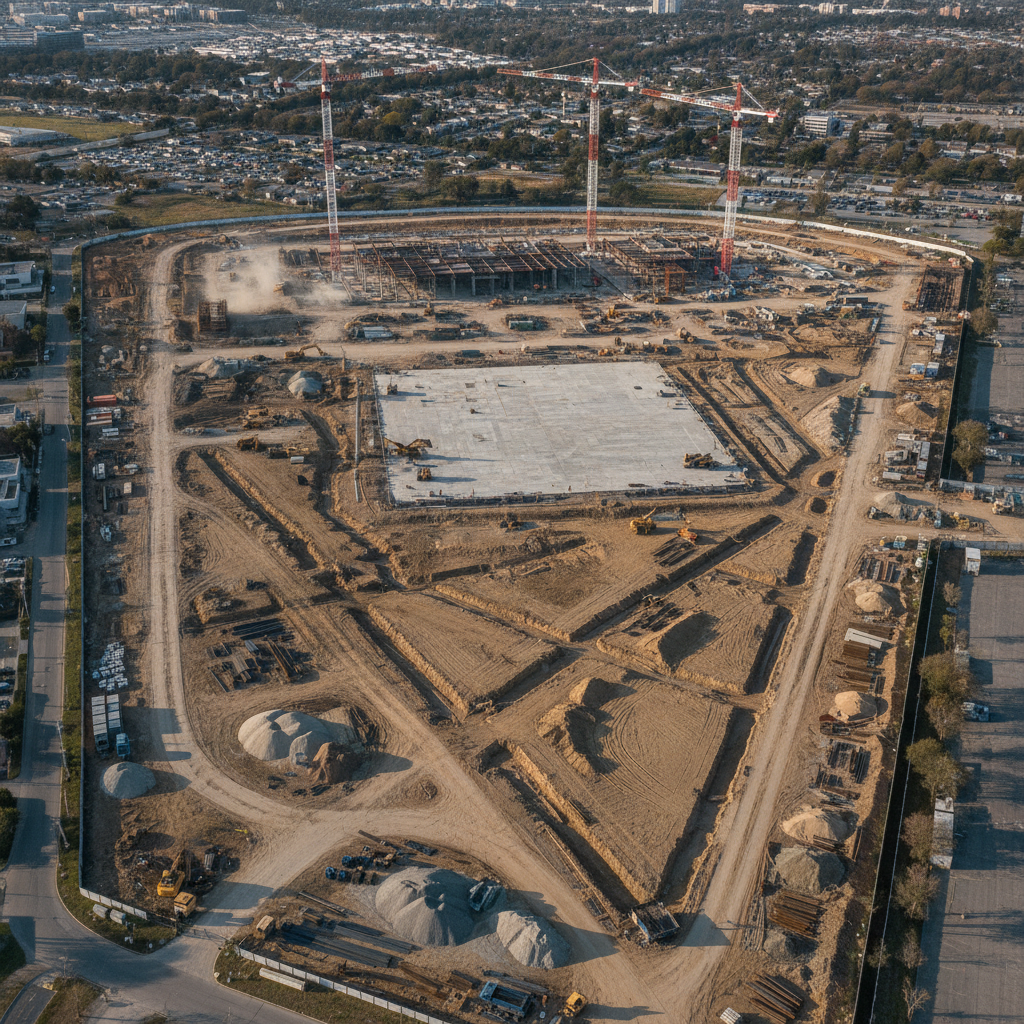
Once permits are secured, the first order of business on site is establishing the foundational earthwork. This begins with implementing robust erosion and sediment control measures as required by the SWPPP. The critical path then moves to mass grading to establish the precise building pad elevation and overall site topography. For data centers, achieving the correct pad elevation and compaction is non-negotiable, as it supports the massive weight of the structure and its equipment. The building pad certification, which involves rigorous testing and documentation, is a key milestone that gates the start of foundation work. During this phase, we also begin constructing the core stormwater management system components, such as retention or detention ponds. In Florida’s flat terrain and high water table environment, excavating these large features early can help dewater the site and provide fill material for the building pad, creating a more efficient workflow. This early focus on the drainage design ensures that the site can handle Florida’s intense rainfall events during construction, minimizing weather-related downtime and protecting the work area.
Phase 3: Deep Utility Installation and Coordination
Data centers are defined by their utilities. The sequencing of underground infrastructure is a complex three-dimensional puzzle that demands precise utility coordination. The first systems to be installed are typically the deepest gravity-fed lines, such as the main sanitary sewer gravity lines. These set the depth for all other crossing utilities. Following this, the large-diameter storm drain pipes are placed, as they are also highly dependent on slope and elevation for proper function. Next comes the installation of pressurized pipes, including fire protection water mains and potable water lines. The most critical and complex utility for a data center is the electrical and communications infrastructure. The installation of concrete-encased duct bank installation systems for primary power and fiber optics is a major undertaking. These trenches are often wide and deep, requiring careful coordination with building foundation work to avoid conflicts. A well-documented utility plan, managed by a skilled Civil Engineer near me, is essential to prevent clashes that could halt all site progress.
Phase 4: Vertical Construction and Foundation Work
With the building pad certified and deep utilities routed around its perimeter, vertical construction can commence. This phase begins with the excavation and pouring of the building’s foundation systems, which are often substantial to support the weight of generators, UPS systems, and cooling equipment. The sequencing must be carefully managed so that foundation crews and utility crews can work in parallel without interfering with each other’s access and laydown areas. As foundations are completed in one area, structural steel erection or the placement of precast concrete walls can begin. This parallel activity is key to compressing the schedule. While the building goes vertical, ongoing site development work continues, including the installation of curb and gutter, subgrade preparation for parking lots, and the installation of shallower utilities like secondary electrical conduits and irrigation lines. This overlapping approach requires constant communication between the general contractor and the civil engineering team.
Phase 5: Paving, Flatwork, and Final Grading
As the building envelope nears completion, the focus of the site work shifts to surface-level finishes. This includes the installation of heavy-duty pavement sections for access roads, loading docks, and generator yards, which must be designed to withstand constant traffic from heavy trucks. Standard-duty asphalt or concrete is then placed for employee parking areas. This phase is also critical for ensuring ADA compliance, which involves the precise installation of accessible parking spaces, ramps, and sidewalks with correct slopes and cross-slopes. The final step in this phase is final grading. This involves shaping the landscape to ensure positive drainage away from the building and into the stormwater system, as specified in the drainage design. Topsoil is placed, and the site is prepared for landscaping. Achieving proper final grading is essential for passing final inspections and obtaining the certificate of occupancy. It’s a detailed process that marks the transition from heavy construction to site completion.
Phase 6: MEP Commissioning and Agency Inspections
The final and most intensive phase for a data center is the commissioning of its mechanical, electrical, and plumbing (MEP) systems. While this is primarily handled by specialized contractors, the civil engineer’s role remains crucial. We must ensure that all utility connections, from the main water meter to the sanitary sewer cleanouts and the electrical switchgear, have passed final agency review and inspection. The successful completion of the stormwater management system is a prerequisite for receiving the final Certificate of Occupancy (CO). During this period, our team coordinates final site walk-throughs with municipal inspectors to close out the site development and infrastructure permits. Any outstanding punch-list items related to paving, grading, or ADA compliance are addressed swiftly. The goal of the MEP commissioning phase from a civil perspective is to ensure all supporting site infrastructure is fully approved and operational, providing a seamless handover for the facility to go live. This final step in the permit submittals process is what ultimately allows the data center to begin its operations.
RSP Engineers’ Approach to Data Center Sequencing
At RSP Engineers, we treat data center projects as integrated logistical challenges, not just design exercises. Our approach is built on a foundation of proactive communication and early collaboration. We engage with the client, architects, and general contractor from the earliest stages of site selection to develop a holistic project strategy. Our process involves creating detailed, phased construction drawings that clearly delineate the work for each stage, from mass grading and deep utilities to final paving and landscaping. Leveraging our extensive experience with Florida civil engineering, we anticipate and solve problems before they reach the field. We understand the nuances of dealing with Florida’s high water tables, sandy soils, and stringent stormwater regulations. We facilitate early coordination meetings with utility providers and permitting agencies to streamline the agency review process. This hands-on, forward-thinking approach to construction administration ensures that the construction sequence is not just a plan on paper, but a viable, efficient roadmap to a successful and timely project completion.
Common Sequencing Pitfalls and How to Avoid Them
Even with a solid plan, data center projects can encounter pitfalls. One of the most common is discovering unsuitable soils or a higher-than-expected water table after grading has begun, which can halt all work and require costly soil remediation. This is avoided with thorough upfront Geotechnical Engineering, including a sufficient number of soil borings. Another frequent issue is utility conflicts, where a duct bank is planned at the same elevation as a storm pipe. This is mitigated through rigorous 3D utility modeling and utility coordination meetings during the design phase. Failing to secure long-lead-time materials, such as precast structures, generators, or primary switchgear, can completely derail a schedule. Early procurement should be integrated into the project timeline. Finally, underestimating the time required for permitting and agency inspections can lead to significant delays at the end of the project. The solution is to begin agency discussions early and maintain clear communication throughout the construction process, ensuring that all permit submittals are complete and accurate.
Accelerate Your Data Center Project with RSP Engineers
Navigating the complexities of data center development in Florida requires specialized expertise. The success of your project depends on a construction sequence that is both aggressive and realistic, grounded in sound engineering principles. RSP Engineers provides the expert civil engineering and site development services needed to deliver these critical facilities on time and on budget. From initial due diligence and permitting to detailed utility coordination and construction administration, our team is ready to help you build the infrastructure of tomorrow. Contact us today to discuss your project and learn how we can help you achieve a faster path to market.
Conclusion
In the fast-paced world of data center development, the construction sequence is the master plan that dictates success or failure. A well-orchestrated sequence, founded on early and thorough civil engineering, transforms a complex project into a manageable process. By prioritizing due diligence, strategically phasing site work and vertical construction, and maintaining rigorous utility coordination, developers can significantly compress project timelines. Ultimately, understanding the critical path and anticipating the unique challenges of land development in Florida is the key to delivering these vital infrastructure assets to market faster and more efficiently.
FAQs
-
A civil engineer should be one of the first consultants engaged, ideally during the site selection phase. Early involvement allows for critical due diligence on zoning, utility availability, and potential site constraints, which heavily influences the project’s viability and timeline.
-
The primary challenge is securing adequate and redundant power. This involves extensive coordination with the power company to confirm capacity and plan the routing of primary duct bank installation. A close second is managing stormwater due to Florida’s flat topography and intense rainfall, requiring robust drainage design.
-
Florida’s Environmental Resource Permitting (ERP) process is comprehensive. The design and permitting of the stormwater management system must be completed and often approved before any major site work can begin. This can add several months to the pre-construction timeline if not managed proactively.