
Data Center Construction Phasing: A Civil Engineer’s Guide to Minimizing Risk and Downtime
A guide to data center construction phasing in Florida. Learn how civil engineering strategies for site work, utilities, and permitting minimize risk and prevent downtime.
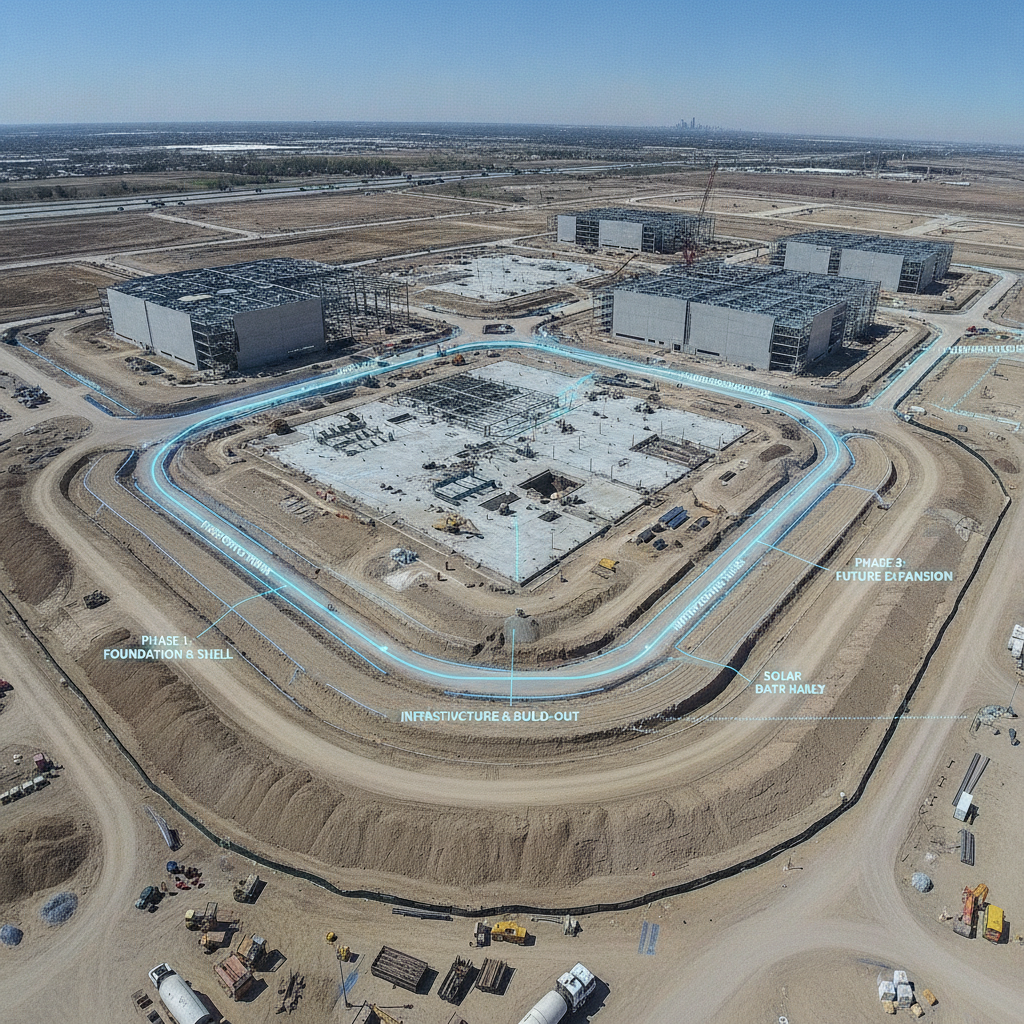
Phase 0: Strategic Site Selection and Due Diligence
The success of a phased data center project is often determined before a single shovel breaks ground. The initial due diligence phase is a critical civil engineering function that validates a site’s viability for a multi-stage, high-demand development. This goes far beyond a simple boundary survey. We conduct a thorough feasibility study that scrutinizes power and fiber availability, which are the lifeblood of any data center. This includes identifying redundant power sources from separate substations and mapping diverse fiber routes to ensure maximum resiliency. A lack of robust, scalable utilities can render an otherwise perfect site unusable for phased growth. Simultaneously, we perform in-depth Geotechnical Engineering investigations, including extensive soil boring test work, to understand subsurface conditions. The findings from a Geotechnical soil report directly influence foundation design, earthwork costs, and the feasibility of constructing heavy structures. We also conduct a preliminary analysis of zoning compliance and land use restrictions to identify potential entitlement hurdles. This early-stage risk assessment ensures that the master plan is built on a solid foundation of verified data, preventing costly surprises during later permitting and construction phases.
Phase 1: Master Planning and the Infrastructure Backbone
Data Center Phasing: Civil Engineering Considerations
| Phase | Key Civil Engineering Activities | Primary Risk Mitigation Focus |
|---|---|---|
| Phase 0: Due Diligence | Geotechnical investigation, utility capacity analysis, zoning verification, environmental assessment. | Identifying fatal flaws (power, fiber, zoning) before capital is committed. |
| Phase 1: Master Infrastructure | Master grading, design of main utility corridors, master stormwater system design and construction. | Ensuring the site's 'backbone' can support ultimate build-out without future disruption. |
| Phase 2: First Building Construction | Pad grading, final utility connections, access road construction, localized drainage. | Isolating construction logistics to prevent impact on future operational zones. |
| Phase 3+: Expansion Phases | Replication of Phase 2 activities, connection to master infrastructure stubs, updating SWPPP. | Seamless integration with existing, operational infrastructure without causing downtime. |
| Ongoing Operations | Stormwater system maintenance, as-built surveys, planning for equipment upgrades. | Maintaining compliance and ensuring the site continues to function as designed. |
With a viable site confirmed, the focus shifts to creating a comprehensive master site plan design. This is the blueprint for the entire lifecycle of the data center campus. The primary goal is to establish the infrastructure backbone that will serve the ultimate build-out, even if it’s constructed over a decade or more. This includes designing and sizing the main utility corridors for power, water, sanitary sewer, and fiber optics. These corridors are strategically placed to allow for future connections without disrupting existing operations, a key component of successful utility coordination. The master plan also establishes the primary roadway network and, critically, the master stormwater management system. In Florida, this often involves designing large-scale retention or detention facilities that are sized for the total future impervious area. The initial phase of construction may only utilize a fraction of this capacity, but the land and core infrastructure must be in place from day one. This foresight in the drainage design prevents the need for major earthwork or system redesigns during subsequent expansion phases, which would be both disruptive and prohibitively expensive.
Phase 2: Initial Build-Out and Core Systems Activation
The first construction phase involves building the initial data hall or administrative building and activating the core systems. The civil engineering work in this phase is focused on executing a portion of the master plan with precision. This includes mass grading for the first building pad and its associated parking and access roads, as well as installing the initial utility taps and stubs from the main infrastructure backbone. A key consideration is the logistical separation of this active construction zone from areas designated for future phases. This requires careful planning of construction access routes, laydown yards, and temporary erosion and sediment control measures. During this phase, we ensure that all work is performed in strict accordance with the approved construction documents and permit submittals. The goal is to create a self-sufficient, operational facility that can function independently while the rest of the site remains ready for future development. This involves close coordination with all disciplines to ensure that underground utilities are placed correctly and that the site is stabilized and secure upon completion of the phase. This meticulous execution of the first phase of site development sets the standard for all future expansions.
Utility Coordination: The Zero-Downtime Imperative
For a data center, utility coordination is not a task; it’s a core discipline. The phasing plan must be built around the principle of zero downtime. This means designing utility systems with N+1 or 2N redundancy from the outset. From a civil engineering perspective, this translates into designing physically separate and diverse entry points for power and fiber. We work directly with utility providers to route primary and secondary power feeds from different substations, often requiring extensive off-site design and permitting for new duct banks and infrastructure. The same principle applies to fiber optic connectivity, where we plan for multiple, physically separate conduits entering the site from different directions to avoid a single point of failure. Water for cooling systems and sanitary sewer services must also be planned for the ultimate capacity, ensuring that the municipal systems can handle the load as the campus grows. Effective phasing means that connecting utilities for Phase 3 never requires trenching across the critical fiber path for the operational Phase 1. This level of detailed, forward-looking utility coordination is paramount to maintaining operational integrity throughout the data center’s lifecycle.
Stormwater Management and Drainage Design for Scalability
Florida’s intense rainfall and flat topography make stormwater management a primary design challenge for any large-scale development. For a phased data center, the challenge is magnified. The drainage design must be engineered to accommodate the final build-out, where impervious surfaces like rooftops and pavement can cover over 90% of the site. The initial phase might only develop 20% of that area, but the stormwater permit, often issued by a Water Management District, requires a comprehensive plan for the entire project. Our approach involves designing a master stormwater system, typically a large wet detention or retention pond, that is constructed during the first phase. This pond is sized for the total future runoff, representing a significant upfront investment that pays dividends in predictability and regulatory compliance. We then implement temporary erosion and sediment control measures that are adapted with each new phase of construction. This ensures the site remains in compliance throughout its multi-year development, avoiding fines and work stoppages while protecting Florida’s sensitive ecosystems. This scalable approach to stormwater management is a hallmark of responsible site development.
Permitting Strategy for Phased Data Center Development
Navigating the permitting process for a multi-phase data center requires a strategic, long-term approach. Simply submitting plans for the first building is shortsighted and can lead to significant roadblocks later. The optimal strategy often involves securing a master site plan approval or a Planned Unit Development (PUD) zoning, which codifies the development rights for the entire campus upfront. This provides certainty to investors and stakeholders that the future phases can be built as envisioned, subject to detailed construction plan approvals. Following the master approval, each construction phase requires its own set of detailed permit submittals for site work, building, and utilities. Our team manages this complex process, ensuring that each submittal package is consistent with the master plan and meets the specific requirements of every reviewing agency, from local planning departments to state environmental bodies. This proactive management of the agency review process minimizes delays and ensures a smooth transition from one phase to the next, keeping the project on schedule and on budget.
RSP Engineers’ Phased Approach to Data Center Development
At RSP Engineers, we treat data center projects as long-term partnerships. Our process begins with immersive due diligence to ensure the project is viable from a civil engineering standpoint. We then develop a flexible and robust master site plan design that serves as the strategic guide for all subsequent phases. Our deep experience in Florida allows us to navigate the complexities of multi-agency permitting, securing the necessary entitlements to protect our clients’ investment for the full project lifecycle. During construction, our role evolves into one of oversight and quality control. We provide comprehensive construction administration services, working closely with contractors to ensure that the design intent is realized and that the critical separation between active construction and operational facilities is maintained. Our proactive approach to utility coordination and problem-solving on-site helps keep the project moving forward, ensuring each phase is delivered on time and ready to support the next stage of growth.
Common Pitfalls in Data Center Phasing and How to Avoid Them
Even with a solid plan, phased data center projects can encounter significant challenges. One of the most common pitfalls is underestimating the lead time for high-capacity utility upgrades. Securing new power substations or extending major water mains can take years of planning and negotiation, and this must be factored into the master schedule. Another frequent issue is an inadequate master stormwater management plan, where the system designed for Phase 1 cannot be efficiently expanded to serve future phases, leading to costly redesigns. Poor construction logistics planning can also be disastrous, creating conflicts between construction traffic and facility operations or failing to properly manage dust and vibration. Finally, a failure to achieve full zoning compliance for the entire master plan at the outset can put future phases in jeopardy. The best way to avoid these pitfalls is to engage an experienced civil engineering firm near me like RSP Engineers early in the process to develop a comprehensive strategy that anticipates these challenges from day one.
Partner with RSP Engineers for Your Mission-Critical Facility
Your data center’s success depends on a foundation of precision, foresight, and unwavering reliability. At RSP Engineers, we provide the expert civil engineering services necessary to navigate the complexities of phased development in Florida. From initial due diligence and master planning to complex utility coordination and multi-agency permitting, we are your trusted partner in building resilient, scalable, and successful mission-critical facilities. Our team of Florida Licensed Engineers has the experience to manage your site development from concept to completion, ensuring no detail is overlooked.
Conclusion: Building Resiliency Through Strategic Phasing
In conclusion, strategic phasing is the cornerstone of modern data center development. It is a multidisciplinary effort where civil engineering provides the essential framework for long-term success. By focusing on a robust master site plan design, proactive utility coordination, and a scalable stormwater management strategy, developers can mitigate risk, manage capital effectively, and build a campus that can grow with demand without compromising ongoing operations. A successful project is not just about building the first data hall; it’s about implementing a resilient, forward-looking plan that ensures the integrity of the entire campus for decades to come.
FAQs
-
Phasing allows capital expenditure to be spread over time, matching investment to demand. While there can be some minor cost inefficiencies from multiple mobilizations, this is far outweighed by the financial benefit of avoiding the massive upfront cost of building the entire campus at once. A well-designed master plan minimizes redundant costs by establishing the core utility coordination and stormwater management infrastructure during the first phase.
-
Without a doubt, securing sufficient and redundant high-voltage power is the greatest challenge. The demand of a modern data center campus can equal that of a small city. This requires extensive, early coordination with power companies to plan for new substations and transmission lines. The permitting and construction timeline for this critical infrastructure can often be the longest lead item in the entire project.
-
Minor adjustments are often possible, but significant changes to the master plan—such as altering the primary access roads or the location of the master stormwater pond—can be extremely difficult and expensive after Phase 1 is operational. This is why a thorough and forward-thinking initial master site plan design is so critical. It provides a framework that is flexible enough to accommodate technological changes within the buildings but robust enough to guide the site’s long-term development.