
Ensuring Uptime: A Civil Engineer’s Guide to Data Center QA/QC During Construction
Explore the critical role of Quality Assurance (QA) and Quality Control (QC) in data center construction. Learn how Florida civil engineering firms like RSP manage site work, utilities, and structural
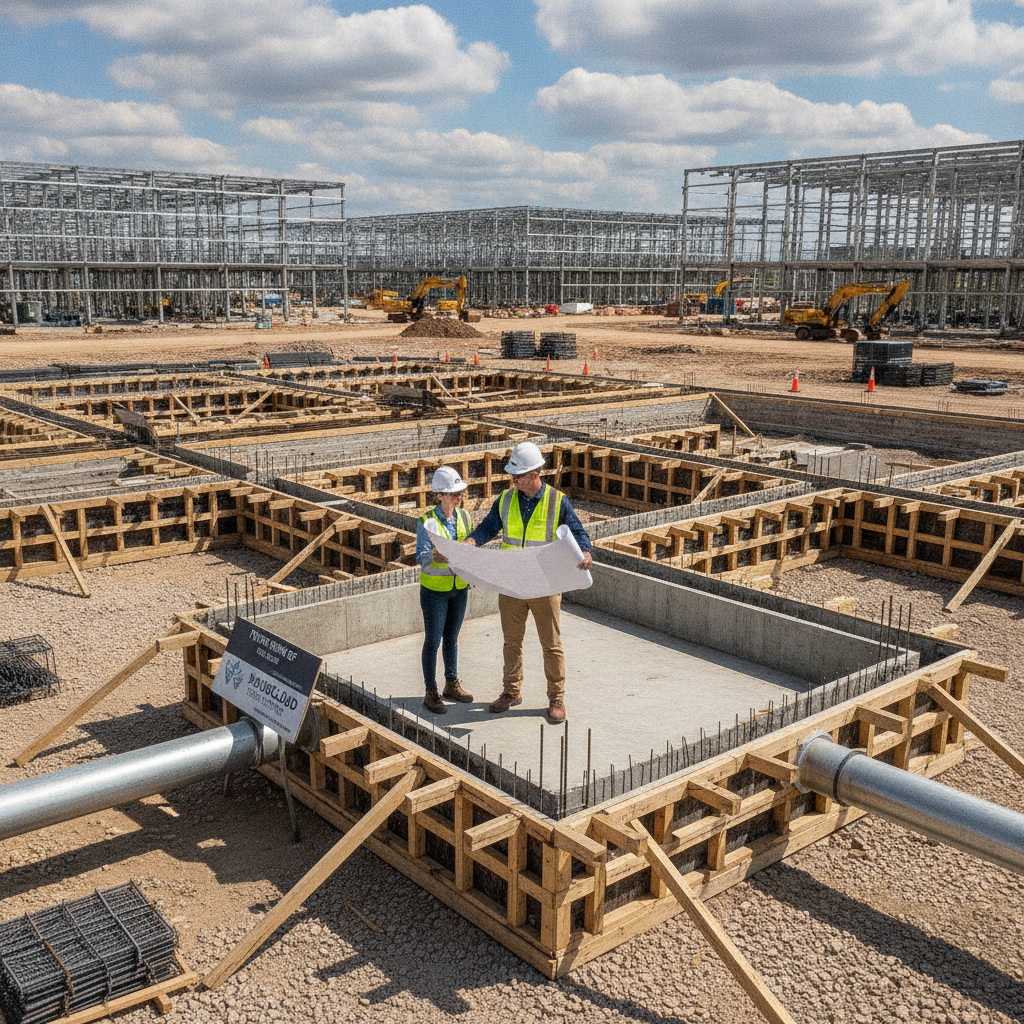
The Foundation of Reliability: Differentiating QA and QC in Data Center Projects
While often used interchangeably, Quality Assurance and Quality Control are distinct but complementary disciplines. Quality Assurance (QA) is a proactive, process-oriented approach focused on preventing defects. It involves establishing and auditing the procedures, standards, and documentation that guide the construction process. For a data center, this includes creating a detailed inspection and testing plan, verifying contractor qualifications, and ensuring all material construction submittals comply with the project specifications before they even arrive on site. Conversely, Quality Control (QC) is a reactive, product-oriented approach focused on identifying defects. It is the hands-on inspection and testing of the work itself to ensure it meets the established quality standards. This includes activities like concrete cylinder testing, soil compaction tests, and as-built surveys of utility installations. In data center construction, where tolerances are tight and systems are interdependent, a rigorous QC program is non-negotiable. Together, QA and QC form a comprehensive system that ensures the final product aligns perfectly with the engineering design and performance requirements.
Site Development and Earthwork QA/QC: The First Line of Defense
QA vs. QC Activities for Key Data Center Systems
| System Component | Quality Assurance (QA) Activity (Proactive) | Quality Control (QC) Activity (Reactive) |
|---|---|---|
| Foundation Subgrade | Review geotechnical report and establish testing frequency plan. Verify contractor's earthwork equipment and methods. | Perform proof-rolling observations. Conduct regular in-place density tests (e.g., nuclear density gauge) on fill lifts. |
| Underground Electrical Duct Bank | Review and approve conduit material submittals and shop drawings. Hold pre-installation meetings with electrical and civil contractors. | Inspect trench depth and bedding. Verify conduit spacing and alignment before backfill. Witness mandrel testing post-installation. |
| Stormwater Drainage System | Confirm pipe and structure materials match approved plans. Review contractor's dewatering and installation plan. | Survey pipe invert elevations and slopes. Inspect pipe joints for proper sealing. Witness hydrostatic or low-pressure air tests. |
| Structural Concrete Slabs | Approve concrete mix designs. Verify rebar placement, size, and clearance against structural drawings before the pour. | Perform field tests during pour (slump, air, temp). Cast concrete cylinders for compressive strength testing at 7 and 28 days. |
| Asphalt Paving | Review asphalt mix design (JMF). Verify subgrade and base course compaction reports meet specifications. | Monitor asphalt temperature and rolling patterns during placement. Take core samples to test for thickness and density. |
| ADA Accessible Routes | Incorporate ADA checklist into daily site review process. Review drawings for compliant slope and dimension callouts. | Field measure cross-slopes, running slopes, and ramp dimensions. Verify accessible parking signage and striping locations. |
A data center’s structural integrity begins with the ground it’s built on. The QA/QC process for site development and earthwork is the first line of defense against settlement, foundation issues, and drainage failures. The process starts by verifying that the contractor’s work aligns with the recommendations in the geotechnical report. This involves observing the initial site stripping, proof-rolling the subgrade to identify soft spots, and meticulously documenting soil conditions. Key QC activities include conducting regular compaction testing on fill material using methods like nuclear density gauges to ensure it meets the specified percentages (typically 95-98% of the maximum dry density determined by a Proctor test). The QA process ensures these tests are performed at the correct frequency and locations as outlined in the project specifications. Verifying correct site grading and elevations is also critical for ensuring positive drainage design and preventing water intrusion, a catastrophic risk for any mission-critical facility.
Critical Utility Infrastructure: Verifying Power and Connectivity Pathways
Data centers are defined by their immense power and connectivity requirements. The QA/QC for underground utility installation is therefore paramount. The process involves more than just digging trenches; it requires precise verification of the horizontal and vertical alignment of duct banks and conduits. A primary QA function is the thorough review of shop drawings and submittals for all conduit, vaults, and backfill materials to ensure they meet stringent utility provider and engineering standards. During construction, QC inspections focus on verifying the depth of cover, proper spacing between conduits, and the integrity of concrete encasement for critical power feeds. This prevents future damage from excavation and ensures proper heat dissipation. Furthermore, utility coordination extends to witnessing pressure tests for water lines and mandrel testing for communications conduits to ensure clear, unobstructed pathways. Final as-built surveys are a critical QC step, providing an exact record of utility locations for future maintenance and expansion.
Stormwater Management and Drainage Integrity for Mission-Critical Sites
In Florida, intense rainfall events make stormwater management a critical system for any development, but for a data center, it is a core component of site reliability. A failure in the drainage system can lead to flooding, equipment damage, and service outages. QA/QC for these systems begins with verifying that all materials—pipes, inlets, and control structures—match the approved plans and permitting documents from agencies like the Water Management Districts. QC activities include inspecting pipe installations to confirm correct slope (invert elevations), secure joint connections, and proper bedding and backfill to prevent pipe failure under load. We also monitor the construction of retention and detention ponds to ensure their dimensions, side slopes, and control structures are built per the drainage design. During and after construction, inspections for NPDES compliance, such as verifying the stability of silt fences and inlet protection, are crucial for avoiding regulatory fines and environmental impact.
Structural Concrete and Steel: QA/QC for Unyielding Support
Data centers house heavy equipment, requiring robust structural systems. The QA/QC for structural concrete and steel is a highly specialized field. For concrete, the process starts before the pour, with QA checks on the mix design submittal and verification of rebar placement, size, and spacing against the structural engineering drawings. During the pour, QC technicians perform slump, temperature, and air content tests and cast cylinders for compressive strength testing. A critical QA process is tracking these concrete cylinder testing results to ensure they meet the specified strength at 7 and 28 days. For structural steel, QC inspections verify that bolted connections are properly torqued, welds are performed by certified welders and pass inspection (visual, magnetic particle, or ultrasonic), and that the erected frame is within specified plumb and alignment tolerances. These measures ensure the building can safely support the immense dead and live loads associated with data center operations.
Pavement, Curbing, and ADA Compliance Verification
While not as technically complex as the building’s core systems, exterior site elements are crucial for operations, safety, and regulatory compliance. The QA/QC for paving and curbing ensures long-term durability and proper site drainage. This includes verifying the subgrade is properly prepared and that the aggregate base course meets the specified thickness and compaction requirements before asphalt or concrete is placed. QC involves monitoring asphalt temperature during placement and testing core samples for density and thickness. Equally important is ensuring the site meets all requirements for ADA compliance. This is a critical QA/QC checkpoint that involves meticulous field measurements. Inspectors verify that accessible parking spaces are correctly dimensioned and marked, curb ramps have the proper slope and landings, and the accessible path of travel from the parking area to the building entrance is free of obstructions and meets all cross-slope and running-slope requirements. Failure to achieve compliance can result in costly remediation and legal challenges.
Our Approach to Data Center Construction Administration
At RSP Engineers, our approach to QA/QC is integrated into our comprehensive Construction Management Services. We begin with a pre-construction conference to establish clear expectations, communication protocols, and the submittal schedule. Our team meticulously reviews all contractor submittals, shop drawings, and material certifications to ensure they align with the design intent and project specifications before any work begins. Throughout the construction phase, our field representatives conduct regular site visits to observe the work, document progress, and identify potential issues before they become significant problems. We facilitate communication between the owner, architect, and contractors, managing the RFI (Request for Information) process to provide timely clarifications. By maintaining detailed field reports and proactively addressing non-conformance issues, we provide the oversight needed to keep the project on track and ensure the final construction meets the highest standards of quality required for a mission-critical facility.
Common QA/QC Challenges in Data Center Construction
Even with a robust plan, challenges can arise. One of the most common issues is a discrepancy between the approved site plan design and field conditions, often related to underground utilities. Proactive QA, including utility locates and potholing, can mitigate this. Another frequent challenge is managing the sheer volume of documentation, from material submittals to daily reports and test results. A well-defined document control process is essential. Failed QC tests, such as low concrete strength breaks or inadequate soil compaction, can cause significant delays and require costly remediation. A solid QA program anticipates these risks and includes contingency plans. Finally, ensuring consistent quality across multiple shifts and various subcontractors requires constant vigilance and clear communication. Regular QA meetings and a collaborative, non-adversarial approach are key to overcoming these hurdles and maintaining project momentum.
Your Partner for Mission-Critical Site Development
Building a data center that delivers on its promise of reliability requires unwavering attention to detail from the very first day of construction. The success of your project depends on expert oversight that bridges the gap between design and execution. The team at RSP Engineers provides comprehensive construction administration and QA/QC oversight for complex projects. Contact us today to discuss your site development needs and ensure your project’s permitting and construction phases are managed with precision and expertise.
Conclusion
Ultimately, Quality Assurance and Quality Control are not expenses on a balance sheet; they are fundamental investments in the long-term viability and reliability of a data center. A disciplined approach to civil engineering oversight, from verifying geotechnical conditions to confirming the integrity of utility and stormwater systems, is essential. By implementing a rigorous QA/QC program, developers can mitigate risk, avoid costly rework, and ensure the final facility is built on a foundation of quality, ready to support mission-critical operations for years to come. This commitment to rigorous quality control is the key to a successful project delivery.
FAQs
-
During construction, the Professional Engineer of record, or their designated representative, serves as the owner’s technical expert for site-related work. Their role includes reviewing submittals, responding to RFIs, observing construction to assess general conformance with the plans, and reviewing QC test results for systems like stormwater management and utilities. They are a key part of the team ensuring the design intent is realized.
-
Poor site work can have severe long-term consequences. Improper soil compaction can lead to settlement, causing cracks in slabs and foundations, which can compromise structural integrity. A flawed drainage design or installation can result in persistent flooding, threatening equipment and operational uptime. Incorrect utility placement can make future maintenance or expansion extremely difficult and costly.
-
Typically, the owner or developer hires a third-party testing agency directly. This maintains the agency’s independence from the contractor. The contractor is then responsible for coordinating with the agency to schedule tests for activities like soil compaction, concrete pours, and asphalt placement. This arrangement ensures unbiased quality control reporting.