
Collaborating on Site Plans with Surveyors
Explore how civil engineers and licensed surveyors collaborate on site plans, including boundary, topographic, and as-built surveys, and their impact on grading, drainage, and utility design in Florid
Understanding Boundary, Topographic, and As-Built Surveys
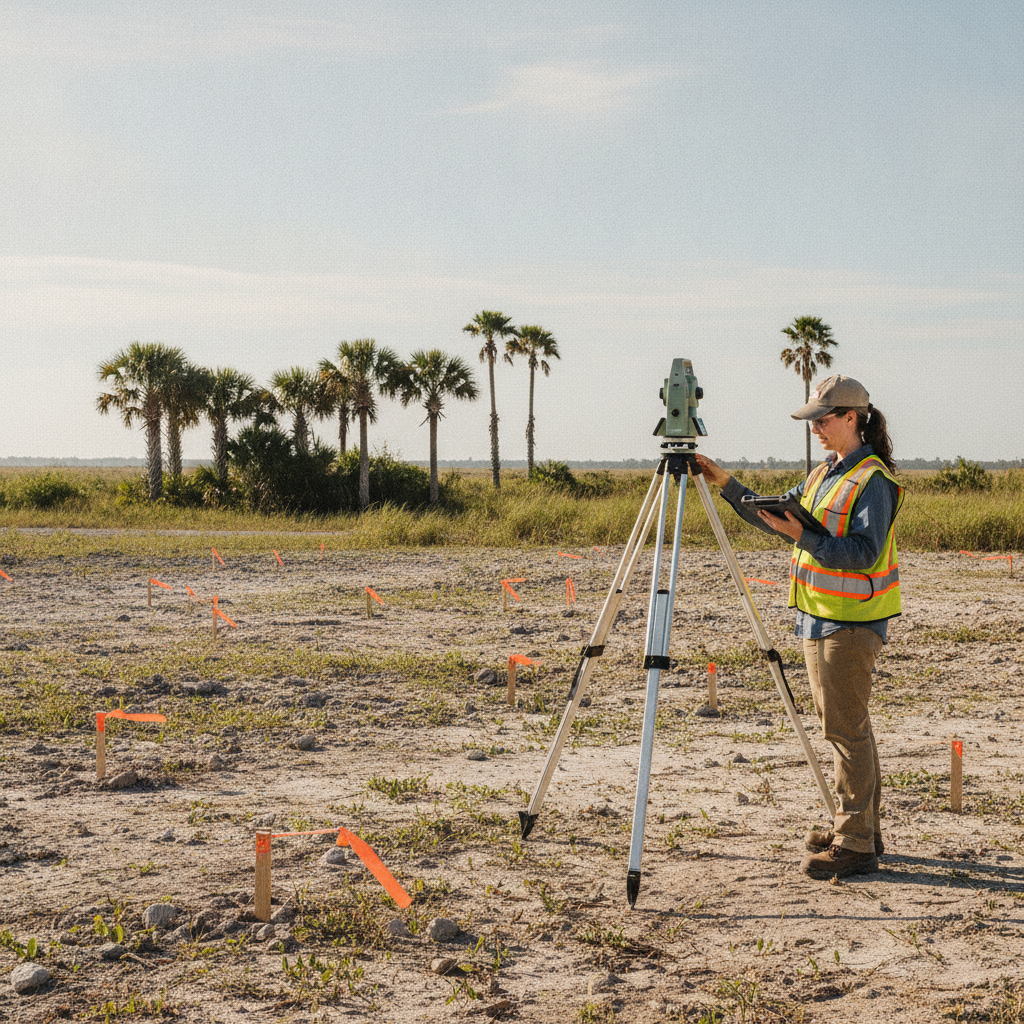
Boundary surveys are essential for defining the legal perimeters of a property. These surveys establish property lines and identify any encroachments or easements that could affect site development. Topographic surveys, on the other hand, provide detailed information about the land’s surface features, including elevations, contours, and existing structures. This data is vital for grading design and drainage design. As-built surveys are conducted post-construction to verify that the completed project aligns with the original plans. These surveys are crucial for ensuring compliance with zoning regulations and for future maintenance or modifications.
The Role of Survey Data in Grading, Drainage, and Utility Design
Survey Types and Their Uses
| Survey Type | Purpose | Application |
|---|---|---|
| Boundary Survey | Defines property lines | Legal documentation, property disputes |
| Topographic Survey | Maps land features | Grading and drainage design |
| As-Built Survey | Verifies construction | Compliance, future modifications |
| ALTA Survey | Comprehensive property survey | Real estate transactions |
| Construction Survey | Guides construction | Building layout, infrastructure placement |
Survey data serves as the foundation for grading design, which involves shaping the land to ensure proper drainage and prevent erosion. Accurate topographic data allows engineers to design effective drainage systems that manage stormwater efficiently, a critical aspect of stormwater management in Florida. Utility design also relies heavily on precise survey data. Engineers use this information to plan the layout of water, sewer, and electrical systems, ensuring they are integrated seamlessly into the overall site plan. Misalignment in survey data can lead to costly errors and delays during construction.
Common Coordination Points Between Engineers and Surveyors
Effective collaboration between engineers and surveyors involves several key coordination points. Initial meetings are crucial for aligning on project goals and timelines. Regular updates and data sharing ensure that both parties are working with the most current information. Engineers and surveyors must also coordinate on control points and datum, which serve as reference points for all subsequent measurements. Any discrepancies in these areas can propagate errors throughout the project, affecting everything from grading to utility placement.
Impact of Misalignment Between Survey and Design
Misalignment between survey data and design plans can have significant repercussions. Errors in boundary surveys can lead to legal disputes, while inaccuracies in topographic data can result in improper grading and drainage issues. Utility misplacement can cause service disruptions and require costly rework. To mitigate these risks, it is essential for engineers and surveyors to maintain open communication and regularly verify data accuracy throughout the project lifecycle.
RSP Engineers’ Approach to Survey Collaboration
At RSP Engineers, we prioritize seamless collaboration with surveyors to ensure the accuracy and success of our projects. Our approach includes: Conducting thorough initial assessments to understand project requirements. Establishing clear communication channels for regular updates and data sharing. Utilizing advanced technology for precise data collection and analysis. Implementing rigorous quality control measures to verify data accuracy.
Common Issues in Survey and Design Coordination
Despite best efforts, several common issues can arise in survey and design coordination: Data discrepancies due to outdated or incorrect survey information. Miscommunication between teams leading to misaligned project goals. Delays in data sharing affecting project timelines. Inadequate verification processes resulting in errors. Addressing these issues requires proactive communication and a commitment to continuous improvement.
Contact RSP Engineers
For expert guidance on site plan design and survey collaboration, contact RSP Engineers. Our team of Florida Licensed Engineers is ready to assist with your site development needs, ensuring accuracy and compliance at every stage of your project.
Conclusion
Effective collaboration between civil engineers and surveyors is essential for successful site development in Florida. By understanding the roles of different survey types and maintaining precise coordination, projects can achieve optimal outcomes with minimized risks. RSP Engineers is committed to providing expert support and ensuring the accuracy of every project we undertake.
FAQs
-
Boundary surveys are crucial for defining property lines and ensuring compliance with legal requirements. They help prevent disputes and guide the placement of structures within the correct boundaries.
-
Topographic data provides detailed information about land elevations and contours, which is essential for designing effective grading plans that manage stormwater and prevent erosion.
-
As-built surveys verify that the completed construction matches the original design plans, ensuring compliance with zoning regulations and facilitating future maintenance or modifications.