
5 Critical Mistakes to Avoid in Florida Land Development Projects
Avoid costly errors in your next Florida land development project. Our civil engineers break down 5 critical mistakes in due diligence, stormwater, permitting, and more.
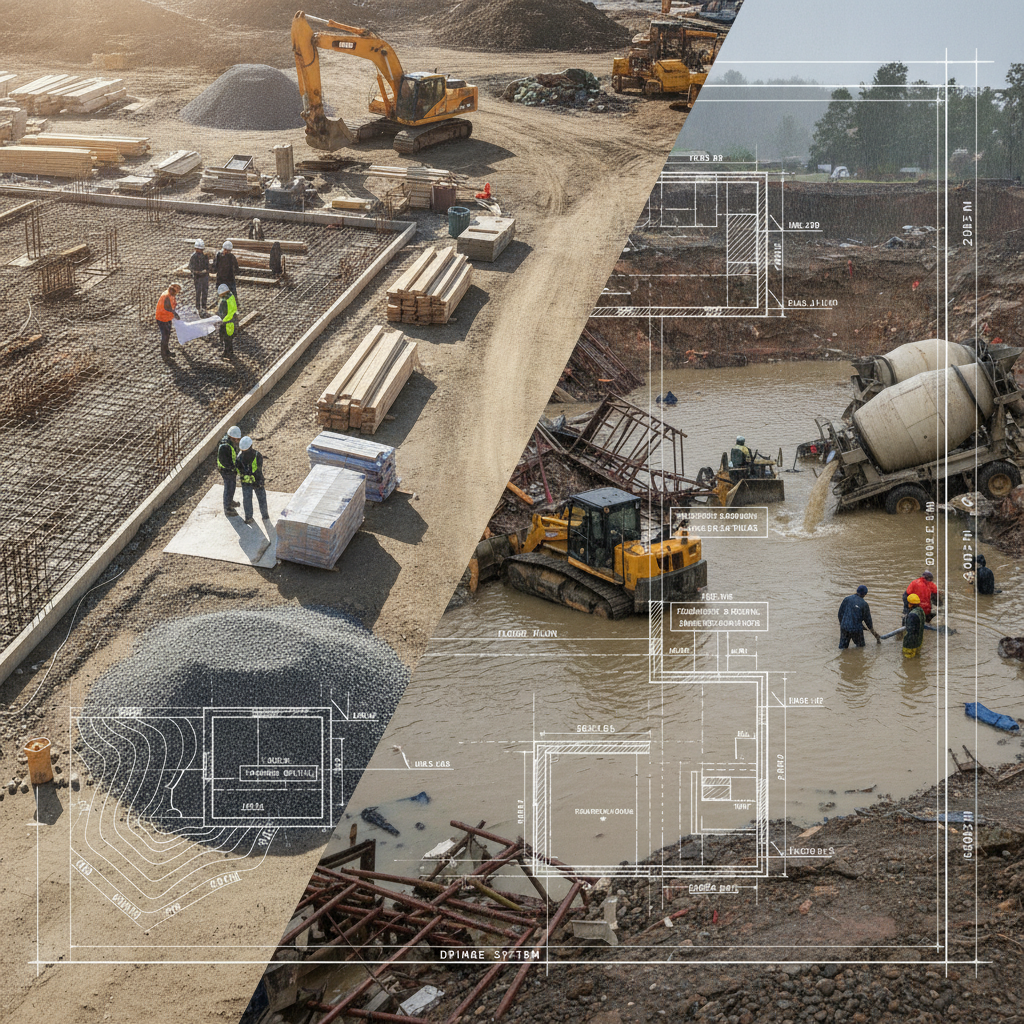
Mistake #1: Insufficient Upfront Due Diligence
The most expensive mistakes are often made before a property is even purchased. Rushing into a deal without comprehensive due diligence is a gamble. A thorough feasibility study should be non-negotiable, providing a clear picture of a site’s development potential and its constraints. This process goes far beyond a simple title search; it involves a deep dive into every aspect of the property that could impact design, cost, and schedule. Key components include verifying zoning compliance, identifying allowable uses, and confirming density or intensity limitations dictated by the local comprehensive plan. A critical part of this phase is the environmental assessment. This includes identifying wetlands, protected species habitats, and potential contamination, all of which can trigger extensive and time-consuming agency review processes with state and federal bodies like the FDEP and Army Corps of Engineers. Furthermore, a boundary and topographic survey is essential to identify easements, rights-of-way, and physical features that will dictate the ultimate site development layout. Ignoring this foundational step is like building a house without inspecting the foundation first.
Mistake #2: Underestimating Florida’s Stormwater Management Requirements
Due Diligence Checklist: Key Investigation Areas
| Investigation Area | Key Considerations for Florida Projects | Potential Costly Outcome if Ignored |
|---|---|---|
| Zoning & Land Use | Verify zoning, FLUM, setbacks, density/FAR, parking ratios, and any overlay district requirements. | Inability to build the desired product, costly variances, or a complete project halt. |
| Environmental | Wetland delineation, protected species survey (gopher tortoise, scrub jay), Phase I ESA for contamination. | Significant loss of usable land, expensive mitigation requirements, and federal permitting delays. |
| Utilities | Confirm capacity and connection points for water, sewer, power, and communications. Identify major transmission lines. | Prohibitive off-site improvement costs, project delays waiting for service, or need for a costly lift station. |
| Stormwater & Drainage | Identify downstream discharge points, flood zone status (FEMA maps), and regional stormwater requirements. | Major redesigns, loss of developable area to large ponds, and inability to obtain an ERP permit. |
| Geotechnical | Analyze soil composition, identify muck or rock, and determine the seasonal high water table. | Unexpected costs for soil correction, deep foundations, or pavement sub-base, leading to major budget overruns. |
| Access & Traffic | Review FDOT/local roadway requirements, sight distance, and need for turn lanes or traffic signals. | Expensive off-site roadway improvements, denial of access permits, and project unviability. |
Florida’s unique hydrology and stringent environmental regulations make stormwater management one of the most complex and costly components of any land development project. Developers often underestimate the land area and construction expense required to comply with state and local water management district rules (e.g., SFWMD, SWFWMD). A successful project requires a sophisticated drainage design that addresses both water quantity (flood control) and water quality (pollutant removal) before discharge. Obtaining an Environmental Resource Permit (ERP) is a major milestone that requires detailed hydraulic and hydrologic modeling to prove no adverse impacts upstream or downstream. This involves designing retention or detention ponds, swales, and sometimes complex underground systems. The design must also account for floodplain encroachment and establish appropriate finished floor elevations to protect future structures. A failure to properly plan for these systems can lead to significant redesigns, loss of developable area, and lengthy delays in the permitting process.
Mistake #3: Neglecting Comprehensive Utility Coordination
A site is only as viable as its access to essential services. A common mistake is assuming that water, sewer, power, and communications are readily available at the property line. Effective utility coordination involves more than just identifying nearby infrastructure; it requires early and continuous communication with service providers to confirm capacity and connection requirements. A water main across the street may not have enough pressure or capacity to serve a new multifamily development, or a nearby sewer line may require a costly lift station to service the project. Securing utility service agreements can be a long process, often taking months. Developers must account for this in their project timeline. Furthermore, identifying the precise location of existing underground utilities through Subsurface Utility Engineering (SUE) is crucial to prevent costly and dangerous conflicts during construction. A well-executed Site plan design integrates utility routing from day one, avoiding redesigns and construction change orders down the line.
Mistake #4: Misinterpreting Zoning Codes and Land Use Plans
Simply confirming a property’s zoning district is not enough. Local zoning codes are complex documents filled with nuanced requirements for setbacks, building height, parking ratios, landscaping, and architectural standards. Overlooking a single requirement can force a complete redesign or require a lengthy and uncertain variance application process. It’s crucial to understand the difference between the zoning code, which governs immediate use, and the Future Land Use Map (FLUM), which dictates long-term development potential. A property may be zoned for commercial use, but if the FLUM designates it for residential, a comprehensive plan amendment may be required for a commercial project—a significant political and procedural hurdle. Developers must also investigate overlay districts, special area plans, and other jurisdictional quirks that can impose additional restrictions. Engaging a civil engineering firm with deep local knowledge is essential to navigate these regulations. A proactive approach to zoning compliance involves meeting with planning staff early to clarify interpretations and identify potential roadblocks before significant design capital is expended.
Mistake #5: Skimping on Geotechnical Investigations
What lies beneath the surface can make or break a project’s budget. Florida’s variable soil conditions, from stable sands to problematic organic mucks, make a thorough geotechnical investigation indispensable. A Geotechnical soil report, prepared by a qualified Geotechnical engineer, provides the critical data needed for designing foundations, pavement sections, and stormwater ponds. This report is based on data gathered from a Soil boring test program across the site. Skipping this step or relying on incomplete data is a recipe for disaster. Unforeseen soil issues can lead to foundation failures, roadway settlement, and massive cost overruns for soil correction or deep foundation systems. The cost of a proper Geotechnical Engineering investigation is a tiny fraction of the potential expense of remediating a problem discovered during construction. This data is fundamental to accurate earthwork calculations, helping to determine if soil must be imported or exported, a major factor in the overall site work budget.
Mistake #6: Creating an Inflexible Site Plan
The initial Site plan design is a critical tool, but it should be viewed as a dynamic document, not a final mandate. A common mistake is falling in love with a specific layout before it has been vetted against all regulatory and physical constraints. An inflexible design cannot adapt to the inevitable surprises that arise during the permitting and detailed design phases. For example, a review comment from the fire marshal may require a wider fire lane, or a newly discovered drainage easement may force a building to be relocated. A successful development process involves creating a conceptual plan that is robust yet adaptable. This requires a civil engineering team that understands how to balance the developer’s vision with the practical realities of code compliance and constructability. Building in contingencies and exploring multiple layout options early on allows the project to absorb changes without triggering a full-scale, budget-busting redesign. This flexibility is key to navigating the agency review process efficiently.
How RSP Engineers Mitigates Development Risks
Our approach is proactive and systematic, designed to identify and solve problems before they impact your budget and schedule. We begin every project with a comprehensive Feasibility and Due Diligence phase, where we perform a deep-dive analysis of all the critical areas mentioned above. This allows us to provide you with a clear, realistic assessment of the project’s viability and a strategic roadmap for navigating the entitlement and permitting process. From there, our team of experienced Civil Engineers develops a conceptual Site plan design that optimizes land use while respecting all known constraints. We manage the entire permitting process, coordinating with all relevant local, state, and federal agencies to secure approvals efficiently. During construction, we provide Construction Management Services and administration to ensure the design is executed correctly and to quickly resolve any issues that arise in the field, protecting your investment from start to finish.
Common Sticking Points in the Permitting Process
Even with perfect planning, the permitting process can present challenges. One common issue is receiving conflicting comments from different review agencies. For example, the fire department may require a specific road width that conflicts with the environmental department’s desire to minimize impervious surfaces. Navigating this requires strong negotiation skills and technical creativity to find a solution acceptable to all parties. Another frequent hurdle is the discovery of unrecorded easements or utilities during the detailed survey and design phase, which can force last-minute layout changes. Similarly, delays from third-party utility providers in providing service agreements or design approvals can stall progress. A seasoned civil engineering firm near me anticipates these potential sticking points and builds contingency time into the project schedule to manage them without causing a cascade of delays.
Your Partner for Successful Florida Development
Navigating the complexities of land development requires more than just a good design; it requires a strategic partner who can anticipate challenges and guide you through Florida’s demanding regulatory environment. Don’t let a preventable mistake jeopardize your investment. The team at RSP Engineers is here to provide the expert guidance you need for your next project. Contact us today to discuss how our site development, stormwater management, and permitting expertise can bring clarity and confidence to your project. Let’s work together to turn your vision into a successful reality.
Conclusion
Successful land development in Florida hinges on a foundation of meticulous due diligence, strategic planning, and expert engineering. By avoiding the critical mistakes of inadequate site investigation, underestimating stormwater management complexity, poor utility coordination, misinterpreting regulations, and skimping on geotechnical analysis, developers can significantly de-risk their projects. A proactive, informed approach is not just best practice—it is essential for navigating the path from raw land to a completed, profitable asset. Ultimately, partnering with an experienced civil engineering firm is the most effective way to ensure all critical factors are addressed from the very beginning, paving the way for a smooth and successful site development process.
FAQs
-
While many factors can cause delays, one of the most significant and common is underestimating the timeline and complexity of the stormwater management and Environmental Resource Permit (ERP) process. Securing this permit from the water management districts often involves multiple rounds of comments and requires extensive, detailed engineering analysis.
-
You should engage a civil engineer during the due diligence phase, before you even close on the property. An experienced engineer can perform a feasibility study that identifies red flags related to zoning compliance, utility availability, environmental constraints, and other critical factors, potentially saving you from a disastrous investment.
-
Yes, it absolutely can. A Geotechnical soil report that reveals extensive unsuitable materials like muck or a very high water table can make a project financially unfeasible. The costs for soil removal, replacement, and specialized foundation design can eliminate any potential profit. This is why a Geotechnical investigation is a critical early step.