
What Sets RSP Engineers Apart? A Deep Dive into Our Florida Civil Engineering Approach
Discover what differentiates RSP Engineers from other Florida civil engineering firms. Explore our proactive approach to permitting, stormwater management, and site development.
Proactive Permitting Strategy vs. Reactive Submittals
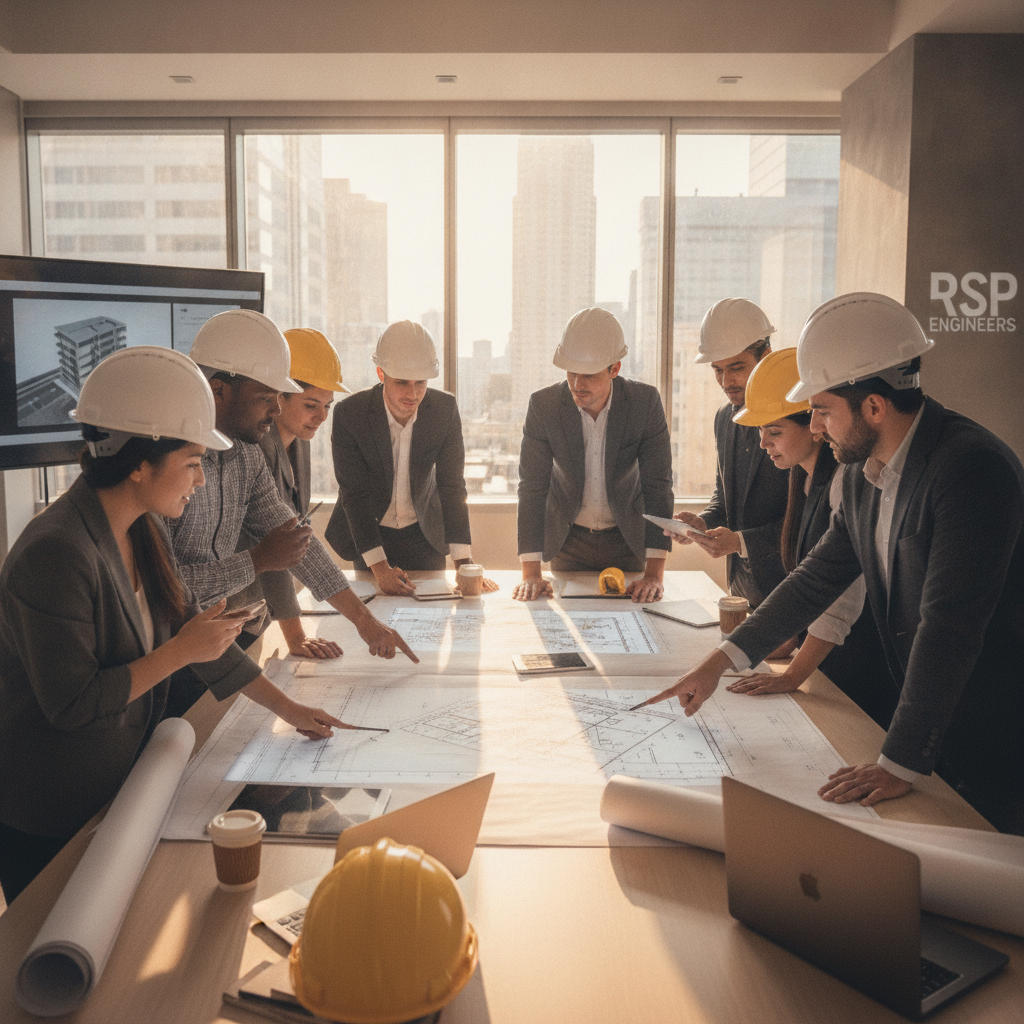
Many engineering processes treat permitting as a final step: design the site, then submit the plans. This often leads to lengthy review cycles, unexpected requests for information (RAIs), and costly delays. Our approach is fundamentally different. We view permitting as an integral part of the design process from day one. This involves early and frequent communication with regulatory agencies, including Water Management Districts, the FDEP, and local municipalities. By engaging in pre-application meetings, we can identify potential red flags and align our design with agency expectations before significant resources are invested. This proactive strategy transforms the permit submittals from a simple transaction into a collaborative narrative. We don’t just submit drawings; we submit a comprehensive package that tells the story of the project, anticipates reviewer questions, and clearly demonstrates how every aspect of the design meets or exceeds regulatory requirements. This meticulous preparation minimizes review comments, accelerates approval timelines, and ensures a smoother path to breaking ground. It’s a critical difference that protects the project schedule and budget from the uncertainty of a protracted agency review.
Integrated Stormwater Management as a Site Amenity
RSP's Proactive Approach vs. Standard Industry Practice
| Project Feature | Standard Industry Approach | RSP Engineers' Enhanced Approach |
|---|---|---|
| Permitting Strategy | Design first, then submit plans to agencies. React to reviewer comments as they come. | Engage agencies with pre-application meetings. Build a comprehensive submittal narrative to preemptively address concerns and accelerate approvals. |
| Stormwater Design | Size and place a pond to meet minimum code requirements, often in a leftover site area. | Integrate stormwater management as a site amenity using LID principles. Optimize land use and enhance property aesthetics. |
| Utility Coordination | Rely primarily on record drawings provided by utility companies. Conflicts are often found in the field. | Mandate early utility coordination and SUE investigation. Resolve vertical and horizontal conflicts during the design phase to prevent construction delays. |
| Value Engineering | Focus on reducing initial material costs, sometimes at the expense of quality or constructability. | Focus on holistic value through constructability reviews, balanced earthwork, and efficient construction sequencing for long-term savings. |
| Client Communication | Communication is often funneled through a junior project manager. Access to senior leadership is limited. | A Professional Engineer and firm principal leads every project, ensuring direct access to experienced decision-makers and consistent oversight. |
| Construction Phase Support | Provide basic responses to RFIs. Site visits may be infrequent or handled by junior staff. | Offer robust Construction Management Services with regular site presence from senior engineers to proactively solve field issues and ensure design intent is met. |
In Florida, stormwater management is non-negotiable. The standard approach is often utilitarian: design a retention or detention pond that meets the minimum storage and water quality requirements, and place it in a leftover corner of the site. At RSP Engineers, we see stormwater infrastructure as an opportunity to add value. Our philosophy centers on integrated design, where drainage systems are woven into the site layout as functional and aesthetic amenities. This can involve using Low Impact Development (LID) techniques, creating beautifully landscaped wet detention ponds that serve as water features, or designing bio-swales that enhance green space. This approach requires a more sophisticated level of drainage design and a deeper understanding of both hydrological engineering and site aesthetics. By treating stormwater systems as part of the overall site experience, we can help developers create more desirable properties while often optimizing land use. An intelligently designed system can reduce the overall footprint required for drainage, freeing up valuable land for development. This method ensures full compliance with Environmental Resource Permit (ERP) criteria while enhancing the project’s marketability and environmental stewardship.
Comprehensive Utility Coordination and Conflict Resolution
One of the most common sources of construction delays and budget overruns is unforeseen utility conflicts. A line and grade shown on an old as-built drawing may not reflect its true location, leading to costly field changes and project standstills. We mitigate this risk through a rigorous utility coordination process that begins during the initial due diligence phase. We go beyond simply requesting record drawings from utility providers; we advocate for early Subsurface Utility Engineering (SUE) investigations to verify the horizontal and vertical locations of critical infrastructure. Our team meticulously maps existing utilities and models the proposed systems—water, sewer, storm, power, and communications—to identify potential clashes long before a shovel hits the ground. This detailed analysis allows for strategic utility relocation planning and ensures our site development plans are based on reality, not assumptions. By resolving these conflicts on paper during the design phase, we save our clients significant time and money during construction, preventing the domino effect of delays that a single utility clash can trigger.
Value Engineering Rooted in Constructability
The term “value engineering” is often misinterpreted as simply cutting costs. Our philosophy is different. For us, true value engineering is about optimizing design for efficiency, longevity, and constructability. It’s about asking critical questions: Can we adjust the grading to balance cut and fill, minimizing soil import/export costs? Is there a more durable or locally sourced material for the storm pipe that offers a better long-term value? Can the phasing of the utility installation be sequenced more logically to reduce construction time? This process is a collaborative effort between our engineers, the client, and the construction team. We perform thorough constructability reviews at key project milestones to ensure our designs are not just theoretically sound, but also practical to build. This focus on real-world application is a hallmark of our site engineering services. By focusing on efficient design, we deliver a project that is not only cost-effective upfront but also less prone to construction issues and more economical to maintain over its lifespan.
The RSP Engineers Project Lifecycle: A Collaborative Framework
Our process is designed for clarity, collaboration, and results. We guide clients through a structured project lifecycle that ensures all critical factors are considered at the appropriate time. It begins with a thorough Due Diligence and Feasibility Study, where we assess zoning compliance, utility availability, and major environmental constraints. This initial phase provides a clear, data-driven understanding of the project’s viability before major design work begins. From there, we move into Conceptual and Preliminary Site Planning, working closely with the client and architect to optimize the layout. This is followed by the detailed Design and Engineering phase, where our team produces construction documents for grading, drainage, utilities, and paving, all while advancing the permitting process in parallel. During the Bidding and Contractor Selection phase, we assist clients in evaluating bids to ensure they are comprehensive. Finally, our involvement continues through the construction administration phase, where we provide oversight, review shop drawings, and help resolve field issues to ensure the project is built according to plan.
Common Pitfalls We Help Developers Avoid
A less experienced or less diligent engineering approach can lead to a host of predictable and costly problems. Our proactive methodology is specifically designed to help our clients avoid these common pitfalls. These include discovering significant wetland impacts late in the design process, leading to major redesigns; receiving multiple rounds of agency review comments that delay the project by months; realizing during construction that the planned utility connections are not feasible; and facing post-construction drainage failures or ADA compliance issues that require expensive remediation. Another frequent issue is a site plan that looks good on paper but is inefficient to build, resulting in budget overruns for earthwork or utility installation. By investing in thorough due diligence, early agency coordination, and detailed constructability reviews, we identify and solve these problems before they can impact the project’s timeline and financial success. Our goal is to deliver a project with no surprises.
Partner with a Proactive Florida Civil Engineering Firm
Your project’s success depends on the expertise and diligence of your engineering partner. Don’t settle for a reactive process that leaves your budget and schedule vulnerable to unforeseen issues. The team at RSP Engineers provides the proactive, principal-led guidance needed to navigate the complexities of Florida land development. Whether you require a comprehensive site plan design, expert stormwater management solutions, or strategic assistance with permitting, we are ready to be your trusted advisor. Contact us today to discuss your project and learn how our distinct approach can bring value and certainty to your next venture.
Choosing the Right Engineering Partner is Your First Critical Decision
In the end, the plans, reports, and permits are deliverables, but the true differentiator is the partnership. Choosing from the many available Civil Engineering firms is a critical decision that will impact every stage of your project. A partnership with RSP Engineers means gaining an advocate dedicated to protecting your interests through meticulous design, strategic foresight, and unwavering technical expertise. Our commitment to proactive permitting, integrated stormwater management, and robust construction administration ensures your vision is realized efficiently, effectively, and successfully.
FAQs
-
Our strategy is built on proactive communication and strong technical justification. We establish professional relationships with agency staff and engage them early. If unexpected comments arise, we analyze their technical basis, provide clear and concise data to support our design, and seek a collaborative solution. Our deep knowledge of Florida regulations allows us to effectively navigate the agency review process.
-
We focus on smart design rather than cheap design. This means optimizing the site layout to balance earthwork, selecting appropriate materials for long-term durability, and ensuring the drainage design is efficient and maintainable. Our goal is to reduce lifetime project costs, not just initial construction costs, ensuring quality and functionality are never sacrificed.
-
As early as possible, preferably during the property evaluation or due diligence phase. Early engagement allows us to identify potential fatal flaws, assess utility coordination needs, and provide realistic feedback on development potential before you commit to a purchase. This initial investment can save you from significant financial loss down the road.