
Top Data Center Permit Delays and How to Avoid Them
A guide by RSP Engineers on the top data center permit delays in Florida, covering utility coordination, stormwater, zoning, and FDEP rules to streamline your project.
Utility Coordination and Capacity Confirmation
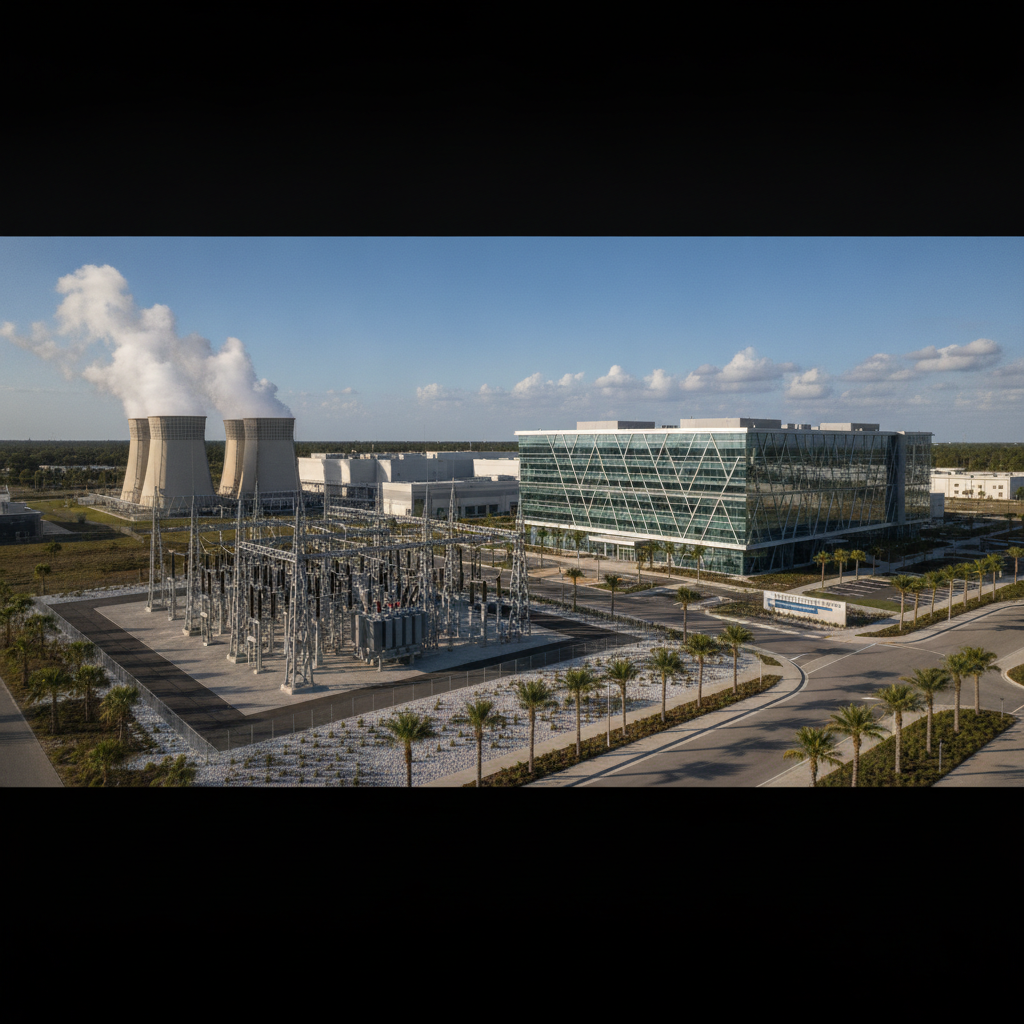
The single greatest long-lead item and potential point of failure for a data center project is securing adequate utilities. A data center’s thirst for power and water is immense, often equivalent to that of a small town. Early and persistent engagement with utility providers is not just recommended; it’s critical. This process begins with a detailed utility capacity analysis to determine if the existing grid and water systems can handle the proposed load. Developers must secure formal commitments, often in the form of power load letters and water/sewer capacity reservation letters, well before site design is finalized. Delays frequently occur when a project’s needs exceed available infrastructure, triggering the need for costly and time-consuming off-site improvements like new substations or main line extensions. A thorough due diligence process must include confirming the physical location and capacity of electrical feeds, water mains, and fiber optic infrastructure. Waiting until the formal site plan design is underway to confirm utility availability is a recipe for significant schedule setbacks and budget overruns. Proactive coordination ensures that utility requirements drive the initial site selection and layout, not the other way around.
Stormwater Management and ERP Permitting
Key Agency Review Timelines for Florida Data Center Projects
| Agency / Authority | Primary Permit / Approval | Typical Review Cycle | Key Submission Documents |
|---|---|---|---|
| Local Municipality (City/County) | Site Plan Approval / Building Permit | 60-120 days | Full civil engineering plans, architectural drawings, traffic study, utility plans. |
| Water Management District (WMD) | Environmental Resource Permit (ERP) | 90-180 days | Stormwater management report, drainage calculations, hydraulic models, environmental assessment. |
| Florida DEP (FDEP) - Air Division | Air Construction Permit | 60-90 days | Emission calculations, generator specifications, application forms, statement of compliance. |
| Primary Electric Utility | Power Availability / Service Agreement | 120+ days | Load letter request, one-line diagrams, site plan, projected power demand curve. |
| Florida DOT / County Public Works | Access / Right-of-Way Permit | 90-150 days | Traffic impact study, access design plans, drainage connection plans, maintenance of traffic (MOT) plans. |
Data centers, with their massive building footprints and extensive paved areas for equipment and access, create vast expanses of impervious surface. In Florida, this directly triggers stringent stormwater management regulations enforced by the state’s Water Management Districts (WMDs). Obtaining an Environmental Resource Permit (ERP) is a non-negotiable milestone that requires sophisticated engineering and detailed hydraulic modeling. The design must address water quality treatment, peak discharge attenuation, and floodplain compensation, all based on precise impervious surface calculations. Permit delays in this area often stem from incomplete applications or designs that fail to meet the WMD’s rigorous standards. Review agencies scrutinize every aspect of the drainage design, from pond siting and outfall structures to maintenance access and water quality treatment mechanisms. A common pitfall is underestimating the land area required for stormwater ponds, which can force a complete redesign of the site layout late in the process. Engaging a Drainage engineer near me who is an expert in local WMD criteria is essential for developing a compliant and efficient stormwater system that withstands regulatory review and protects the surrounding environment.
Zoning, Land Use, and Special Use Permits
Finding a parcel with appropriate zoning for a data center can be a significant challenge. These facilities are unique hybrids—part industrial, part utility—and often don’t fit neatly into standard zoning classifications. This ambiguity frequently necessitates a lengthy and uncertain process to secure zoning compliance, which may involve a rezoning, a land use plan amendment, or a special use permit. Each of these paths involves public hearings, planning commission reviews, and final approval from elected officials, introducing elements of political and community risk. A primary cause of delay is a mismatch between the project’s operational needs (like noise from generators or the visual impact of the structure) and the expectations of the local comprehensive plan or adjacent land uses. A thorough zoning analysis during the site selection phase is critical to identify potential hurdles. Success requires a proactive strategy that includes early engagement with local planning staff, clear communication with stakeholders, and a robust application that demonstrates comprehensive plan consistency and mitigates potential community impacts. Without this foresight, a project can easily become entangled in months of contentious public hearing requirements.
Environmental and Geotechnical Due Diligence
Unforeseen site conditions are a classic source of project delays, and data centers are particularly sensitive to them. Before closing on a property, comprehensive environmental and geotechnical due diligence is paramount. A Phase I ESA is the first step to identify potential contamination from prior land uses. If recognized environmental conditions are found, a Phase II investigation involving soil and groundwater sampling may be required, adding significant time and cost. Furthermore, a wetland delineation is crucial in Florida to identify and avoid impacts to jurisdictional wetlands, which can trigger complex and lengthy federal and state permitting processes. Simultaneously, a thorough Geotechnical Engineering investigation is required to ensure the ground can support the massive, vibration-sensitive structures. This involves performing a Soil boring test to create a detailed geotechnical soil report that informs foundation design. Discovering poor soil conditions, a high water table, or subsurface rock late in the design process can force a complete re-engineering of the foundation and site grading, leading to major delays and cost increases. Identifying any threatened and endangered species surveys requirements early is also critical to avoid conflicts with state and federal wildlife regulations.
FDEP Permitting for Backup Power Systems
The operational reliability of a data center hinges on its backup power systems, which typically consist of large diesel-powered generators. These generators are a source of air pollutants and are regulated by the Florida Department of Environmental Protection (FDEP). Any facility with the potential to emit certain pollutants above established thresholds must obtain an FDEP air permit before construction can begin. This is an often-overlooked permit that can bring a project to a halt if not addressed early. The permitting process requires detailed calculations of potential emissions, an evaluation of the proposed emission control technology, and a demonstration of compliance with all applicable state and federal air quality standards. Delays can arise from incomplete applications, incorrect emissions calculations, or failure to adhere to specific standby generator regulations. The FDEP review process has its own timeline, independent of local building permits, making it essential to initiate the notice of intent and application process as early as possible to prevent it from becoming a critical path delay.
Traffic and Access Management
While the daily operational traffic for a data center is typically low, the construction phase generates a significant volume of heavy truck traffic. Local and state transportation agencies require a detailed plan to manage this impact. Depending on the project’s scale and location, a formal traffic impact analysis may be required to evaluate the effect on the surrounding road network. This study forms the basis for designing access points, turn lanes, and other required roadway improvements. Securing the necessary FDOT access permits or local driveway connection permits can be a lengthy process, especially if the project fronts a major state highway. The design must meet strict geometric and safety standards, and any work within the public right-of-way requires a separate right-of-way utilization permit. A comprehensive construction logistics planning effort is needed to coordinate material deliveries and worker access without disrupting public traffic. Failing to account for these transportation-related permits and approvals early in the schedule is a common oversight that can delay the start of construction.
RSP Engineers’ Proactive Permitting Strategy for Data Centers
At RSP Engineers, our approach is built on proactive management to mitigate the risks of delays. We begin every data center project with a comprehensive due diligence and feasibility study, identifying all potential permitting pathways and critical-path items from day one. Our process emphasizes early and frequent pre-application meetings with all jurisdictional agencies—from the local planning department to the WMD and FDEP. This allows us to build consensus, clarify review expectations, and identify potential issues before they result in formal review comments. Our integrated team of Civil Engineers works in parallel, ensuring that the site plan design, drainage, and utility plans are cohesive and mutually supportive. We prepare meticulous and complete permit submittals, anticipating agency questions and providing clear, defensible engineering. By managing the entire permitting lifecycle, from initial application to final sign-off, we provide our clients with schedule certainty and a clear path to construction, making us one of the most effective Civil Engineering firms for complex projects.
Navigating Common Data Center Permitting Pitfalls
Even with a solid strategy, pitfalls exist. One of the most common issues is underestimating the lead time for high-capacity utility infrastructure, particularly substation upgrades, which can take 18-24 months. Another frequent problem is submitting an incomplete ERP application with insufficient data, which immediately stops the review clock and can add months to the timeline. Failing to properly address community concerns during zoning hearings, such as noise from cooling units or backup generators, can also lead to unexpected opposition and delays. Finally, a lack of coordination between the civil, architectural, and MEP (Mechanical, Electrical, Plumbing) designs can result in conflicting plans that trigger extensive comments from plan reviewers, forcing costly and time-consuming revisions.
Partner with RSP Engineers to Streamline Your Data Center Development
The complexities of data center development in Florida demand an engineering partner with specialized expertise and a proactive mindset. RSP Engineers provides the comprehensive site engineering services needed to navigate these challenges. Our team of Florida Licensed Engineers excels at managing complex utility coordination, designing resilient stormwater systems, and steering projects through the intricate permitting process. From initial feasibility and site development Orlando to final construction, we are your strategic ally. Contact us today to discuss how we can bring certainty and efficiency to your next mission-critical project.
Building the Future: Overcoming Permitting Hurdles for Data Centers
Successfully navigating the permitting landscape for a data center in Florida is a complex but achievable goal. The keys to avoiding costly delays are comprehensive due diligence, early and continuous agency engagement, and an integrated design approach. By addressing critical items like utility capacity analysis, stormwater management, and zoning compliance at the outset, developers can establish a predictable and efficient path to construction. Partnering with an experienced civil engineering firm near me that understands the unique demands of these facilities is the most effective way to mitigate risk and ensure your project’s success in Florida’s competitive market.
FAQs
-
You should engage a Civil Engineer near me during the site selection phase, even before you go under contract. An experienced engineer can perform critical due diligence on zoning, utility availability, and environmental constraints, helping you avoid sites with fatal flaws and providing a realistic understanding of the site development timeline and costs.
-
Utility coordination is consistently the biggest hurdle. Securing firm commitments for the massive power and water capacity required by a data center involves long lead times and complex negotiations with utility providers. Any required off-site infrastructure upgrades can add more than a year to the project schedule if not identified and planned for at the very beginning.
-
Yes, often they do. The significant water demand for cooling systems can trigger the need for a Water Use Permit (WUP) from the regional Water Management District. This is a separate and distinct process from the ERP for stormwater management and requires a detailed analysis of water needs and conservation measures.