
Right-of-Way Permits for Data Center Utility Connections
A guide for data center developers on securing right-of-way (ROW) and encroachment permits for critical utility connections. Learn about traffic control, pavement restoration, and agency coordination.
Understanding Right-of-Way and Encroachment Permits
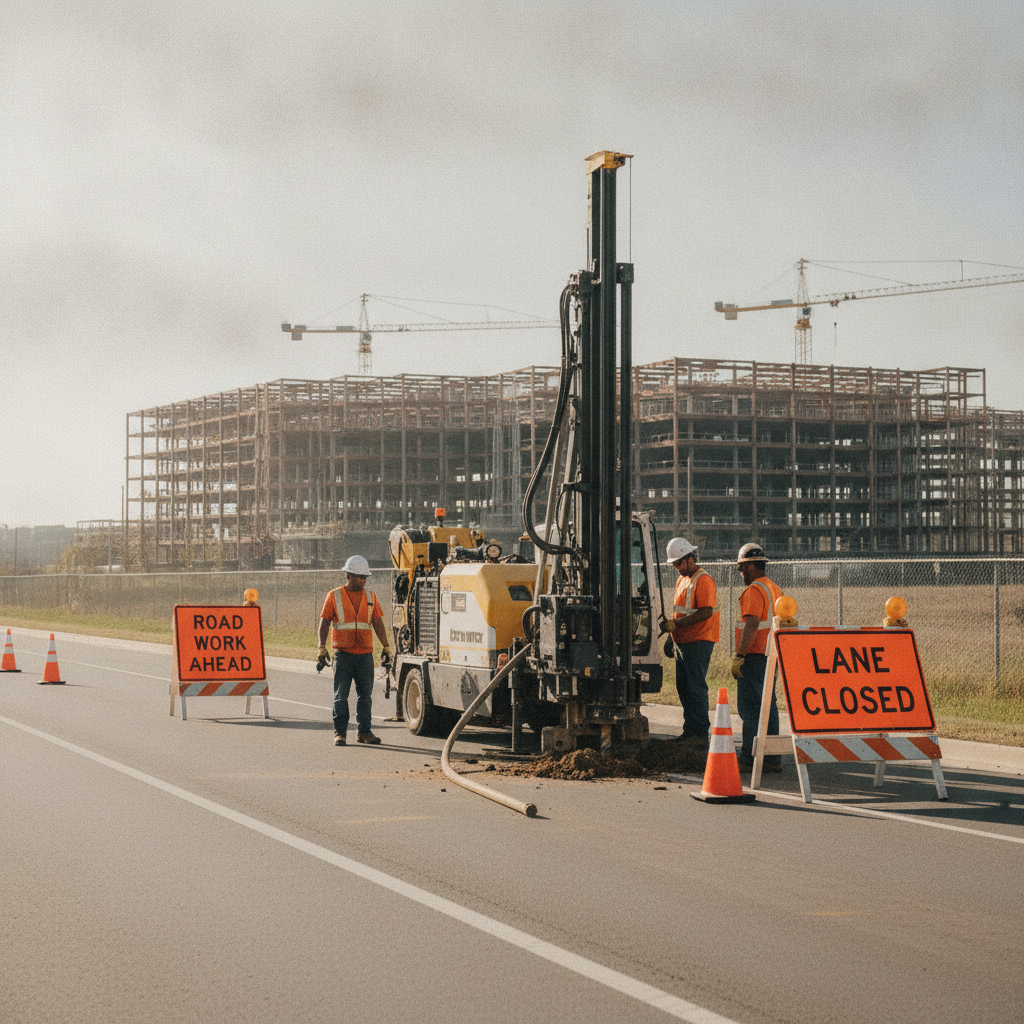
The public right-of-way is the land, typically owned by a public entity, dedicated to transportation and public utility infrastructure. This includes roadways, sidewalks, and the adjacent strips of land containing underground and overhead utilities. Any private entity seeking to install, repair, or maintain infrastructure within this corridor must first obtain an encroachment permit, sometimes called a street opening permit or utility permit. This permit grants temporary, conditional permission to perform work that impacts public assets. The primary goal of the governing roadway authority is to protect the public’s investment in its infrastructure, ensure public safety, and minimize disruption. Therefore, the permit application requires a detailed demonstration of how the proposed work will be executed and how the public ROW will be restored to its original condition or better. This involves submitting comprehensive civil engineering plans, specifications, and supporting documents that address everything from traffic management to pavement reconstruction.
The Critical Role of Traffic Control Plans
Key Considerations for ROW Utility Permit Applications
| Permit Component | Typical Requirement | Impact on Data Center Schedule |
|---|---|---|
| Traffic Control Plan (TCP) | Engineered drawings showing lane closures, signage, and detours compliant with federal and local standards. | High. Agency review can be lengthy, and complex TCPs may require significant lead time for equipment and personnel. |
| Utility Coordination | Proof of coordination with all existing utility owners within the ROW. Often requires a Subsurface Utility Engineering (SUE) investigation. | High. A conflict with a major transmission line (gas, fiber) can force a complete redesign and add months to the schedule. |
| Pavement Restoration Plan | Detailed specifications for backfill, compaction, and pavement section replacement. May require a pre-construction pavement condition survey. | Medium. If open-cut is required, sourcing specified materials and performing required testing can impact construction sequencing. |
| Geotechnical Data | For trenchless methods, a Geotechnical soil report from a Geotechnical engineer showing soil stratigraphy, rock presence, and groundwater levels along the bore path. A Soil boring test is standard. | High. Unforeseen rock or poor soil conditions discovered late can render a trenchless design infeasible, forcing a major project pivot. |
| Bonding & Insurance | A performance bond to guarantee work completion and restoration, plus proof of significant liability insurance coverage. | Low-Medium. Primarily a financial and administrative step, but securing large bonds can require lead time. |
| Dewatering Plan | If excavation will encounter groundwater, a plan for managing and legally discharging the water is required. | Medium. May trigger separate environmental permits and require specialized equipment, impacting cost and schedule. |
No work can occur in a public roadway without a robust plan for managing traffic safely and efficiently. A Traffic Control Plan (TCP), also known as a Maintenance of Traffic (MOT) plan, is a fundamental component of any right-of-way permit application. These plans detail the specific placement of signs, cones, barrels, and flaggers needed to guide vehicles, cyclists, and pedestrians safely around the work zone. The design must adhere to federal standards, such as the Manual on Uniform Traffic Control Devices (MUTCD), as well as any specific local requirements. The complexity of the TCP depends on the roadway’s classification, traffic volume, and the extent of the work. A simple utility bore might require a short-term shoulder closure, while a major open-cut installation across an arterial road could necessitate a multi-phase lane closure with detours lasting several days. Permitting requirements vary by jurisdiction, and every project team should confirm the applicable standards with the local, state, regional, and federal authorities that hold review authority over the site. The agency review of a TCP is rigorous, as public safety is the highest priority for the roadway authority.
Pavement Restoration and Moratoriums
When an open-cut excavation is necessary, the roadway authority’s primary concern is the long-term integrity of the pavement. The permit will include highly detailed pavement restoration specifications, often requiring the restored trench to be stronger than the surrounding roadway to prevent future settlement. This typically involves specific requirements for backfill material, lift thickness, and compaction testing, all of which must be documented by a qualified technician. A significant schedule risk that developers must investigate during due diligence is the existence of a pavement moratorium. Many jurisdictions impose a moratorium on cutting into newly paved or reconstructed roads, often for a period of three to five years. If a critical utility connection must cross a road under moratorium, the project may face a multi-year delay unless a compelling case can be made for an exception or a trenchless installation method is feasible. Identifying these constraints early is essential for accurate site development planning.
Trenchless vs. Open-Cut Installation Methods
The method of utility installation has major implications for the permitting process. The two primary approaches are open-cut trenching and trenchless technology. Open-Cut Trenching: This traditional method involves excavating a trench to lay the utility conduit. While often more cost-effective for shallow installations, it causes significant surface disruption, requires more extensive traffic control, and involves complex pavement restoration. It is often prohibited across major arterial roads. Trenchless Technology: Methods like horizontal directional drilling (HDD) or jack-and-bore allow utilities to be installed underground without disturbing the surface. This is the preferred method for crossing major roadways, environmentally sensitive areas, or roads under a pavement moratorium. While it minimizes disruption, it requires specialized equipment and a thorough geotechnical investigation to understand subsurface conditions like rock or a high water table. The permit application for a trenchless installation must include a detailed profile view of the bore path, showing clearance from all existing utilities.
Navigating Utility Coordination and Agency Review
A public right-of-way is a crowded space. Before any excavation, the project applicant must identify and coordinate with every existing utility owner in the vicinity of the proposed work. This process, often formalized through the state’s 811 “Call Before You Dig” system, is just the starting point. For complex projects, a comprehensive Subsurface Utility Engineering (SUE) investigation is often necessary to precisely locate horizontal and vertical positions of existing infrastructure. This data is crucial for avoiding catastrophic utility strikes during construction. The permit submittals are reviewed by multiple departments within the governing authority, including traffic engineering, public works, and sometimes environmental compliance. Each reviewer may provide comments that require design revisions. This iterative agency review process can take weeks or months, and proactive communication managed by an experienced civil engineering consultant is key to keeping the application moving forward and avoiding unnecessary delays in the project’s critical path.
Bonding, Insurance, and Inspection Requirements
To protect the public interest, roadway authorities require financial guarantees before issuing a permit. A performance bond is typically required, which acts as a financial guarantee that the work will be completed according to the approved plans and the ROW will be properly restored. If the permittee fails to do so, the agency can draw on the bond to hire another contractor to finish the job. Additionally, significant liability insurance is mandatory to cover any potential damage or injury. Once work begins, it is subject to rigorous oversight. The roadway authority will deploy inspectors to the site to verify that all work, from traffic control setup to final pavement marking, complies with the permit conditions. The contractor must coordinate these inspections at critical milestones, such as before backfilling a trench or pouring concrete. Failure to pass an inspection can result in a stop-work order until the deficiency is corrected, adding further pressure to the construction administration phase.
How RSP Engineers Manages the ROW Permitting Process
At RSP Engineers, we treat right-of-way permitting as a critical engineering discipline, not an afterthought. Our approach is built on proactive management and technical diligence to de-risk our clients’ data center projects. Early Due Diligence: We begin by identifying all governing roadway authorities and researching their specific codes, standards, and potential moratoriums. We establish contact with agency staff early to understand their expectations. Comprehensive Application Packages: Our team of Civil engineers prepares complete and detailed permit submittals, including high-quality engineering plans, traffic control designs, and all necessary supporting documentation to minimize review comments and accelerate approval. Proactive Agency Coordination: We manage all communication with the reviewing agencies, providing timely responses to comments and facilitating meetings to resolve complex issues before they become sources of delay. Construction Phase Support: We provide Construction Management Services, assisting clients and their contractors with coordinating pre-construction meetings, scheduling inspections, and managing the final closeout and bond release process.
Common Issues and Delays in ROW Permitting
Even with careful planning, challenges can arise. Developers should be aware of common pitfalls that can delay utility connections. These include discovering unmapped utilities during excavation, encountering unexpected subsurface conditions like rock that halt boring operations, and receiving last-minute requirements from a utility owner. Other issues include delays in the fabrication of long-lead utility materials or contractor scheduling conflicts. A seasoned civil engineering firm can help anticipate these risks and build appropriate contingencies into the project schedule.
Your Partner for Mission-Critical Infrastructure Permitting
Successfully navigating the complexities of right-of-way permitting is essential for bringing a data center online. Delays in utility connections can have cascading effects on the entire construction schedule and budget. The RSP Engineers team has the nationwide experience to manage this critical process effectively. From initial due diligence and site development strategy to detailed utility coordination and securing final permit approval, we provide the expert guidance needed to keep your project on track. Partner with us to manage your project’s permitting and public infrastructure challenges.
Conclusion
The process of securing a right-of-way permit for data center utility connections is a complex but manageable challenge. Success hinges on early planning, thorough due diligence, technical excellence in engineering design, and proactive communication with all stakeholders. By understanding the requirements for traffic control, pavement restoration, and utility coordination, developers can mitigate risks and avoid costly delays. Engaging an experienced civil engineering partner is the most effective strategy to ensure these critical off-site improvements are executed seamlessly, paving the way for a timely and successful project delivery.
FAQs
-
The timeline varies significantly based on the complexity of the work and the jurisdiction’s review process. A simple permit might take 4-6 weeks, while a complex permit involving a major arterial roadway and multiple agency reviews could take 6 months or more. Proactive planning and a complete initial permit submittal are key to a faster approval.
-
A pavement moratorium is a restriction placed by a roadway authority that prohibits cutting into a newly paved road for a set period, often 3-5 years. If your data center’s utility path must cross a road under moratorium, you may be required to use more expensive trenchless technology or face a multi-year delay until the moratorium expires.
-
Absolutely not. Working in the public right-of-way without an approved permit is illegal and will result in immediate stop-work orders, significant fines, and potential legal action. It can also damage the project’s relationship with the governing authority, making future approvals more difficult.