
Navigating South Florida’s Landscape Code: A Civil Engineer’s Guide to Compliance
A guide for developers on navigating complex landscape code compliance in South Florida cities. Learn about tree preservation, irrigation, and permitting with RSP Engineers.
The Intersection of Civil Engineering and Landscape Architecture
Successful site development in Florida requires breaking down the silos between civil engineering and landscape architecture. A landscape plan cannot be developed in a vacuum; it is intrinsically linked to the site’s grading, drainage, and utility infrastructure. The location of a large shade tree, for example, is dictated by underground utility coordination and its potential impact on foundations and paved surfaces. Similarly, the grading of a site, a core civil engineering task, determines how water flows, which directly influences plant selection and the design of swales or rain gardens. This integration is most critical in the context of stormwater management. Modern landscape design often incorporates Low Impact Development (LID) principles, where landscape features are active components of the drainage system. Permeable pavers, vegetated swales, and bioretention areas are all landscape elements that must be precisely engineered to handle specific rainfall volumes. These features reduce runoff, improve water quality, and are essential for meeting the stringent requirements of Environmental Resource Permits (ERPs). A Professional Engineer must ensure these elements are correctly calculated and detailed in the overall drainage design.
Decoding Tree Preservation and Relocation Ordinances
Comparison of Landscape Code Requirements: Miami-Dade vs. Broward County
| Feature | Miami-Dade County (Typical Requirement) | Broward County (Typical Requirement) | Engineering & Permitting Consideration |
|---|---|---|---|
| Minimum Tree Canopy Coverage | Typically 20% for residential, 15% for commercial, calculated over the entire net lot area. | Often requires 1 tree per 2,500 sq. ft. of open space, with specific spacing requirements. | This directly impacts site layout and building footprint. Early calculation is critical for the site plan design. |
| Specimen Tree Protection | Protects trees with a trunk diameter (DBH) of 18 inches or greater, with stricter rules for certain native species. | Generally protects trees with a DBH of 12 inches or greater, and has a broader list of regulated species. | Requires a more cautious approach in Broward. A detailed tree survey is non-negotiable for permitting. |
| Parking Lot Interior Landscaping | Requires one landscaped island for every 10 parking spaces, with specific tree and shrub counts per island. | Mandates landscape areas equivalent to 10% of the total paved area, with flexible island configurations. | Affects parking efficiency and requires careful layout to meet both parking counts and green space rules. Impacts drainage design. |
| Irrigation System Requirements | Mandates soil moisture sensors or evapotranspiration-based controllers. Strong emphasis on reclaimed water use where available. | Requires a rain sensor on all automatic systems and encourages low-volume irrigation. | Impacts utility coordination and long-term operational costs. Must be detailed in the permit submittal. |
| Native Plant Percentage | Often requires at least 50% of trees and 25% of shrubs to be native to South Florida. | May require up to 75% of the total plant material to be native or from a Florida-Friendly list. | Affects plant sourcing, budget, and the aesthetic of the project. Must be clearly documented for zoning compliance. |
| Foundation Planting | Requires continuous planting beds along building frontages, typically 5-10 feet wide. | Similar requirement, but may specify planting heights to maintain visibility for safety (CPTED principles). | Must be coordinated with building egress, window locations, and underground utilities. |
South Florida municipalities have some of the most stringent tree preservation ordinances in the country. Before any site work begins, a comprehensive tree survey performed by a licensed surveyor and often assessed by a certified arborist is required. This survey identifies all existing trees, their species, and their size, paying special attention to “specimen” or “champion” trees, which are granted the highest level of protection. The removal of such a tree, if permitted at all, can trigger exorbitant mitigation fees and replacement requirements, significantly impacting the project budget. This is a critical step in achieving zoning compliance. The civil engineering team must design the site layout—including buildings, parking, and utilities—around these protected trees. This requires creative problem-solving to meet development goals while avoiding protected root zones. In cases where a protected tree must be moved, the process of tree relocation is a highly technical and expensive undertaking that requires specialized contractors and detailed plans for root pruning, transport, and re-establishment. Ignoring these ordinances is not an option and can lead to stop-work orders and severe penalties during the agency review process.
Irrigation Design: Balancing Water Conservation and Code Requirements
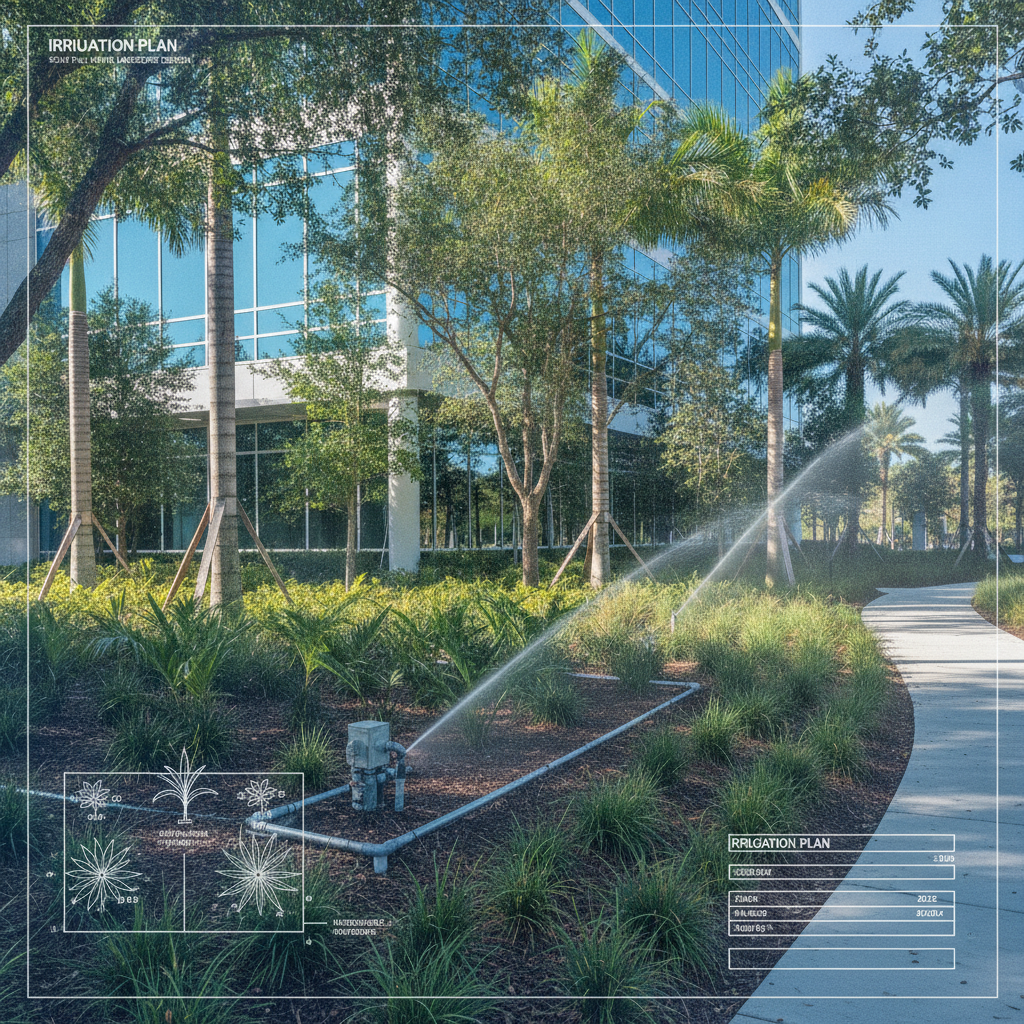
An irrigation plan is a mandatory component of any landscape permit submittal in South Florida. These plans are heavily scrutinized for water conservation measures, reflecting the region’s delicate water resources. Regulations from the South Florida Water Management District (SFWMD) and local ordinances typically mandate the use of high-efficiency equipment, such as low-volume sprinkler heads, drip irrigation for plant beds, and smart controllers with rain sensors that automatically shut the system off during and after a storm. This is a key aspect of sustainable site development. Effective irrigation design is also a matter of proper drainage design. An over-designed or poorly calibrated system can lead to waterlogged soils, creating localized flooding and placing stress on the stormwater infrastructure. Furthermore, the design must account for the varying water needs of different plant zones, such as turf areas versus native planting beds. Proper utility coordination is also essential to ensure the irrigation water lines do not conflict with other underground utilities like sewer, water, or communications conduits.
Native Plant and Xeriscaping Mandates
Many South Florida cities have moved beyond simple beautification and now mandate the use of native plants and Florida-Friendly Landscaping™ principles. These ordinances often specify a minimum percentage of the total landscaped area that must be covered with drought-tolerant, native species. The goal is to create sustainable landscapes that thrive in the local climate with minimal water, fertilizer, and pesticide use. This approach is a cornerstone of modern land development and is heavily favored during the permitting process. From a developer’s perspective, this requires careful plant selection and sourcing. The landscape plan must include a detailed plant list with both common and botanical names, sizes, and quantities, proving that the design meets the required native percentage. While these landscapes are lower maintenance in the long run, they require a specific establishment plan to ensure they thrive initially. The civil engineering plan must support this with appropriate soil specifications and grading that mimics natural conditions where possible, enhancing the project’s overall ecological function and zoning compliance.
Pervious vs. Impervious Surfaces: The Landscape’s Role in Stormwater Calculations
Every square foot of a development site is classified as either pervious (allowing water to soak in) or impervious (shedding water). This ratio is a fundamental calculation in civil engineering, as it determines the volume of runoff the stormwater management system must handle. Landscaped areas are the primary source of pervious surface on a site, and their design is critical to meeting local code requirements that often cap the allowable percentage of impervious coverage. Maximizing pervious area is a key strategy for efficient drainage design. This can be achieved through thoughtful landscape planning that minimizes unnecessary pavement and incorporates green infrastructure. Techniques like using permeable pavers in low-traffic areas, designing vegetated swales instead of concrete channels, and preserving open green space all contribute to reducing runoff. These decisions, made during the initial site plan design phase, have a significant impact on the size and cost of the required stormwater ponds and underground infrastructure.
Parking Lot Landscaping and ADA Compliance
Commercial and multifamily development codes in South Florida have highly specific requirements for parking lot landscaping. These rules mandate interior landscape islands, terminal islands at the end of parking rows, and foundation plantings to break up the visual monotony of large paved areas and mitigate the urban heat island effect. The dimensions, number of trees and shrubs per island, and curb requirements are all precisely defined in the zoning code. Failure to meet these standards is a common reason for the rejection of a site plan design. Furthermore, these landscaped areas must be designed in concert with pedestrian circulation and ADA compliance requirements. Walkways through parking islands must be wide enough for wheelchair access, and tree placement cannot create overhead clearance issues or obstruct accessible paths of travel. The grading within these islands must also be carefully managed to ensure proper drainage without creating tripping hazards, blending aesthetic goals with critical safety and accessibility standards.
RSP Engineers’ Approach to Integrated Landscape Compliance
At RSP Engineers, we treat landscape compliance as an integral part of the civil engineering process, not a final decorative step. Our approach begins with a meticulous review of local zoning and landscape codes during the due diligence phase. We collaborate closely with landscape architects from the project’s inception to ensure their creative vision aligns with the technical constraints of the site, including drainage design, grading, and utility coordination. Our process involves creating a unified set of construction documents where the civil and landscape plans are perfectly synchronized. This prevents conflicts in the field and streamlines the agency review process. By anticipating potential comments from city planners and environmental departments, we prepare a robust permit submittal package that demonstrates comprehensive compliance. This proactive, integrated strategy minimizes requests for information (RFIs), reduces review cycles, and accelerates the timeline to project approval.
Common Pitfalls in South Florida Landscape Permitting
Even experienced developers can encounter setbacks during the landscape permitting process. One of the most common issues is an inaccurate or outdated tree survey, which can lead to the unexpected discovery of a specimen tree mid-design, forcing a costly redesign. Another frequent problem is a disconnect between the landscape plan and the civil drawings; for example, planting a large tree directly over a proposed sewer line, a clear failure of utility coordination. Other pitfalls include failing to meet minimum open space or canopy coverage percentages, using plants from a prohibited or invasive species list, or submitting an irrigation plan that doesn’t meet water conservation standards. These errors often result from treating landscaping as an afterthought. A delayed or rejected permit can have a cascading effect, pushing back construction start dates and impacting financing. Proper integration with a knowledgeable civil engineering firm near me is the best way to avoid these preventable mistakes.
Partner with RSP Engineers for Seamless Landscape Code Compliance
Don’t let the complexities of South Florida’s landscape codes put your project at risk. The team at RSP Engineers provides the expert guidance needed to integrate landscape compliance with all other aspects of your project. We specialize in comprehensive site development services, from initial due diligence and zoning compliance analysis to final permitting and construction administration. Our deep experience with local regulations ensures your project’s landscape plan is not only compliant but also enhances your site’s functionality and value. Contact us today to discuss how our civil engineering and land development expertise can streamline your next project.
Conclusion: Strategic Landscaping as a Cornerstone of Successful Development
In the intricate puzzle of South Florida land development, landscape compliance is a crucial piece that connects aesthetics, environmental stewardship, and engineering. A successful project hinges on a proactive strategy that addresses these requirements from the outset. By integrating landscape design with core civil engineering disciplines like stormwater management and utility design, developers can avoid costly delays and create more sustainable, valuable assets. Ultimately, a well-executed, compliant landscape is a clear indicator of a meticulously planned and professionally executed site development project.
FAQs
-
It depends entirely on its size, health, and the specific local “specimen tree” ordinance. In South Florida, removing a large, healthy oak often requires a separate permit, significant mitigation fees, or a complex and expensive relocation plan. This decision heavily impacts your site development budget and schedule and must be evaluated early.
-
Your landscape plan is a critical component of your stormwater management strategy. The amount of vegetated area directly influences runoff calculations for your Environmental Resource Permit (ERP). Furthermore, landscape features like swales and bioretention ponds are often integral parts of the engineered drainage design, helping to treat and retain water on-site as required by state and local agencies.
-
This is a separate permit required when your landscaping work impacts the public right-of-way, such as planting street trees or modifying the swale area between the sidewalk and the street. It requires coordination with the local public works or transportation department and has strict rules for plant selection, placement, and sight lines to ensure public safety.