
Navigating Retaining Wall Design and Permitting in Florida’s Flood Zones
A guide for developers on the civil engineering requirements for designing and permitting retaining walls in Florida’s flood zones, covering FEMA regulations, stormwater management, and structural int
Understanding Flood Zone Designations and Their Impact
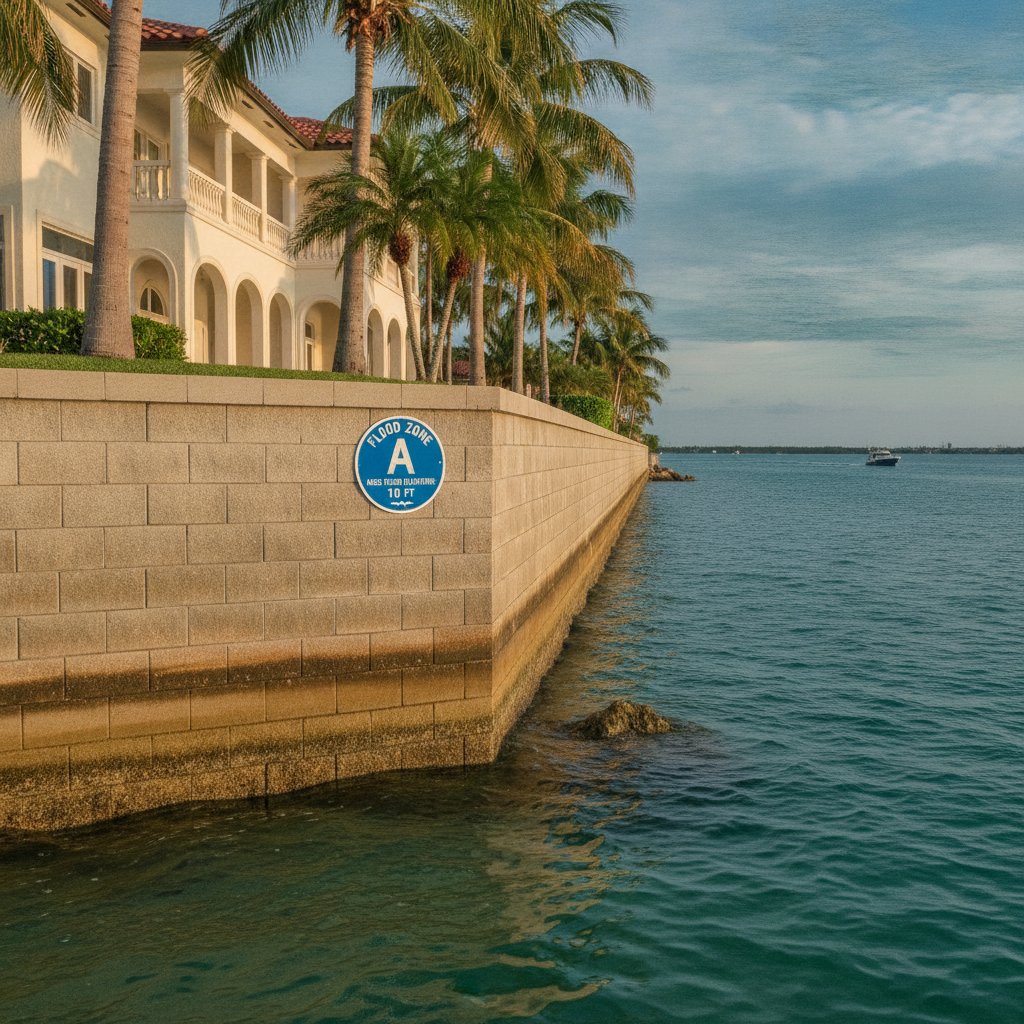
The first step in any project is identifying the specific FEMA flood zone designation for the property. In Florida, the most common are Zone AE and Zone VE. Zone AE areas are subject to inundation by the 1%-annual-chance flood, with determined Base Flood Elevations (BFEs). Zone VE, or Coastal High Hazard Areas, are subject to the same flooding but with the additional, significant hazard of high-velocity wave action. This distinction is critical, as it fundamentally changes the design approach and permitting requirements. A site development plan must be based on an accurate topographical and boundary survey that clearly delineates these zones and the BFE. The BFE dictates the minimum elevation for structures and influences the design height of the retaining wall. The wall must be designed to withstand not only static soil and water pressure but also the dynamic forces of moving water, known as hydrodynamic loads, and potentially wave loads in VE zones. Misinterpreting these initial site constraints can lead to significant redesigns and costly project delays.
Core Structural Engineering Principles for Flood-Resistant Walls
Key Design Considerations: AE vs. VE Flood Zones
| Feature | AE Zone Requirement | VE Zone Requirement (Coastal High Hazard) |
|---|---|---|
| Primary Flood Hazard | Stillwater flooding with some velocity (inundation). | High-velocity wave action and significant scour potential. |
| Foundation Design | Standard footing design considering scour and hydrostatic uplift. | Deep pile or caisson foundation required to resist extreme scour and wave impact loads. |
| Governing Structural Loads | Must resist lateral earth pressure, surcharge, and hydrodynamic loads from moving water. | Must resist breaking wave loads, which are significantly higher and more complex to model. |
| Freeboard Requirement | Lowest structural members often required 1-2 feet above BFE. | Lowest horizontal structural member must be elevated above the BFE. |
| Permitting Hurdles | Requires a No-Rise Certification to prove no adverse impact on upstream flood levels. | Requires a V-Zone Certification from a Professional Engineer, a more stringent analysis. |
| Material Specification | Corrosion-resistant materials recommended. | Marine-grade, highly corrosion-resistant materials (e.g., stainless steel rebar) are often mandatory. |
A retaining wall in a flood zone must be engineered to resist a combination of powerful forces. Standard design accounts for lateral earth pressure and any surcharge from buildings or traffic. In a flood zone, we must add hydrostatic pressure—the force exerted by standing water on both sides of the wall during a flood event. This saturated condition significantly increases the load on the structure and can compromise the bearing capacity of the foundation soils. The structural system, whether it’s a cantilevered reinforced concrete wall, a gravity wall, or a segmental block system, must have a deep, robust foundation designed to prevent overturning, sliding, and settlement under these extreme loads. The design must also account for scour potential, where floodwaters can erode the soil supporting the wall’s foundation. A thorough Geotechnical Engineering investigation, including a Geotechnical soil report, is non-negotiable for determining soil parameters and informing a resilient foundation design. This level of analysis is a hallmark of experienced Civil Engineering Firms.
Drainage Design: The Key to Wall Stability and Compliance
Proper drainage design is arguably the most critical element for the long-term stability of any retaining wall, and its importance is magnified in a flood zone. A wall that impedes the natural flow of water can act as a dam, leading to a dangerous buildup of hydrostatic pressure and potential catastrophic failure. Furthermore, improperly managed drainage can be a violation of local and state regulations, leading to significant liability. An effective drainage system includes features like weep holes, a granular backfill zone to facilitate water movement, and often a perforated pipe or French drain at the base of the wall. This system is designed to rapidly relieve water pressure from behind the wall during and after a storm event. This is a key component of the overall stormwater management plan for the site and is heavily scrutinized during the agency review process. The goal is to ensure the wall does not create unintended water containment, which could flood the property or adjacent parcels.
Navigating the Permitting Labyrinth: FEMA, WMDs, and Local Agencies
The permitting process for construction in a flood zone is rigorous and involves multiple agencies. While FEMA sets the standards through the National Flood Insurance Program (NFIP), enforcement is handled by the local municipality and, in many parts of Florida, the regional Water Management District (WMD). A key requirement for any structure that could obstruct floodwaters is a ‘No-Rise Certification’. This is an engineering analysis that proves the proposed retaining wall will not cause a cumulative increase of more than 0.00 feet in the BFE upstream of the project. Preparing the permit submittals requires detailed hydraulic modeling and extensive documentation. The engineering plans must clearly show all design considerations, from the structural details of the wall to the comprehensive drainage design. In VE zones, the requirements are even more stringent, often requiring a V-Zone Certification from a Professional Engineer confirming the structure can withstand wave forces. Successfully navigating this process requires deep familiarity with the specific requirements of each reviewing agency.
Material Selection and Construction Best Practices in Coastal Environments
Florida’s coastal environment is highly corrosive, and material selection is critical for the longevity of a retaining wall. Standard carbon steel rebar in concrete can corrode quickly when exposed to saltwater spray or brackish floodwaters. Depending on the proximity to the coast, design specifications may require epoxy-coated, galvanized, or even stainless-steel reinforcement to prevent premature deterioration. The concrete mix design itself may also need to be adjusted for marine environments. Proper execution during construction is just as important as the design. This is where construction administration services become invaluable. An engineer must be on-site to verify that the foundation is prepared correctly, the specified materials are used, and the backfill is placed and compacted in lifts as required by the design. Adherence to the Florida Building Code is mandatory, and any deviation from the approved plans can jeopardize the final certification of the wall and the certificate of occupancy for the entire project.
Integrating Retaining Walls with Overall Site Development Plans
A retaining wall is never an isolated element; it is an integral part of the overall site development plan. Its location and height can affect everything from building setbacks and ADA-compliant access routes to the layout of underground utilities. Early and thorough utility coordination is essential to ensure the wall’s foundation does not conflict with existing or proposed water, sewer, gas, or communication lines. A conflict discovered during construction can be incredibly expensive to resolve. Furthermore, the wall’s design must align with the site’s comprehensive stormwater management strategy. It may be used to direct runoff toward a retention or detention pond, or it may need to incorporate features that allow for sheet flow to pass through. This integration requires a holistic approach to civil engineering, where the grading plan, drainage plan, utility plan, and structural plans are all developed in concert to create a cohesive and compliant design.
Our Process: A Systematic Approach to Flood Zone Retaining Wall Projects
At RSP Engineers, we follow a meticulous process to ensure success. It begins with a comprehensive due diligence phase, where we gather all relevant data, including FEMA flood maps, local surveys, and geotechnical information. We then move to preliminary engineering, developing conceptual designs to evaluate feasibility and identify potential challenges. This is followed by detailed structural and drainage design, where our engineers perform the complex calculations required for flood zone compliance. Our team prepares and manages the entire permit submittal package, coordinating with all relevant local and state agencies to streamline the review process. We understand the nuances of a No-Rise Certification and the specific requirements of Florida’s Water Management Districts. During the build phase, we offer full Construction Management Services to oversee the work, ensuring the wall is built exactly to specification and providing the necessary certifications upon completion. This end-to-end management minimizes risk for our clients.
Common Pitfalls in Retaining Wall Design and Permitting
Many projects run into trouble by underestimating the complexities of flood zone regulations. Some of the most common issues we see include inadequate drainage design, which leads to wall failure or flooding of adjacent properties. Another is underestimating the true hydrostatic loads, resulting in an under-designed wall. A critical error is failing to initiate the No-Rise Certification process early, which can halt a project during permitting. Finally, poor utility coordination can lead to costly conflicts and delays during construction. Avoiding these pitfalls requires an experienced team of Civil Engineers from the outset.
Partner with Florida’s Flood Zone Engineering Experts
Designing and permitting a retaining wall in a Florida flood zone is a high-stakes endeavor that demands specialized expertise. The team at RSP Engineers has a proven track record of navigating these complex projects. We provide comprehensive civil engineering, from initial site feasibility and site development planning to detailed structural design and navigating the intricate permitting process with local and state agencies. Don’t risk your project’s success on an incomplete design. Contact us today to discuss how our expertise in stormwater management and flood zone construction can protect your investment.
Conclusion: Building Resilient Infrastructure in Florida’s Landscape
In conclusion, a retaining wall in a Florida flood zone is a critical piece of infrastructure that requires a sophisticated and integrated design approach. Success hinges on a deep understanding of FEMA regulations, robust structural and drainage design, and meticulous navigation of the multi-agency permitting process. By prioritizing expert civil engineering from the start, developers can ensure their projects are not only compliant but also resilient, safe, and capable of withstanding Florida’s unique environmental challenges for decades to come.
FAQs
-
A No-Rise Certification is an engineering analysis required by FEMA for any development in a designated floodway or floodplain. It demonstrates through hydraulic modeling that a project, such as a retaining wall, will not obstruct flood flows and cause an increase in the Base Flood Elevation (BFE). This is crucial for protecting upstream properties from increased flood risk.
-
It is highly discouraged and often not permitted. Segmental block walls are typically not designed to withstand the extreme hydrodynamic loads and wave action present in a VE zone. The Florida Building Code and local ordinances generally require a more robust, monolithic structure like a cast-in-place reinforced concrete wall with a deep pile foundation in these high-hazard areas.
-
The BFE is a critical data point. It determines the anticipated height of floodwaters and therefore dictates the design height of the wall. It also sets the benchmark for calculating hydrostatic pressure and hydrodynamic forces. All structural components and drainage features must be designed relative to the BFE to ensure performance during a flood event.