
Landscape Code Compliance in South Florida: Engineering and Permitting Insights
A detailed guide for developers on navigating landscape code compliance in South Florida cities. Learn about tree preservation, irrigation, and permitting from RSP Engineers.
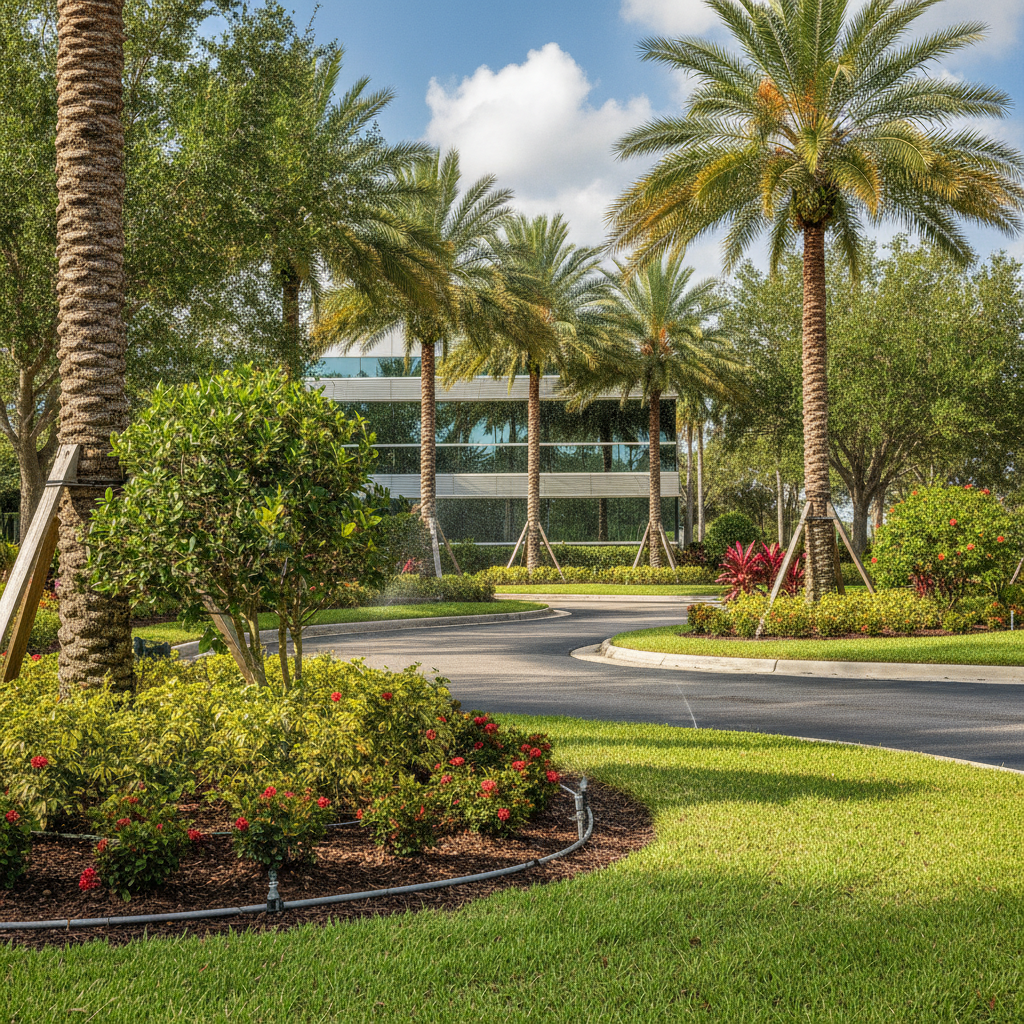
The Role of Landscape Codes in South Florida Site Development
Landscape codes in South Florida serve multiple functions beyond beautification. They are a primary tool used by municipalities to achieve critical environmental and community goals. A key objective is mitigating the urban heat island effect by mandating tree canopy coverage, which provides shade and cools surrounding areas. This is especially important in dense urban environments. The codes are also integral to regional stormwater management efforts, as vegetated areas, permeable surfaces, and specific plant selections help absorb rainfall, reduce runoff, and recharge the Biscayne Aquifer. Furthermore, these ordinances enforce ecological preservation by protecting native plant communities and significant trees. This aligns with the broader goals of agencies like the South Florida Water Management District (SFWMD) to promote sustainable water use and protect local ecosystems. For developers, this means that landscape design is not an afterthought but a foundational element of the site development plan that must be reconciled with grading, drainage, and utility layouts from the earliest stages of a project. Achieving zoning compliance often hinges on a landscape plan that meets these multifaceted requirements.
Key Components of Municipal Landscape Ordinances
Comparison of Landscape Requirements: Miami-Dade vs. Broward County
| Feature | Miami-Dade County (Typical) | Broward County (Typical) |
|---|---|---|
| Minimum Tree Canopy | 20% for single-family residential; varies for commercial based on zoning. | 15-20% depending on land use; requires a mix of canopy, understory, and palms. |
| Parking Lot Shading | Minimum 50% of vehicular use area must be shaded by tree canopy within 15 years. | One tree required for every 8-10 parking spaces, strategically placed for shade. |
| Specimen Tree Protection | Protects trees with a trunk diameter of 18 inches or greater; specific protections for certain native species. | Protects trees with a trunk diameter of 12 inches or greater; requires a permit for removal. |
| Irrigation System Mandates | Requires high-efficiency systems, soil moisture sensors or rain sensors, and prohibits irrigation of impervious surfaces. | Rain sensor required on all automatic systems; promotes low-volume irrigation and reclaimed water use. |
| Foundation Planting | Requires planting in a continuous strip along the front and sides of buildings visible from public right-of-way. | Mandates foundation plantings along a percentage of the building perimeter to soften the structure's appearance. |
| Buffer Requirements | Specifies buffer widths and plant densities based on the intensity of adjacent zoning districts. | Utilizes a point-based system (the "Broward County Tree Preservation and Abuse Trust Fund") for mitigation calculations. |
While specific requirements vary by city and county, most South Florida landscape ordinances share a common structure. A central component is the tree preservation ordinance, which dictates the protection, relocation, or mitigation for existing trees above a certain size (caliper). This often requires a certified arborist’s report and a detailed tree survey early in the design process. Ordinances also specify minimum canopy coverage percentages for a site, which must be achieved within a set number of years after project completion, influencing the species and size of new trees planted. Parking lots are heavily regulated, with strict requirements for interior landscape islands, terminal islands, and shading to reduce heat gain from asphalt. Another critical element is the establishment of landscape buffers along property lines, particularly between different zoning districts (e.g., commercial adjacent to residential). These buffers have specific width, height, and planting density requirements. Finally, codes often include lists of prohibited invasive exotic plants and recommended or required native, drought-tolerant species, pushing projects toward Florida-Friendly Landscaping™ principles to ensure long-term sustainability and resilience.
Navigating Tree Preservation and Relocation Requirements
Tree preservation is one of the most complex and financially significant aspects of landscape compliance in South Florida. The process begins with a comprehensive tree survey that identifies the species, size (diameter at breast height), and health of all existing trees on a property. Municipalities designate certain trees as “specimen” or “heritage” trees based on their size, species, or historical significance, affording them the highest level of protection. Removing such a tree requires extensive justification and often triggers substantial mitigation fees or replacement requirements. When a protected tree cannot be preserved in place due to conflicts with the proposed building footprint, utilities, or grading, relocation may be an option. However, this is a costly and technically challenging process requiring specialized contractors. The permit submittals for tree removal or relocation must include a detailed plan showing the rationale for removal, the proposed mitigation plan (e.g., planting new trees on-site or paying into a tree trust fund), and an arborist report. Failure to properly account for these requirements during due diligence can severely impact a project’s budget and timeline.
Irrigation Design and Water Use Efficiency Standards
Reflecting the region’s focus on water conservation, South Florida landscape codes include stringent standards for irrigation systems. A professionally designed irrigation design is a mandatory part of the permit application package. These plans must demonstrate compliance with water efficiency standards, often requiring the use of low-volume systems like drip irrigation or micro-sprays for planting beds, while reserving more traditional rotor heads for turf areas. The goal is to minimize water waste from overspray and evaporation. Most ordinances mandate the installation of smart irrigation controllers and functioning rain sensors, which automatically shut off the system during and after a rainfall event. The use of reclaimed water for irrigation is strongly encouraged and sometimes required for larger projects, which involves significant utility coordination with local providers. These requirements are enforced by both local building departments and regional bodies like the SFWMD, which may have its own water use permit conditions. A successful design ensures the landscape thrives without placing an undue burden on the region’s precious water resources.
Integrating Landscape Plans with Civil Engineering Documents
The most common source of permitting delays is a lack of coordination between the landscape architect and the Civil Engineer near me. A landscape plan cannot be developed in a vacuum. It must be fully integrated with the overall site plan design to ensure harmony between elements. For example, the location of large canopy trees must be checked against underground and overhead utility locations to prevent future conflicts. This requires meticulous utility coordination from the project’s inception. Similarly, the landscape plan is a critical component of the site’s drainage design. The grading of landscape beds, the use of vegetated swales, and the preservation of permeable ground surfaces all contribute to on-site stormwater retention and treatment. Furthermore, all pedestrian pathways, sidewalks, and accessible routes shown on the landscape plan must meet strict ADA compliance standards for slope, width, and surface material. An experienced civil engineering team ensures these elements are seamlessly woven together, creating a single, cohesive set of construction documents that can withstand agency review.
Xeriscaping and Florida-Friendly Landscaping™ Principles
There is a strong regulatory push in South Florida for landscape designs that are both beautiful and environmentally sustainable. This is embodied in the principles of Xeriscaping and the University of Florida’s Florida-Friendly Landscaping™ (FFL) program. These are not just suggestions but are increasingly codified into municipal ordinances. The core idea is to design landscapes that thrive with minimal supplemental irrigation, fertilizer, and pesticides. This is achieved by putting the “right plant in the right place”—grouping plants with similar water and light needs and prioritizing the use of native plant species adapted to the local climate. For developers, adopting these principles can offer long-term benefits, including lower water bills and reduced maintenance costs for the property owner or HOA. During the permitting process, a design that prominently features FFL principles may receive more favorable consideration from agency reviewers. This approach is a key part of low-impact development (LID) strategies, which aim to manage stormwater and protect water quality by mimicking natural hydrological processes. A well-executed, sustainable design is a hallmark of quality site development.
Our Approach to Landscape Code Compliance
At RSP Engineers, we treat landscape compliance as an integral part of our civil engineering services, not a final-stage add-on. Our process begins with a thorough upfront analysis of the applicable municipal and county codes to identify all constraints and opportunities related to the project site. We perform a detailed zoning compliance review to ensure the proposed use and layout can be supported by a compliant landscape plan. We collaborate closely with landscape architects, arborists, and irrigation designers from the schematic design phase forward. This ensures that the landscape plan is developed in concert with the site’s grading, drainage, and utility infrastructure. By integrating these disciplines, we prevent common conflicts and streamline the review process. Our team prepares comprehensive permit submittals that clearly demonstrate how every aspect of the landscape ordinance is met, facilitating a smoother path through agency review and toward permit issuance.
Common Pitfalls in South Florida Landscape Permitting
Even experienced developers can encounter setbacks during the landscape permitting process. One of the most frequent issues is an inaccurate or incomplete tree survey, which can force significant site plan revisions late in the design phase if a protected tree was missed. Another common problem is conflicts between proposed tree locations and underground utilities, such as water mains, sewer lines, or drainage pipes, which requires costly redesign and coordination. Failing to properly calculate future canopy coverage for parking lot shading is another pitfall that often draws scrutiny from city planners. Developers may also underestimate the time and expense associated with tree mitigation, including sourcing large replacement trees or paying substantial fees into a municipal tree trust fund. Finally, a disconnect between the civil and landscape plans can result in ADA compliance issues with pedestrian routes or drainage problems in poorly graded planting areas, leading to failed inspections and delayed Certificates of Occupancy.
Partner with RSP Engineers for Seamless Site Development
Ensure your South Florida project navigates complex landscape codes successfully from day one. The technical team at RSP Engineers provides the integrated expertise needed to harmonize your development goals with stringent municipal requirements. We specialize in comprehensive site plan design, proactive utility coordination, and meticulous management of the permitting process. Our approach minimizes redesigns, avoids costly delays, and delivers a compliant, successful project. Contact us today to discuss how our site engineering services can bring value to your next development.
Conclusion
Landscape code compliance in South Florida is a complex, technical challenge that is deeply intertwined with the core disciplines of civil engineering. It is not merely about aesthetics but about achieving critical environmental goals related to stormwater management, water conservation, and urban ecology. For developers, treating the landscape plan as a foundational component of the overall site development strategy is essential for a smooth and predictable permitting journey. Proactive planning, thorough code analysis, and seamless integration between design professionals are the keys to transforming regulatory hurdles into a valuable, sustainable project asset.
FAQs
-
Typically, the landscape plan is reviewed and approved as part of the overall site development permit package. However, a separate tree removal or relocation permit is almost always required before any land clearing can begin, and it often has its own specific application and review process.
-
A “specimen tree” is a tree that a municipality has designated for special protection due to its size, age, species, or historical relevance. The criteria are defined in the local ordinance. Removing a specimen tree is extremely difficult, often requiring a variance and always involving a significant mitigation plan, making their preservation a top priority in site plan design.
-
Landscaping is a critical component of modern stormwater management. Trees, shrubs, and turf areas intercept rainfall, promote infiltration, and reduce the volume and velocity of runoff. The drainage design for a site relies on these vegetated areas to function correctly, and they are a key part of the calculations submitted for an Environmental Resource Permit (ERP).