
Green Infrastructure: How Engineers Help
Explore how civil engineers implement green infrastructure in Florida, contrasting it with traditional gray systems. Learn about techniques like bioretention and permeable surfaces, and their benefits
Understanding Green vs. Gray Infrastructure
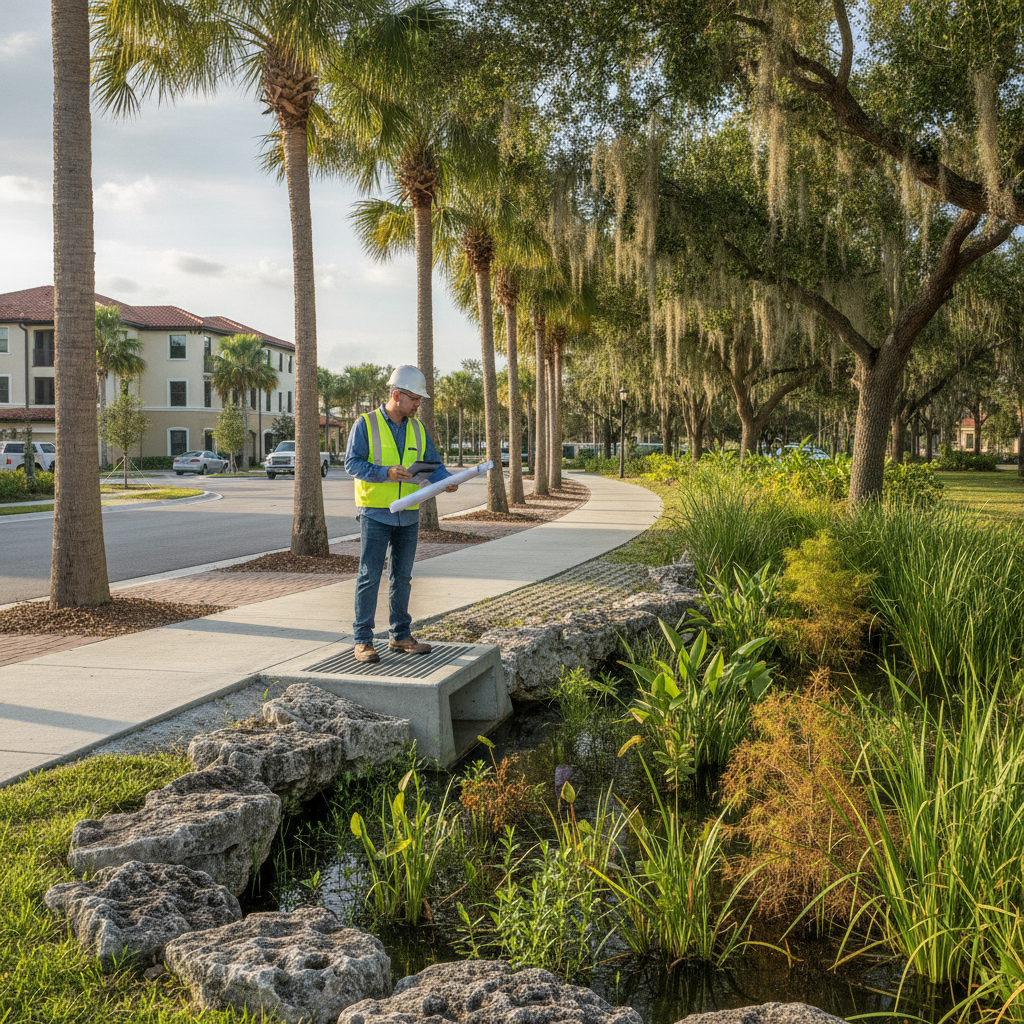
Green infrastructure refers to systems that mimic natural processes to manage stormwater, improve water quality, and enhance urban environments. Unlike traditional gray infrastructure, which relies on pipes and concrete to channel water away, green systems use vegetation and soil to absorb and filter water. Gray infrastructure often involves extensive underground piping and concrete channels, which can lead to increased runoff and urban heat. In contrast, green infrastructure reduces runoff, supports biodiversity, and mitigates urban heat through natural processes. Gray Infrastructure: Pipes, concrete channels, storm drains Green Infrastructure: Bioretention areas, permeable pavements, green roofs
Key Techniques in Green Infrastructure
Green vs. Gray Infrastructure: A Comparison
| Aspect | Green Infrastructure | Gray Infrastructure |
|---|---|---|
| Water Management | Natural absorption and filtration | Channeling through pipes |
| Environmental Impact | Enhances biodiversity | Minimal ecological benefits |
| Urban Heat Mitigation | Reduces heat through vegetation | Contributes to heat islands |
| Maintenance | Requires regular vegetation care | Periodic infrastructure repairs |
| Cost | Potentially lower long-term costs | Higher initial construction costs |
Several techniques are employed in green infrastructure to manage stormwater effectively: Bioretention: These are landscaped depressions that capture and treat stormwater through soil and plant uptake. Green Swales: Vegetated channels that slow and filter runoff, promoting infiltration. Urban Tree Canopy: Trees provide shade, reduce heat, and intercept rainfall, reducing runoff. Blue-Green Roofs: Roofs that combine vegetation with water storage systems to manage stormwater. Permeable Surfaces: Pavements that allow water to infiltrate, reducing surface runoff.
Benefits of Green Infrastructure
Green infrastructure offers numerous benefits over traditional systems, particularly in urban settings: Water Quality Improvement: By filtering pollutants through soil and vegetation, green systems enhance water quality. Flood Mitigation: These systems reduce peak runoff volumes, lowering flood risks during heavy rains. Urban Heat Reduction: Vegetation and permeable surfaces help cool urban areas, mitigating the urban heat island effect.
Designing and Modeling Green Infrastructure
Civil engineers utilize advanced modeling tools to design effective green infrastructure systems. These tools simulate stormwater flow and assess the impact of various design options on water quality and quantity. Engineers must consider site-specific factors such as soil type, topography, and climate to optimize system performance. This requires a detailed understanding of stormwater management principles and local environmental regulations.
Permitting and Compliance in Florida
Implementing green infrastructure in Florida involves navigating a complex permitting landscape. Engineers must ensure compliance with state and local regulations, including the Florida Building Code and environmental protection standards. Permitting processes may involve multiple agencies, requiring detailed documentation and coordination. Engineers play a crucial role in preparing permit applications and ensuring that designs meet all regulatory requirements.
RSP Engineers’ Approach to Green Infrastructure
At RSP Engineers, we prioritize sustainable design in our projects. Our team of Florida Licensed Engineers is adept at integrating green infrastructure into urban developments, ensuring compliance with all regulatory requirements. We employ a collaborative approach, working closely with clients to understand their specific needs and site conditions. Our services include site plan design, permitting assistance, and construction oversight, ensuring that projects are completed efficiently and sustainably.
Common Issues in Green Infrastructure Implementation
Despite its benefits, green infrastructure can present challenges, such as: Site Constraints: Limited space in urban areas can restrict the implementation of certain techniques. Maintenance Requirements: Regular upkeep of vegetation is essential to maintain system effectiveness. Regulatory Hurdles: Navigating the permitting process can be complex and time-consuming.
Contact RSP Engineers
For expert guidance on integrating green infrastructure into your development projects, contact RSP Engineers. Our team of Florida Licensed Engineers is ready to assist with site plan design, permitting, and construction management. Reach out today to learn how we can support your sustainable development goals.
Conclusion
Green infrastructure represents a forward-thinking approach to urban development, offering significant benefits for water management, environmental health, and urban livability. By leveraging the expertise of civil engineers, developers can implement these systems effectively, ensuring compliance with permitting requirements and optimizing site performance. As Florida continues to grow, integrating sustainable practices like green infrastructure will be crucial for resilient and vibrant communities.
FAQs
-
Green infrastructure uses natural processes to manage stormwater, while gray infrastructure relies on engineered systems like pipes and concrete channels.
-
Engineers use modeling tools to simulate stormwater flow and assess the impact of design options, considering factors like soil type and climate.
-
Green infrastructure improves water quality, reduces flood risks, and mitigates urban heat through natural processes.