
Drainage Easements in Florida: When and Why They’re Required for Land Development
Learn when and why drainage easements are required for Florida land development. Our civil engineering experts explain the types, permitting, and process.
The Legal Foundation of Drainage Easements
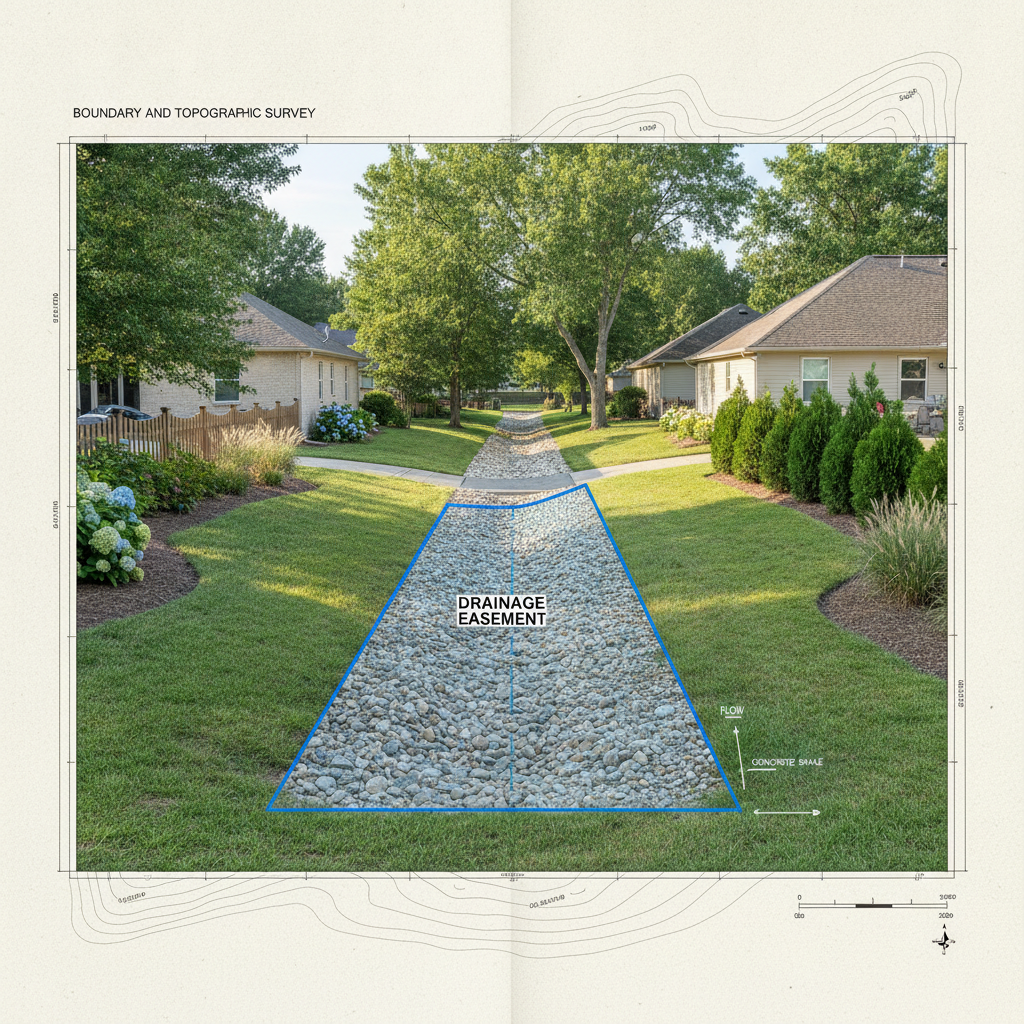
A drainage easement is a legal right granted to a person or entity to use a portion of someone else’s property for the specific purpose of conveying or managing stormwater. This right is typically recorded in the public records and attached to the property’s deed, making it binding on current and future owners. The easement grants access for the installation, maintenance, and repair of drainage design infrastructure, such as pipes, swales, channels, or culverts. It is a non-possessory interest, meaning the easement holder has the right to use the land for drainage but does not own it. These easements can be public or private. A public easement might be granted to a municipality or a drainage district for a major storm sewer line, while a private easement could be established between two adjacent property owners to allow runoff from one parcel to cross another. In either case, the legal instrument clearly defines the rights of the beneficiary and the restrictions on the property owner, forming a critical part of the overall stormwater management strategy for a development.
Triggering the Need for an Easement in Site Design
Key Considerations for Common Drainage Easement Scenarios
| Scenario | Primary Trigger | Key Engineering Task | Common Restriction on Property Owner |
|---|---|---|---|
| Off-site Discharge Across Neighboring Property | Site runoff must cross an adjacent parcel to reach a legal outfall. | Hydraulic modeling to size the conveyance system and negotiate an off-site easement. | Cannot build structures or regrade land within the defined easement path. |
| Shared Stormwater Pond (Multi-parcel) | A single pond manages runoff from multiple lots or an entire subdivision. | Design of the pond and an access easement for maintenance vehicles. | No private docks, structures, or filling within the pond maintenance easement. |
| Public Storm Sewer Main Extension | A project needs to connect to a municipal storm line located across private land. | Utility coordination with the municipality and surveying the alignment. | Prohibition of any deep-rooted trees or structures over the public utility line. |
| Overland Flow Path (Sheet Flow) | Master drainage plan requires sheet flow to be maintained across multiple lots. | Grading plan design to preserve natural flow patterns and elevations. | Cannot erect fences or landscaping that would impede or concentrate sheet flow. |
| Canal Maintenance Access | Property abuts a public canal or ditch requiring periodic maintenance. | Defining a wide easement for heavy equipment access (dredges, mowers). | No structures, fences, or significant plantings within the canal access right-of-way. |
The requirement for a drainage easement is not arbitrary; it is triggered by specific conditions identified during the civil engineering design phase. The primary trigger is the need to convey stormwater from a property to a legal positive outfall—a point where runoff can be discharged without adversely affecting other properties, such as a public storm sewer, a county ditch, a river, or a lake. If the most direct path to this outfall crosses another private property, an off-site easement is required. Other common triggers include the creation of a shared stormwater management facility, like a retention or detention pond that serves multiple lots or an entire subdivision. An easement is required over the pond area and its access routes to ensure it can be maintained by the responsible entity, such as a Homeowners Association (HOA) or a Community Development District (CDD). The necessity for these easements is confirmed through detailed hydraulic modeling and analysis, which is a core component of the site plan design and permitting process.
Differentiating Easement Types: Express Grant vs. Implication
In modern land development, nearly all drainage easements are created by an express grant. This is a formal, written document that is signed by the property owner, legally described, and recorded in public records. This method provides clarity and legal certainty, which is essential for obtaining development approvals and permitting from regulatory agencies. The document explicitly states the purpose, location, and dimensions of the easement, along with the rights and responsibilities of all parties involved. While less common in new construction, easements can also be created by implication or prescription. A prescriptive easement may be claimed after long-term, open, and continuous use of land for drainage without the owner’s permission. However, relying on such a claim is risky and not a viable strategy for new projects. A thorough title search and a current boundary and topographic survey are critical due diligence steps to identify any existing easements—express or otherwise—that could impact a proposed site development plan.
The Role of Water Management Districts and Local Agencies
In Florida, the approval of a stormwater management system is governed by multiple agencies, most notably the state’s Water Management Districts (WMDs) and local municipalities. The WMDs, such as the South Florida Water Management District (SFWMD) or the St. Johns River Water Management District (SJRWMD), issue Environmental Resource Permits (ERPs). A key component of the ERP application is demonstrating that the stormwater system is sustainable and maintainable for the life of the project. This includes securing all necessary on-site and off-site easements. WMDs and local governments will not approve a drainage design that relies on discharging water across neighboring properties without a legally recorded easement. Their agency review process scrutinizes the path of stormwater from the moment it falls on the site until it reaches the legal positive outfall. This ensures that a future sale of an adjacent property does not sever the project’s drainage connection, which could lead to flooding and legal liability. Therefore, securing easements is a critical-path item for the entire permitting process.
Defining Easement Dimensions and Property Restrictions
Determining the precise location and width of a drainage easement is a technical task performed by a Professional Engineer. The dimensions are not arbitrary; they are based on engineering calculations. For a piped system, the width must accommodate the pipe itself plus adequate space on either side for construction equipment and future maintenance access. For an open channel or swale, the width includes the channel banks and an access area. A typical underground storm pipe may require a 15- to 20-foot-wide easement, while a major canal could require 50 feet or more. Once established, the easement imposes significant restrictions on the property owner. No permanent structures—such as buildings, sheds, or in-ground pools—can be built within the easement boundaries. Landscaping may be restricted, and the property owner is prohibited from regrading the land in a way that would obstruct the flow of water. These construction limitations are legally enforceable and are crucial for ensuring the long-term functionality of the entire stormwater management system.
Negotiating and Recording a Drainage Easement
The process of establishing an easement involves several steps, often requiring collaboration between engineers, surveyors, attorneys, and property owners. It begins with the civil engineering team identifying the need and proposed alignment. A surveyor then creates a sketch and legal description of the proposed easement area. This package is used by an attorney to draft the formal easement document. If the easement is between private parties, a negotiation over compensation and terms is often necessary. Once an agreement is reached, the document is signed, notarized, and officially recorded with the Clerk of the Court in the county where the property is located. This recording makes the easement a public record and legally binds all future owners. For developments undergoing a platting process, drainage easements are typically dedicated and recorded as part of the final plat approval, streamlining the procedure for internal lot-to-lot drainage.
RSP Engineers’ Approach to Drainage Easement Strategy
At RSP Engineers, we approach drainage easements as a critical component of project strategy, not an afterthought. Our process begins with comprehensive due diligence, including a review of title work, surveys, and municipal infrastructure maps to identify potential constraints early. Our civil engineers then develop a robust drainage design that seeks the most efficient and cost-effective path for stormwater, minimizing the need for complex off-site easements where possible. When an easement is unavoidable, we manage the entire technical process. We perform the necessary hydraulic calculations, coordinate with surveyors to prepare precise legal descriptions and exhibits, and provide clear documentation for legal counsel. We also lead the agency review process, presenting the engineering justification for the easement to city, county, and WMD staff to facilitate smooth permit submittals and approvals.
Common Issues and Pitfalls with Drainage Easements
Several common issues can arise with drainage easements, often leading to project delays or future conflicts. One of the most significant is failing to secure a necessary off-site easement before finalizing the site development plan, which can force a costly and time-consuming redesign. Another pitfall is poorly defined easement language or an inaccurate legal description, which can lead to disputes over maintenance responsibilities or property rights years later. Negotiations with adjacent property owners can also be a major hurdle. An unwilling neighbor can halt a project in its tracks, forcing the developer to pursue much more expensive alternatives, such as pumping stormwater uphill or acquiring another property for drainage. After construction, a common problem is a property owner encroaching on the easement by building a shed, patio, or fence, which can obstruct flow and violate the terms of the easement, potentially leading to legal action.
Navigate Your Florida Land Development Project with Confidence
Successfully navigating the complexities of drainage easements requires deep expertise in Florida’s unique regulatory environment. From initial site assessment and drainage design to negotiating with landowners and securing agency approvals, the process is multifaceted. RSP Engineers provides the expert guidance needed to ensure your project’s stormwater management system is compliant, effective, and sustainable. If you are planning a project, contact our team of civil engineering professionals today. We can help you address all aspects of permitting and site development, ensuring that critical elements like drainage easements are handled correctly from the start.
The Critical Role of Easements in Sustainable Development
In conclusion, drainage easements are a foundational element of sound civil engineering and responsible land use in Florida. They are the legal and physical backbone of a project’s stormwater management system, ensuring its functionality and longevity. Proactively identifying the need for easements, precisely engineering their specifications, and properly recording them are not just procedural steps; they are essential actions that prevent future flooding, avoid legal disputes, and enable sustainable site development.
FAQs
-
Generally, you cannot place permanent structures like sheds, additions, or in-ground pools within a drainage easement. Some jurisdictions may allow fences if they do not obstruct water flow (e.g., a chain-link fence). It is critical to review the specific language in your easement document and consult with the local permitting department before installing anything.
-
The responsibility for maintenance is defined in the easement agreement. Typically, the property owner is responsible for routine landscaping like mowing. However, the easement beneficiary (e.g., the city or HOA) is responsible for maintaining the actual drainage infrastructure, such as clearing a clogged pipe or re-grading a swale.
-
It can. Because an easement restricts the use of a portion of your property, it may slightly reduce the property’s market value compared to an unencumbered property. However, being part of a well-designed stormwater management system that prevents flooding can also be seen as a benefit that protects overall property value in the community.