
Designing Fire Protection Water Systems for Florida Data Centers
A guide by RSP Engineers on the civil engineering requirements for designing fire protection water systems for data centers in Florida, covering water supply, permitting, and system selection.
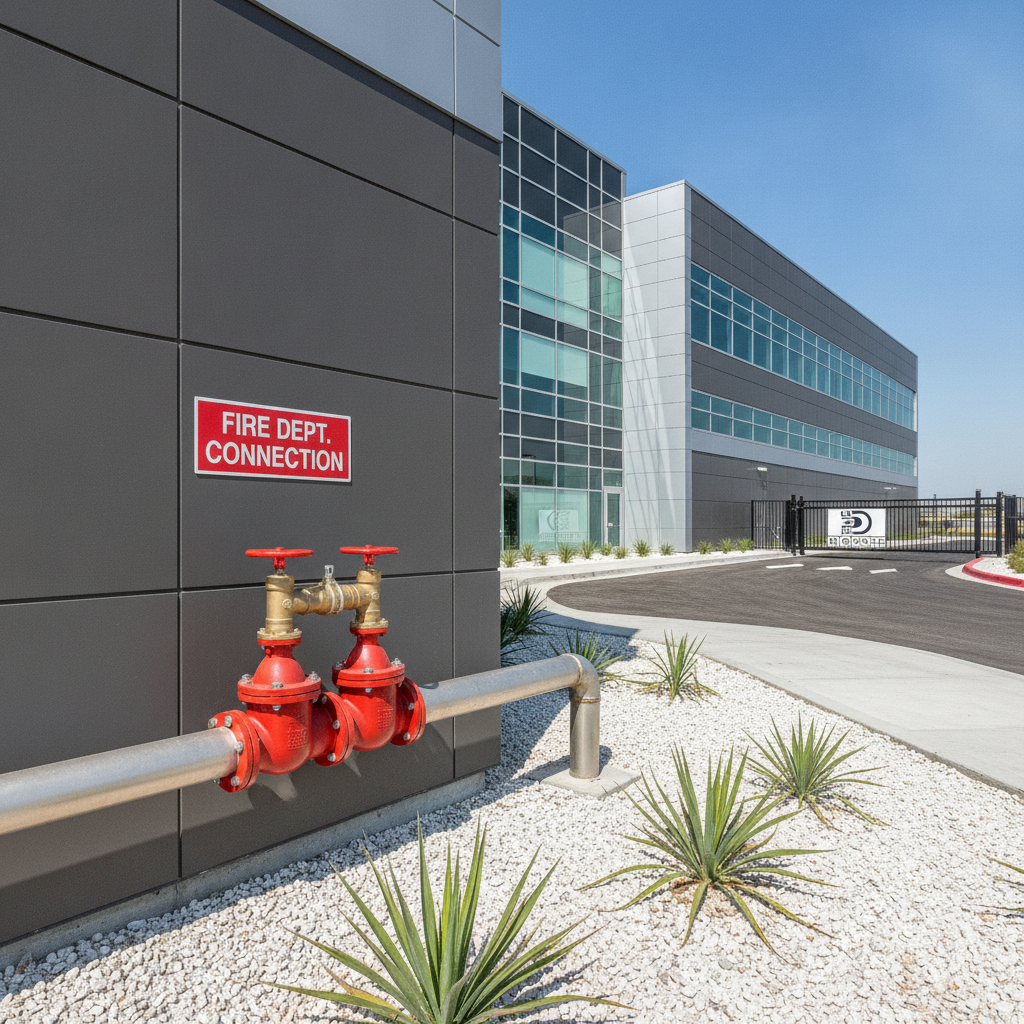
The Critical Role of Water Supply and Utility Coordination
The starting point for any data center fire protection system is a reliable and sufficient water supply. This goes beyond simply connecting to the nearest municipal water main. Data centers often require a high-volume, high-pressure water supply that can meet the worst-case scenario fire demand, which may exceed the capacity of the local infrastructure. Our role as Civil Engineers begins with a thorough assessment, including conducting fire flow testing on nearby hydrants to determine available pressure and flow rates. Effective utility coordination with the local water authority is essential. We work to identify potential connection points, negotiate the terms of service, and determine if system upgrades, such as the installation of a new, larger-diameter water main, are required. For many high-tier data centers, a single water source is insufficient. The design often incorporates redundant feeds from different parts of the municipal grid or a secondary on-site source to ensure water is available even if a portion of the public system is down for maintenance. This level of redundancy is a key part of the overall site development strategy.
Navigating NFPA Standards and the Florida Building Code
Comparison of Data Center Fire Suppression Systems
| System Type | Primary Application | Water Impact | Key Civil Engineering Consideration |
|---|---|---|---|
| Wet-Pipe Sprinkler | Office areas, support spaces, loading docks | High risk of accidental discharge | Standard municipal water connection is often sufficient. |
| Dry-Pipe Sprinkler | Unheated spaces (e.g., parking garages) subject to freezing | Slight delay in water delivery; moderate risk | Requires compressed air source; hydraulic calculations must account for delivery time. |
| Pre-Action (Double Interlock) | Data halls, server rooms, critical equipment areas | Very low risk of accidental discharge | Requires reliable water supply and pressure to the riser; supports water damage mitigation. |
| Deluge System | High-hazard areas (e.g., generator yards with transformers) | Immediate, high-volume water discharge upon detection | Requires extremely high-capacity water supply, often demanding large on-site fire protection tanks. |
| Clean Agent System | Primary suppression within data halls | No water impact; safe for electronics | No direct water demand, but must be backed by a water-based system, influencing overall site water needs. |
The design of fire protection systems is governed by a stringent set of codes and standards. The National Fire Protection Association (NFPA) provides the primary guidelines, with NFPA 75 (Standard for the Fire Protection of Information Technology Equipment) and NFPA 20 (Standard for the Installation of Stationary Pumps for Fire Protection) being particularly relevant. These standards dictate everything from the type of suppression systems allowed in data halls to the specific requirements for fire pump installation and testing. A Professional Engineer must certify that the design meets these rigorous standards. These NFPA standards are incorporated by reference into the Florida Building Code, which serves as the legally enforceable standard across the state. Navigating the code requires a deep understanding of both the state-level requirements and any additional amendments or interpretations by the local Authority Having Jurisdiction (AHJ), typically the municipal fire marshal. Successful permitting hinges on submitting a design that clearly demonstrates code compliance and addresses all AHJ concerns upfront, minimizing delays during the agency review process.
On-Site Water Storage: Tanks, Ponds, and Redundancy
When municipal water supplies are inadequate or when enhanced reliability is required, on-site water storage becomes a critical design element. The most common solution is the installation of large, dedicated fire protection tanks. These tanks are sized to provide the required fire flow for a specific duration (e.g., 90-120 minutes), as determined by NFPA standards and insurance underwriter requirements. The design includes not only the tank itself but also the associated piping, valves, and a mechanism for refilling. In Florida, a unique opportunity exists to integrate fire protection with stormwater management. A properly designed stormwater retention or detention pond can serve a dual purpose, providing both water quality treatment and a dedicated volume of water for firefighting. This approach requires careful drainage design to ensure the fire protection volume is always maintained, even during drought conditions, and that the intake structure is designed to prevent debris from entering the fire pumps. This integrated design can be a cost-effective solution but requires sophisticated hydraulic modeling and specific permitting through the local Water Management District.
Fire Pump and Hydrant System Design Considerations
The fire pump is the heart of the water-based suppression system, boosting the pressure from the water source to meet the demands of the sprinkler systems and hydrants. The fire pump design involves selecting the right pump (typically electric with a diesel backup for redundancy), sizing it correctly based on hydraulic calculations, and designing the pump house to meet NFPA 20 standards. This includes considerations for ventilation, fuel storage for diesel pumps, and access for maintenance and testing. The external site layout must include a strategically planned network of fire hydrants. Hydrant placement is dictated by fire code to ensure complete coverage of the building’s exterior and to provide fire department connection points. The site plan design must show the location of all hydrants, the underground fire loop piping, and post-indicator valves (PIVs) that allow sections of the system to be isolated for maintenance. This entire network is a critical component of the overall site engineering services package submitted for permits.
Pre-Action Sprinkler Systems: The Data Hall Standard
While traditional wet-pipe sprinkler systems are common in office areas, they pose an unacceptable risk of accidental water damage in data halls containing sensitive electronic equipment. The industry standard for these critical spaces is the pre-action sprinkler system, most often a double-interlock type. This system requires two independent events to occur before water is discharged: a smoke or heat detector must first activate, and then a sprinkler head must be triggered by high heat. This two-step process virtually eliminates the risk of an accidental discharge from a damaged sprinkler head or faulty pipe. The civil engineering design must support this system by providing the required water pressure and flow at the base of the sprinkler riser. While the internal piping is designed by a fire protection engineer, the site water system designed by the civil engineer is the foundation that makes it work. This careful approach to water damage mitigation is a key selling point for data center operators.
Integrating Clean Agent Suppression with Water-Based Systems
For the highest level of protection, many data centers employ a hybrid approach. The primary line of defense within the data hall is a clean agent suppression system, such as those using Novec 1230 or FM-200. These gaseous agents extinguish fires quickly without using water and without leaving a residue, causing no damage to electronic equipment. They are designed to handle smaller, incipient-stage fires. The water-based pre-action sprinkler system then serves as a secondary, catastrophic-event system, designed to activate only if the clean agent fails or the fire grows too large for it to handle. The fire suppression design must be carefully integrated. The civil engineer’s responsibility is to ensure the water supply, pumps, and piping are robust enough to support the sprinkler system as a reliable backstop, completing a layered defense strategy based on a thorough risk assessment.
RSP Engineers’ Approach to Data Center Fire Protection Design
At RSP Engineers, one of the leading Civil Engineering firms in Florida, we follow a systematic process to ensure a resilient and compliant fire protection water system. Our approach begins with an in-depth initial site assessment, including comprehensive utility research and preliminary discussions with the local fire marshal and water authority. We conduct or oversee certified fire flow testing to establish a baseline of the available public water supply and use this data to perform detailed hydraulic modeling. Our team collaborates closely with the project architect, MEP engineer, and fire protection subcontractor to create a cohesive design. We develop a complete set of civil construction documents, including the site plan design, utility profiles, and all necessary details for the underground fire main, hydrants, fire pump, and any on-site storage. We manage the entire permitting process with all relevant agencies and provide responsive construction administration services to address field conditions and ensure the system is built to specification.
Common Challenges in Data Center Fire Water System Permitting
Even with a robust design, data center projects can face several common hurdles during the permitting and construction phases. One of the most frequent issues is an insufficient municipal water supply, which can necessitate costly off-site improvements or the addition of large on-site storage tanks, impacting project budgets and timelines. Another challenge arises from conflicting requirements between the local fire marshal and the project’s insurance underwriter (e.g., FM Global), who may have more stringent standards than the public code. Complex utility coordination for redundant water and power feeds can lead to significant delays if not managed proactively. The routing of new utility lines through crowded public rights-of-way requires extensive surveying, planning, and negotiation with multiple agencies. Furthermore, permitting for dual-use stormwater/fire protection ponds can be a lengthy process involving detailed environmental and hydraulic reviews by Water Management Districts. Overcoming these challenges requires an experienced engineering team with strong local relationships.
Partner with RSP Engineers for Your Data Center Project
Designing and permitting a fire protection water system for a mission-critical data center in Florida requires specialized expertise. The team at RSP Engineers has a proven track record of navigating these complex projects. We provide the critical site engineering services needed to ensure your facility is protected by a reliable, compliant, and robust system. From initial utility coordination and hydraulic analysis to final permitting and construction support, we are your trusted partner. Contact us today to discuss how we can support your next site development project.
Conclusion: A Foundation of Safety and Reliability
In conclusion, the fire protection water system is more than just a code requirement; it is a fundamental component of a data center’s operational resiliency. A successful design hinges on a deep understanding of water supply limitations, strategic utility coordination, and meticulous adherence to the Florida Building Code and NFPA standards. By integrating on-site storage, redundant sources, and appropriate suppression technologies, we create a layered defense that protects high-value assets. This requires proactive and expert civil engineering to lay a foundation of safety and reliability for these critical facilities.
FAQs
-
Not always, but it is highly recommended and often required for higher-tier data centers or by insurance underwriters. The need for redundancy is based on a risk assessment and the requirements of the local Authority Having Jurisdiction (AHJ). A secondary source ensures water is available for firefighting even if the primary municipal main is out of service.
-
A double-interlock pre-action system requires two separate events to trigger water flow. First, a detection system (like smoke or heat detectors) must activate. This opens a valve, allowing water to fill the pipes. However, water is not discharged until a second event occurs: a specific sprinkler head must be activated by high heat. This two-step process provides excellent protection for sensitive electronic equipment.
-
Yes, this is a common practice in Florida. However, the pond must be specifically designed for this dual use. The design must guarantee a minimum permanent volume of water is always available for fire protection, and the intake structure must be designed to prevent sediment and debris from being drawn into the fire pump. This requires careful drainage design and specific stormwater management permits.