
Data Center Site Plan Approval Process Explained
A detailed guide from RSP Engineers on the complex civil engineering and permitting process for data center site plan approval in Florida, covering utilities, stormwater, and zoning.
Initial Due Diligence and Site Selection Criteria
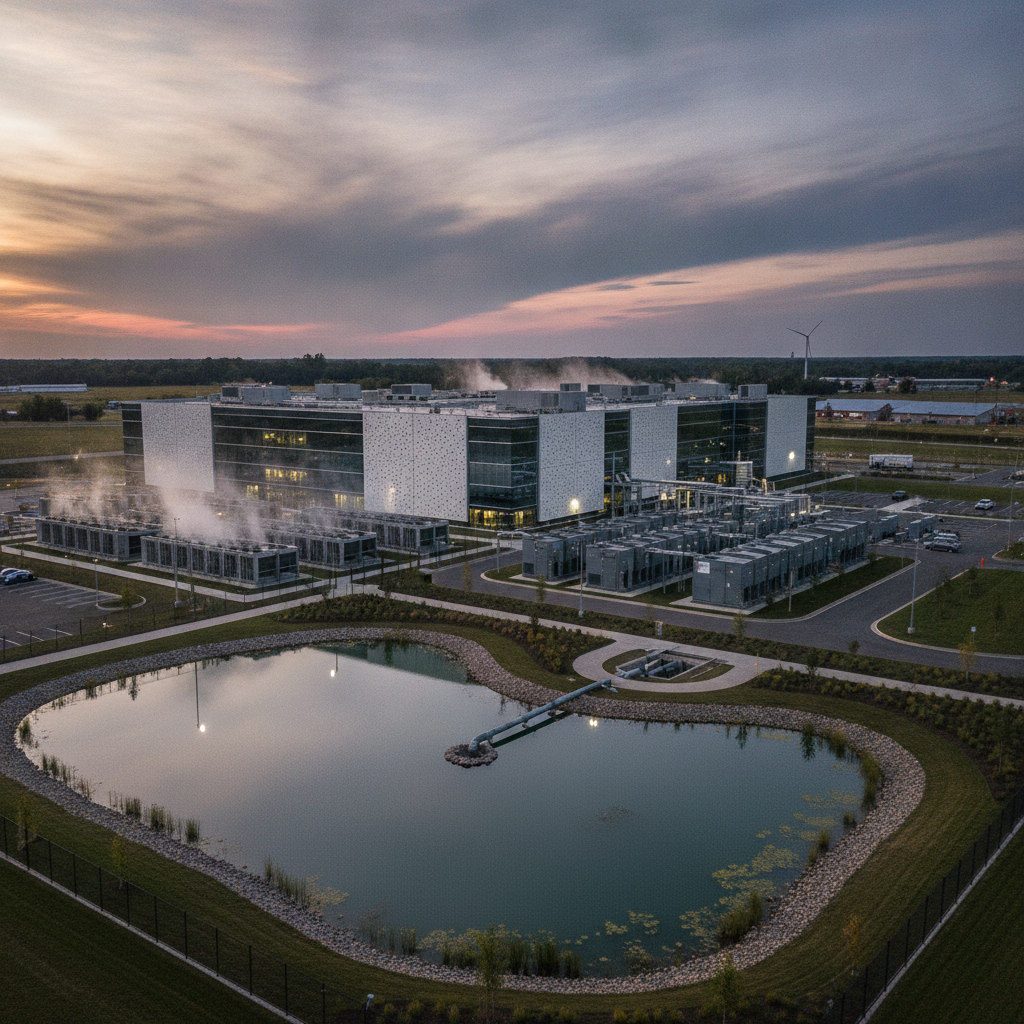
The success of a data center project is often determined before a single drawing is made. The initial due diligence and site selection phase is paramount, focusing on identifying properties that can support the facility’s extreme operational requirements. The primary consideration is almost always utility availability, specifically redundant, high-capacity power from separate substations and diverse, high-bandwidth fiber optic connectivity. A site without clear access to these resources is a non-starter. Our team works with utility providers early to obtain availability letters and analyze the feasibility of service extensions, which can be a major cost and schedule driver. Beyond power and fiber, a thorough site investigation includes a comprehensive zoning compliance review to ensure the proposed use is permitted. We also conduct preliminary environmental assessments and analyze the property’s flood zone designation, as determined by FEMA flood maps. A critical component of this phase is the initial geotechnical analysis, which informs foundation design and the feasibility of constructing large-scale stormwater systems. This early investment in due diligence mitigates risk and prevents costly surprises during the formal site development process.
Navigating Zoning and Land Use Regulations
Comparison: Data Center vs. Standard Warehouse Permitting Requirements
| Requirement Category | Standard Warehouse Facility | Data Center Facility |
|---|---|---|
| Power Utility Review | Standard review for commercial service; typically connects to existing distribution lines. | Intensive, high-level review requiring new substations, redundant feeders, and long-range capacity planning with the utility provider. |
| Water & Sewer Demand | Primarily for domestic use (restrooms) and standard fire suppression systems. | Massive demand for cooling tower make-up water and complex fire suppression, often requiring new, oversized water mains and lift stations. |
| Stormwater ERP Criteria | Standard calculations for roof and pavement runoff, typically managed with a single detention pond. | Complex hydrological modeling for vast impervious areas; often requires multiple treatment trains, and advanced BMPs to meet WMD water quality and quantity rules. |
| Security & Fencing Review | Standard commercial fencing, primarily for asset protection. Reviewed under local zoning code. | Extensive review of anti-climb fencing, vehicle crash barriers, and controlled access points. Coordinated with security and operational plans. |
| Generator Permitting | Typically a single, smaller generator for emergency lighting. Standard electrical permit. | Multiple large-scale generators in a 'generator farm' requiring air quality permits, fuel storage containment plans (SPCC), and extensive noise attenuation studies. |
| Geotechnical Analysis | Standard borings for foundation and pavement design. | Extensive Geotechnical soil report needed for heavy foundation loads, vibration-sensitive equipment pads, and large stormwater pond stability analysis. |
Zoning and land use regulations dictate what can be built and how. Data centers typically fall under industrial or heavy commercial zoning districts, but local ordinances vary significantly. A key challenge is ensuring the project aligns with the local government’s comprehensive plan, which is the long-range blueprint for community growth. In some cases, a site may require a rezoning, a special exception, or a conditional use permit, each involving public hearings and a lengthy approval process that can add months to the project timeline. Our role as Civil Engineers involves preparing the necessary documentation and exhibits for these applications, presenting the project’s technical aspects to planning boards and city or county commissions. We address critical land use considerations such as building height restrictions, setback requirements, noise ordinances (especially for backup generators), and landscape buffering. Achieving zoning compliance is a foundational step that must be secured before significant engineering design can be finalized, making it a critical path item in the overall land development schedule.
Critical Utility Coordination and Capacity Planning
Data centers are defined by their utility demand. Effective utility coordination is not just a task; it is the central pillar of the entire design and permitting effort. The power demand of a single data center can equal that of a small city, requiring direct coordination with power companies to plan for new substations, dedicated feeders, and redundant power sources. This process involves detailed load calculations and extensive negotiations to secure the necessary capacity and infrastructure commitments, often with lead times exceeding 18-24 months. Water and wastewater are equally critical. Water is needed for sophisticated cooling systems (like cooling towers) and essential fire suppression systems, while sanitary sewer must accommodate staff facilities. We perform a detailed capacity analysis to quantify these demands and design the on-site and off-site infrastructure required. This includes designing water mains, lift stations, and force mains. This level of infrastructure design requires constant communication between the project’s MEP engineers, the civil engineer, and multiple utility providers to ensure a seamless and integrated site plan design.
Advanced Stormwater Management for Large Impervious Surfaces
With massive building footprints and extensive pavement for service yards and parking, data centers create vast impervious surfaces. In Florida, this triggers stringent stormwater management regulations enforced by the state’s Water Management Districts (WMDs) and local governments. The primary goal is to manage stormwater runoff on-site to prevent flooding and protect water quality, which requires a sophisticated drainage design and an Environmental Resource Permit (ERP). The design must account for both water quantity (controlling the peak discharge rate) and water quality (treating runoff to remove pollutants). Common solutions include large wet detention or dry retention ponds, underground exfiltration systems, and other Best Management Practices (BMPs). Our engineers perform detailed impervious area calculations and hydrological modeling to design a system that meets all agency review criteria. This is a complex part of the permitting process that requires deep knowledge of Florida’s environmental codes.
Site Layout, Security, and ADA Compliance
The layout of a data center site is a careful balance of operational efficiency, security, and regulatory compliance. The design must facilitate secure and efficient circulation for delivery trucks, maintenance vehicles, and staff. This includes designing robust pavement sections for heavy vehicle loads and ensuring adequate fire department access around the entire facility. A key part of the site plan design is integrating formidable security measures, such as perimeter fencing, controlled access gates, and vehicle barriers, directly into the civil drawings. While security is paramount, the facility must also adhere to federal and state accessibility laws. All administrative or office areas of the site must meet strict ADA compliance standards, including accessible parking spaces, ramps, and clear paths of travel from the parking lot to the building entrance. Our designs meticulously incorporate these requirements to ensure the project meets all life-safety and accessibility codes, avoiding costly rework during construction. This attention to detail is a hallmark of quality site engineering services.
The Permitting Gauntlet: Agency Review and Submittals
Securing a site plan approval for a data center involves a multi-layered agency review process. A complete set of construction documents is submitted to numerous agencies, often simultaneously. Key reviewers in Florida typically include the local municipality’s planning and engineering departments, the county, the applicable Water Management District (e.g., SFWMD, SWFWMD), the Florida Department of Environmental Protection (FDEP) for water and sewer permits, and sometimes the Florida Department of Transportation (FDOT) if the project impacts a state roadway. Each agency reviews the plans for compliance with its specific codes and regulations, from the Florida Building Code to local drainage criteria. The process involves responding to rounds of technical comments and making necessary revisions. Successful navigation of this phase relies on meticulous preparation of all permit submittals, a deep understanding of each agency’s requirements, and proactive communication. As one of the leading Civil Engineering firms in the region, we manage this entire process to streamline approvals and keep the project on schedule.
The RSP Engineers Approach to Data Center Site Development
At RSP Engineers, we employ a phased, strategic approach to guide data center projects from concept to completion. Our process is designed to de-risk the project early and build momentum through each stage of approval. It begins with an exhaustive Feasibility and Due Diligence phase, where we verify utility capacity and uncover any potential zoning or environmental fatal flaws. This is followed by Conceptual and Preliminary Engineering, where we develop the initial site plan design, focusing on optimizing the layout for operations while meeting key regulatory constraints. Once the concept is proven, we move into Final Engineering and Permitting. Here, our team produces a full set of detailed construction documents covering grading, drainage, utilities, paving, and erosion control. We prepare and submit all necessary applications for the full suite of permit submittals required by local, state, and regional agencies. Finally, during the construction phase, we offer Construction Management Services, including site inspections, contractor coordination, and final certification to ensure the project is built exactly as designed and approved.
Common Pitfalls in Data Center Permitting
Even with careful planning, data center projects can encounter significant hurdles. One of the most common pitfalls is underestimating the lead time for high-capacity power delivery; securing commitments and constructing new substations can take years, not months. Another frequent issue is an inadequate Geotechnical analysis, which can lead to unforeseen soil conditions that require costly foundation redesigns or soil remediation. Failing to properly plan for generator noise is another major issue, often resulting in comments from planning staff or opposition from adjacent property owners. From a civil engineering perspective, a critical error is failing to master-plan the stormwater management system for future campus expansion. Phased build-outs are common, and the initial drainage design must accommodate the ultimate impervious area to avoid a complete system redesign later. Similarly, not planning for redundant utility pathways in the initial site development phase can create significant operational vulnerabilities down the road.
Your Partner for Mission-Critical Site Development
The complexities of data center development demand an engineering partner with proven experience in mission-critical facilities. RSP Engineers provides the expert guidance needed to navigate every stage of the process, from initial site selection and due diligence to final permit acquisition. Our team specializes in complex utility coordination, advanced stormwater management, and securing challenging permitting approvals across Florida. We deliver the robust site infrastructure design that these critical facilities depend on. Contact us to discuss how our site engineering services can ensure the success of your next data center project.
Conclusion
Successfully obtaining a site plan approval for a data center in Florida is a testament to meticulous planning, technical excellence, and strategic navigation of a complex regulatory environment. The process requires a deep understanding of the unique demands these facilities place on a site, particularly regarding power, cooling, and connectivity. Proactive utility coordination, a robust stormwater management strategy, and a carefully prepared set of permit submittals are the cornerstones of a successful project. Partnering with an experienced civil engineering firm is not just an advantage; it is essential for bringing these vital infrastructure assets online.
FAQs
-
The timeline can vary dramatically based on project complexity, but it is a lengthy process. For a straightforward site that is properly zoned and has adequate utility access, the design and permitting phase can take 12 to 18 months. If a rezoning or major utility coordination for off-site infrastructure is required, the timeline can easily extend beyond 24 months.
-
While all utilities are important, redundant high-capacity power is the single most critical factor. A site’s viability is fundamentally dependent on the ability of the local utility provider to deliver reliable, dual-feed power at the massive scale required. Early and continuous utility coordination is essential.
-
Absolutely. A comprehensive Geotechnical soil report is non-negotiable. It provides essential data for designing foundations to support extremely heavy equipment loads, for pavement design in high-traffic service yards, and for ensuring the stability and permeability of large stormwater management ponds. It is a foundational piece of the engineering design.