
Data Center Drainage Construction Best Practices
A guide to best practices in data center drainage construction. Learn about trench safety, compaction, testing, and certification from Florida’s leading civil engineers.
Trench Safety and Effective Dewatering
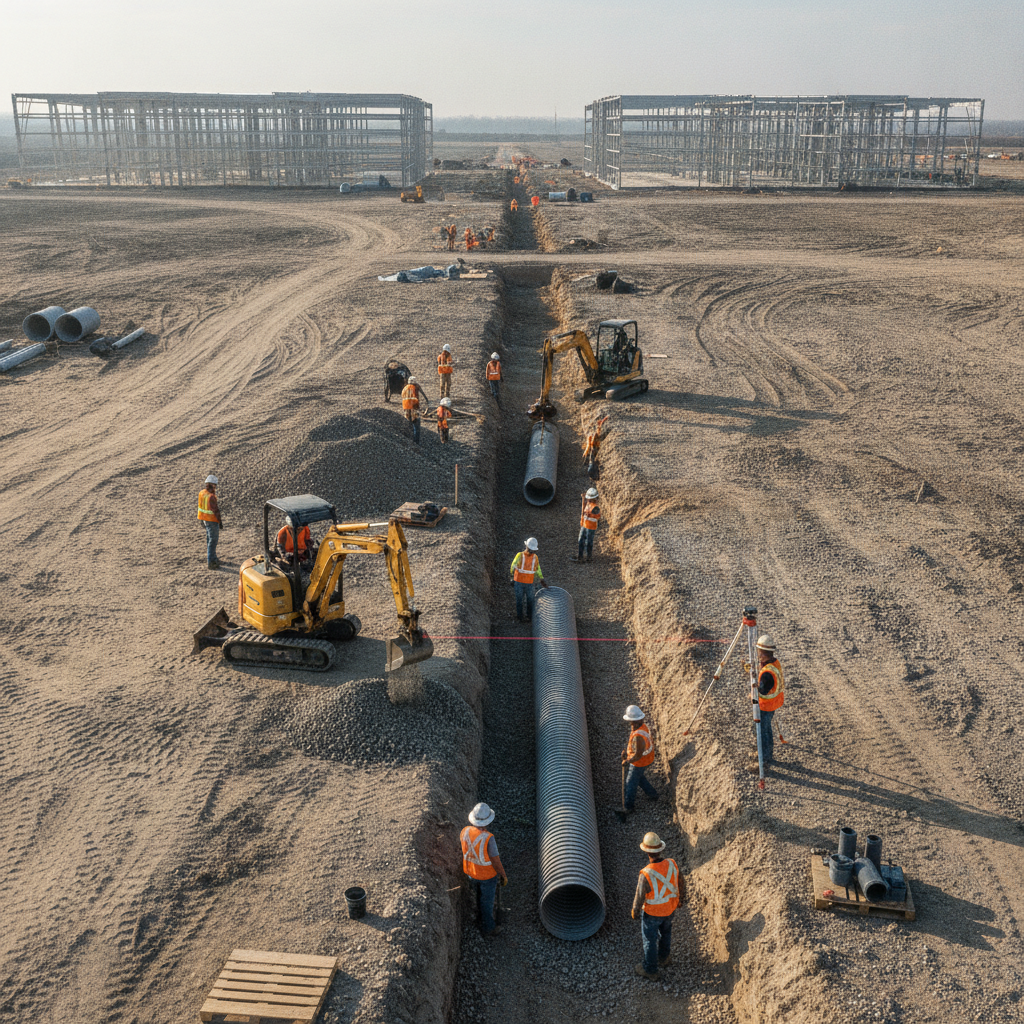
The first step in any successful pipe installation is ensuring a safe and stable work environment. For data center projects, which often involve deep and extensive trenching for large-diameter storm pipes and utility conduits, trench safety is paramount. All excavations must comply with OSHA standards, utilizing appropriate shoring, benching, or sloping based on soil conditions identified in the Geotechnical soil report. A competent person must be on-site to inspect trenches daily for any signs of instability. Equally important is dewatering. Florida’s high water table can quickly compromise trench stability and prevent proper pipe installation. A robust dewatering plan, often involving well points or sump pumps, is essential to keep the trench dry. This allows for proper subgrade inspection, prevents pipe flotation, and ensures that bedding and backfill materials can be placed and compacted to the required engineering specifications. Failure to control groundwater can lead to long-term settlement issues and compromise the entire drainage design.
Subgrade Preparation, Bedding, and Compaction
Drainage System Testing and Acceptance Criteria
| Test / Inspection Method | Purpose | Typical Acceptance Criteria (Florida) |
|---|---|---|
| Mandrel (Deflection) Test | Ensures flexible pipe (PVC, HDPE) has not been excessively deformed during backfill and compaction. | A 9-pronged mandrel sized to 95% of the pipe's base internal diameter must pass through freely. |
| Low-Pressure Air Test | Checks for leaks in the pipe joints of a sealed storm sewer system. | The pipe section must hold a specified air pressure (e.g., 3.5 psi) for a minimum duration with minimal pressure drop, per ASTM F1417. |
| Hydrostatic Exfiltration/Infiltration Test | Verifies watertightness by filling the pipe with water and measuring loss over time. | Water loss must not exceed a specified limit (e.g., 200 gallons per inch of diameter per mile per day) over a 24-hour period. |
| CCTV Video Inspection | Provides visual confirmation of pipe interior condition, grade, and joint integrity. | No visible cracks, joint separation, blockages, or standing water (sags/dips) exceeding specified depth (e.g., 10% of pipe diameter). |
| Manhole Vacuum Test | Ensures the integrity and watertightness of precast concrete manhole structures. | The structure must hold a vacuum of 10 inches of mercury with a maximum loss of 1 inch over a specified time, per ASTM C1244. |
| As-Built Survey Verification | Confirms final inverts, grades, and locations match the approved engineering plans. | Invert elevations must be within a tight tolerance (e.g., +/- 0.05 feet) of the design elevation. Locations must match planimetrics. |
Once the trench is safe and dry, the focus shifts to creating a stable foundation for the pipe. The trench bottom, or subgrade, must be firm and free of loose material. Any unsuitable soils must be over-excavated and replaced with engineered fill. The pipe bedding—typically clean, crushed stone or sand—is then placed and graded to provide uniform support along the entire length of the pipe barrel. The type and depth of bedding are critical for preventing point loads that could crack or deflect the pipe over time. After the pipe is set, the haunching and initial backfill must be carefully placed and compacted in lifts. This process, known as compaction, is crucial for providing lateral support to the pipe and preventing future settlement. Each lift of backfill material must be tested for density using methods like a nuclear density gauge to ensure it meets the project’s compaction testing requirements, which are typically 95% to 98% of the Standard Proctor Maximum Dry Density. Proper compaction is a cornerstone of a successful site development project.
Precision Grade and Alignment Control
A drainage system functions entirely on gravity. Therefore, achieving the precise grade and alignment specified in the civil engineering plans is non-negotiable. Even minor deviations can lead to reduced flow capacity, sediment buildup, and eventual blockages. Modern construction relies on laser levels and GPS-guided equipment to ensure every section of pipe is installed at the correct slope and horizontal alignment. The contractor must maintain constant verification throughout the installation process. This precision extends to the installation of structures like manholes and catch basins. These structures must be set to the exact elevations shown on the plans to ensure proper hydraulic function and to match final surface grades for pavement or landscaping. Misaligned structures can create maintenance nightmares and are a common source of agency review comments during project closeout. Strict adherence to the drainage design is essential for long-term performance.
System Testing, Inspection, and Agency Acceptance
Before backfilling is complete, the newly installed drainage system must undergo rigorous testing and inspection to verify its integrity. This phase is a critical quality control checkpoint. Common tests include mandrel testing (deflection testing) for flexible pipes like HDPE and PVC to ensure they haven’t been crushed or deformed during installation. Another key test is a low-pressure air test or hydrostatic test to check for leaks at the pipe joints. A Professional Engineer or a certified inspector should witness these tests and visually inspect the interior of the pipeline using a camera. This video inspection identifies any dips (sags), obstructions, or joint failures that need correction. Passing these tests is a prerequisite for gaining acceptance from the local municipality or drainage district, a key step in the permitting process. All test results must be documented and submitted as part of the project closeout package.
Protecting Installed Infrastructure During Phased Construction
On a large data center site, construction is a multi-phase, long-duration process. A drainage system installed early in the project is vulnerable to damage from subsequent construction activities. Heavy equipment traffic from building construction, paving operations, or other utility coordination can crack pipes, damage structures, or cause settlement if not properly managed. It is critical to establish clear protocols for protecting installed infrastructure. These protocols should include marking the location of all underground utilities, establishing designated heavy equipment crossing points with extra cover or steel plates, and conducting regular inspections of manholes and inlets for damage. The construction administration team must enforce these rules diligently. Forgetting to protect these assets can lead to costly repairs and significant project delays, undoing all the careful work of the initial installation.
As-Built Surveys and Final Certification
The final step before project closeout is the creation of as-built drawings. An as-built survey is a detailed survey performed by a licensed surveyor after construction is complete. It documents the exact horizontal and vertical location of all drainage components as they were actually installed. This is not just a formality; it’s a critical piece of the permanent record. These surveys verify that the system was built in substantial conformance with the approved civil engineering plans. The as-built survey data is used by the design engineer to prepare a final certification letter. This letter, sealed by a Professional Engineer, is submitted to the permitting agency (such as the Water Management District and local municipality) and formally states that the stormwater management system has been constructed according to the permitted design. This certification is often the final gate to receiving a Certificate of Occupancy and closing out the site development permit.
RSP’s Approach to Drainage Construction Administration
At RSP Engineers, our involvement doesn’t end when the design is permitted. We believe that rigorous construction administration is essential to realizing the design intent and protecting our client’s investment. Our process for data center drainage construction includes pre-construction meetings to review specifications with the contractor, regular site visits to observe installation practices, and formal review of all material submittals and test reports. We act as the owner’s representative, verifying that compaction densities, pipe grades, and material standards are met at every step. Our team coordinates directly with agency inspectors to streamline the acceptance process, ensuring that the final as-built certification is a smooth and efficient conclusion to a well-managed construction project.
Common Pitfalls in Data Center Drainage Installation
Even with detailed plans, construction issues can arise. One common problem is encountering unforeseen underground conflicts, such as undocumented utilities, which requires rapid redesign and utility coordination. Another frequent issue is improper compaction around structures, leading to settlement of the surrounding pavement. We also often see contractors failing to protect installed pipes from heavy equipment, resulting in cracked pipes that must be excavated and replaced. Proactive inspection and communication are the best defenses against these costly mistakes. A vigilant construction administration team can identify these issues early and enforce corrective action before they become major problems. Frequently Asked Questions What is the most common cause of drainage system failure during construction? The most common cause is improper backfilling and compaction. When bedding isn’t placed correctly or backfill isn’t compacted in proper lifts to the specified density, it can lead to pipe deflection (ovalization), joint failure, or settlement that creates sags in the line, all of which compromise the system’s long-term hydraulic performance. How do as-built surveys for drainage impact the final project closeout? As-built surveys are a critical requirement for permit closeout. They provide the official record that the stormwater management system was built according to the permitted drainage design. Without an accurate and certified as-built survey, a municipality or water management district will not release the project from its permit obligations, which can prevent the owner from obtaining a Certificate of Occupancy. Why is trench dewatering so critical for data center sites in Florida? Florida’s high groundwater table means that trenches can fill with water quickly. If not managed through active dewatering, this water can destabilize trench walls, prevent proper compaction of bedding and backfill, and potentially cause installed pipes to float out of alignment. For a mission-critical facility, this introduces unacceptable risks of future settlement and system failure. What are the consequences of improper pipe bedding? Improper bedding creates point loads on the pipe instead of providing uniform support. This can lead to structural failure, such as cracking in rigid pipes (concrete) or excessive deflection in flexible pipes (PVC/HDPE). Over time, this can cause system blockages, soil infiltration, and sinkholes, requiring extremely expensive and disruptive repairs. How does RSP handle unexpected utility conflicts discovered during trenching? When an unforeseen conflict is discovered, our field and design teams collaborate immediately. We perform the necessary utility coordination with the conflicting utility owner, survey the exact location and depth of the obstacle, and rapidly engineer a design modification. This solution is then communicated to the contractor and, if necessary, submitted to the permitting agency to keep the project moving forward with minimal delay.
Partner with RSP for Your Mission-Critical Site Development
Ensuring the flawless execution of your data center’s drainage system requires deep expertise in Florida’s unique construction environment. The team at RSP Engineers provides comprehensive site engineering services, from initial design and permitting to hands-on construction administration and final certification. We protect your investment by ensuring every aspect of the site development process meets the highest standards of quality and resilience. Contact us today to discuss how our experience can bring certainty to your next mission-critical project.
Conclusion
The long-term reliability of a data center depends on the quality of its foundational infrastructure. Best practices in drainage construction—from meticulous compaction testing and grade control to thorough system testing and final as-built certification—are not just items on a checklist. They are essential risk mitigation strategies that protect a multi-million dollar investment from the fundamental threat of water. By prioritizing these construction principles, developers can ensure their facilities are built on a solid, resilient, and dry foundation, ready to meet the demands of the digital age.
FAQs
-
Data Center Drainage Construction Best Practices requires careful planning, qualified engineering, and compliance with the applicable codes and permits.
-
Getting Data Center Drainage Construction Best Practices right protects safety, supports regulatory compliance, and avoids costly redesigns or delays.
-
RSP Engineers provides licensed expertise and end-to-end support for Data Center Drainage Construction Best Practices, from early planning through permitting.