
Step-by-Step Guide to the Land Development Process
Explore the complete land development process in Florida, from feasibility to closeout. Learn about surveying, civil design, permitting, and construction administration.
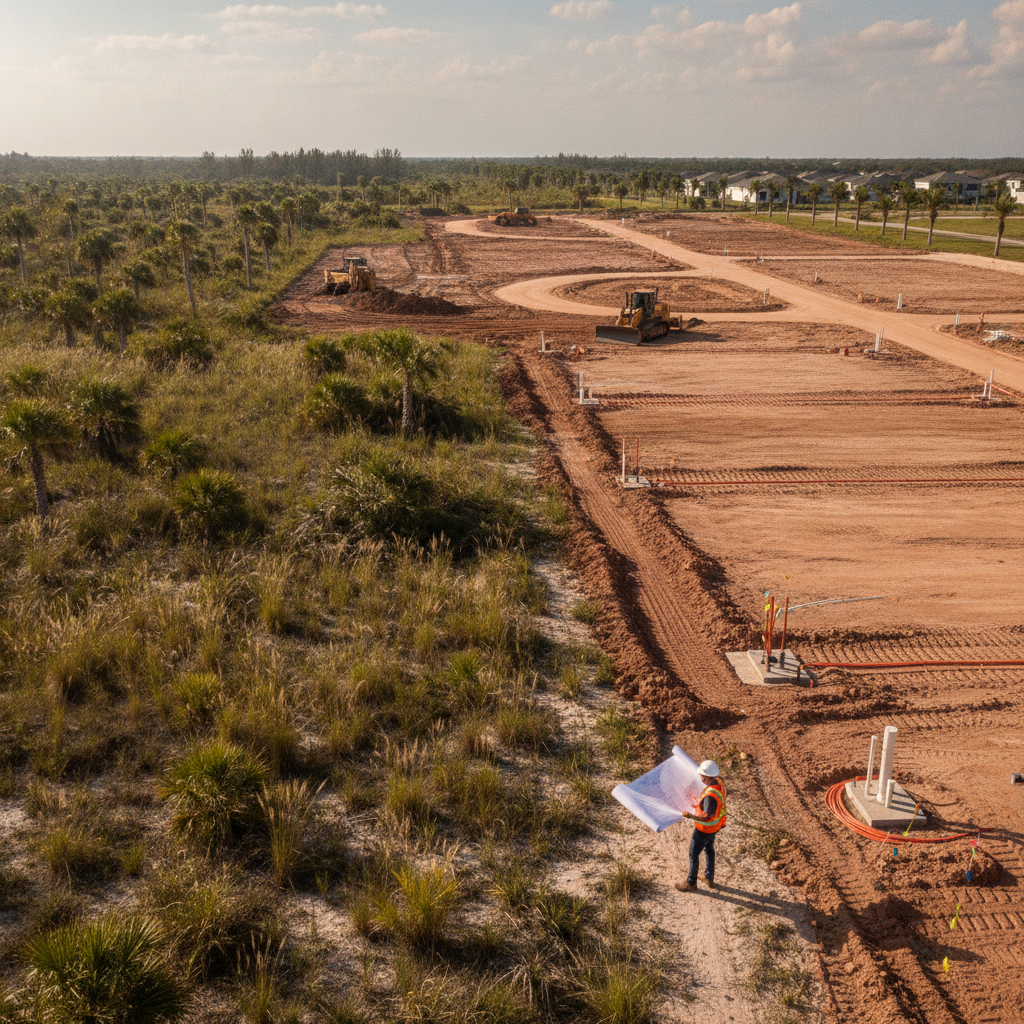
Feasibility and Due Diligence
The first step in any land development project is conducting a thorough feasibility study and due diligence. This phase involves assessing the site’s potential and identifying any constraints that could impact development. Key activities include: Reviewing zoning regulations and land use plans Conducting environmental assessments Evaluating access to utilities and infrastructure Identifying potential stormwater management issues Understanding these factors early on helps developers make informed decisions and avoid costly surprises later in the process.
Surveying and Geotechnical Investigations
Phase-by-Phase Activities and Deliverables
| Phase | Key Activities | Deliverables |
|---|---|---|
| Feasibility and Due Diligence | Site assessment, zoning review | Feasibility report, zoning analysis |
| Surveying and Geotechnical | Topographic survey, soil testing | Survey maps, geotechnical report |
| Conceptual Design | Site planning, entitlement | Conceptual site plan, entitlement approvals |
| Civil Design | Grading, drainage, utilities | Construction drawings, utility plans |
| Permitting | Permit applications, agency review | Approved permits, review comments |
| Construction Administration | Bidding, construction oversight | Bid documents, progress reports |
| Closeout | Final inspections, as-builts | Occupancy permit, as-built drawings |
Accurate surveying and geotechnical investigations are critical to the success of any land development project. These activities provide essential data about the site’s topography, soil conditions, and existing structures. Key deliverables include: Boundary and topographic surveys Geotechnical soil reports and analysis Identification of potential drainage issues This information forms the foundation for the subsequent design phases, ensuring that the project is built on solid ground.
Conceptual Design and Entitlement
During the conceptual design phase, developers create preliminary plans that outline the project’s scope and layout. This phase often involves: Developing site plans and layouts Engaging with local authorities for zoning compliance Securing necessary entitlements and approvals Successful entitlement ensures that the project aligns with local regulations and community expectations, paving the way for detailed design work.
Civil Design: Site, Grading, Drainage, and Utilities
The civil design phase involves detailed planning of the site’s infrastructure, including grading, drainage, and utility systems. Key components include: Site grading plans to ensure proper water flow Drainage design to manage stormwater effectively Utility coordination for water, sewer, and electrical systems These designs must comply with local and state regulations, ensuring the site’s functionality and sustainability.
Permitting: Local and Agency/ERP
Obtaining the necessary permits is a critical step in the land development process. This phase involves: Submitting permit applications to local agencies Engaging with the Environmental Resource Permit (ERP) process Addressing any review comments from regulatory bodies Successful permitting ensures that the project meets all regulatory requirements, allowing construction to proceed without delays.
Bidding and Construction Administration
Once permits are secured, the project moves into the bidding and construction administration phase. Key activities include: Preparing bid documents and selecting contractors Overseeing construction activities to ensure compliance with plans Managing changes and addressing unforeseen issues Effective construction administration ensures that the project is completed on time and within budget.
Closeout and As-Builts
The final phase of the land development process involves project closeout and the preparation of as-built drawings. This phase includes: Conducting final inspections and obtaining occupancy permits Preparing as-built drawings for record-keeping Ensuring all contractual obligations are met Proper closeout ensures that the project is fully compliant and ready for use.
RSP Engineers’ Approach to Land Development
At RSP Engineers, we guide our clients through each phase of the land development process with precision and expertise. Our team of Florida Licensed Engineers provides comprehensive site engineering services, from initial feasibility studies to final project closeout. We prioritize clear communication and proactive problem-solving to ensure successful project outcomes.
Common Issues in Land Development
Land development projects can encounter a variety of challenges, including: Unexpected site conditions affecting geotechnical engineering Delays in permitting due to regulatory changes Coordination issues with utility providers Our team is equipped to address these issues promptly, minimizing impacts on project timelines and budgets.
Contact RSP Engineers
For expert guidance on your next land development project, contact RSP Engineers. Our team of Florida Licensed Engineers offers comprehensive site engineering services, from planning and permitting to construction oversight. Let us help you navigate the complexities of the land development process with confidence.
Conclusion
The land development process in Florida is a multifaceted journey that requires expertise in civil engineering, permitting, and construction administration. By understanding each phase and working with experienced professionals, developers can achieve successful project outcomes. RSP Engineers is committed to providing the technical support and guidance needed to navigate this complex process effectively.
FAQs
-
The first step is conducting a feasibility study and due diligence to assess the site’s potential and identify any constraints.
-
Geotechnical investigations provide critical data about soil conditions, which influence design decisions and construction methods.
-
The permitting process can vary depending on the project’s complexity and the regulatory environment, typically ranging from a few months to over a year.