
Data Center Environmental Approvals: A Florida Civil Engineering Guide
A comprehensive guide from RSP Engineers on the critical environmental approvals and civil engineering requirements for data center construction in Florida, covering stormwater, wetlands, and utility
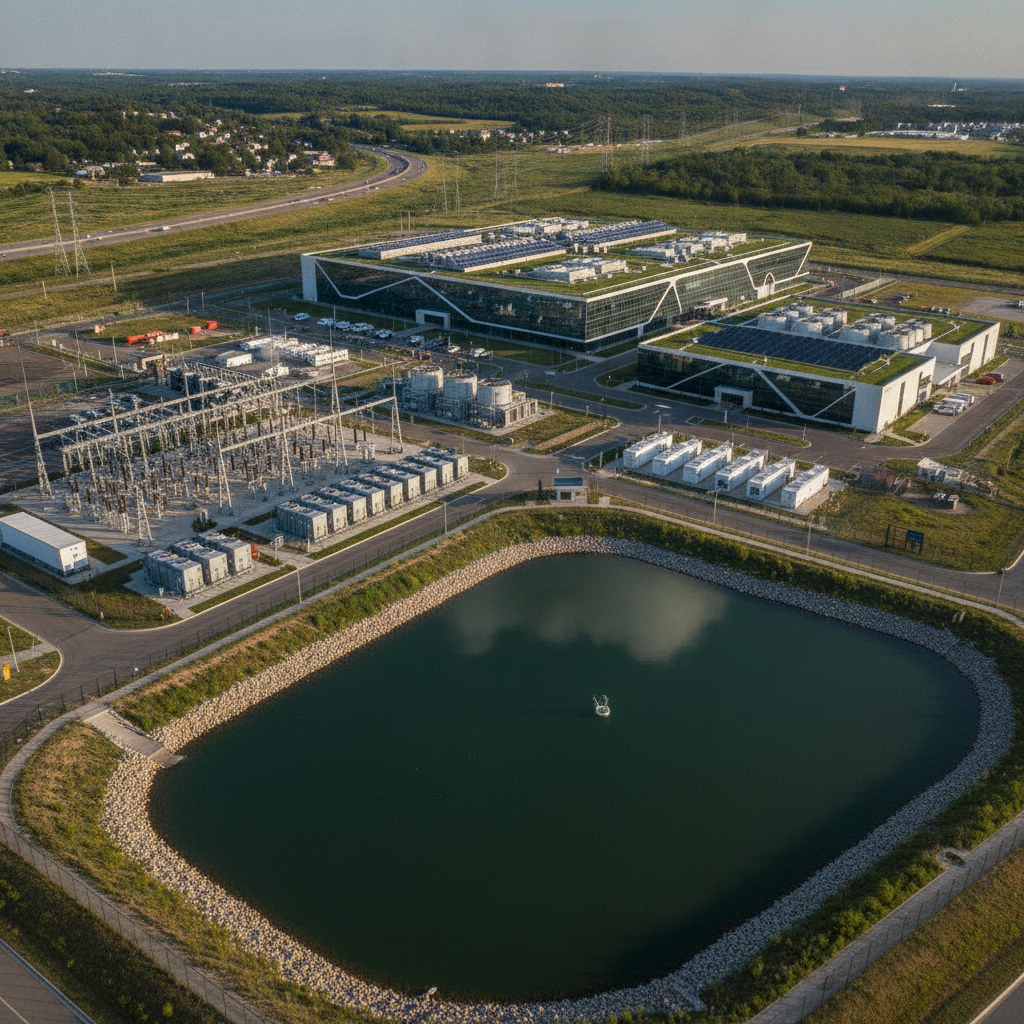
Navigating Florida’s Environmental Resource Permit (ERP) Process for Data Centers
The cornerstone of environmental regulation for large-scale development in Florida is the Environmental Resource Permit (ERP). Due to their massive impervious areas (roofs, parking lots, access roads), data center projects almost invariably trigger the need for an ERP. This permit is jointly administered by the Florida Department of Environmental Protection (FDEP) and the state’s five Water Management Districts (WMDs), and it governs everything from stormwater management to wetland impacts. The ERP application requires a comprehensive engineering design that demonstrates the project will not cause adverse water quality, flooding, or environmental impacts. For a data center, this involves creating a sophisticated stormwater management system capable of handling runoff from hundreds of thousands of square feet of non-porous surfaces. The review process is rigorous, with agencies scrutinizing drainage calculations, water quality treatment mechanisms, and potential effects on adjacent properties and ecosystems. Early engagement with a Civil Engineer near me who is experienced in WMD criteria is essential for a smooth review.
Stormwater Management Design for Mission-Critical Facilities
Key Environmental Permit Requirements for Florida Data Centers
| Permit/Approval | Governing Agency | Key Considerations for Data Centers | Typical Timeline |
|---|---|---|---|
| Environmental Resource Permit (ERP) | FDEP / Water Management District | Stormwater management for massive impervious areas; water quality treatment; wetland and surface water impacts. | 6-12 months |
| NPDES Construction Generic Permit | FDEP / EPA | Required for sites over 1 acre. Mandates a Stormwater Pollution Prevention Plan (SWPPP) and erosion control measures. | 1-2 months |
| Local Site Plan Approval | City / County Government | Zoning compliance, utility connections, traffic impact, noise ordinance adherence (generators), and landscaping/buffering. | 4-9 months |
| FWC/USFWS Consultation | FWC / USFWS | Required if protected species or critical habitats are present. May require species-specific surveys and mitigation plans. | 3-12+ months |
| Consumptive Use Permit (CUP) | Water Management District | May be required for facilities with very high water demands for cooling systems, depending on the source and volume. | 6-12 months |
A data center’s operational uptime is paramount, and its stormwater management system must be designed with the same level of resilience. The sheer scale of impervious surfaces necessitates a robust drainage design that can manage Florida’s intense rainfall events without threatening the facility or surrounding areas. This typically involves large, engineered systems like wet detention or retention ponds, underground exfiltration trenches, and complex conveyance networks. Beyond flood control, the design must incorporate state-mandated water quality treatment to remove pollutants from runoff before it discharges off-site. Furthermore, projects over one acre require a National Pollutant Discharge Elimination System (NPDES permit) for construction activities, which mandates erosion and sediment control best management practices (BMPs). The design must account for 100-year storm events and often includes redundant features to ensure the site remains secure and operational even in extreme weather.
Wetland Delineation and Mitigation Strategies
Many undeveloped parcels in Florida contain jurisdictional wetlands, which are heavily protected under state and federal law. The first step in the process is a formal wetland delineation, where environmental scientists identify the precise boundaries of any wetlands on the property. If the proposed site plan design cannot completely avoid these areas, any unavoidable wetland impacts must be offset through mitigation. Florida uses the Uniform Mitigation Assessment Method (UMAM) to quantify the ecological value lost and determine the required mitigation credits. This often involves purchasing credits from a permitted wetland mitigation bank, which can be a significant and early project expense. The process of assessing impacts, negotiating with agencies, and securing mitigation can add months to the permitting timeline, making early identification of wetlands a critical due diligence item.
Utility Coordination: Power, Water, and Fiber Demands
Data centers have an insatiable appetite for utilities. Securing adequate power, water, and fiber is a primary driver of site selection and a major component of the pre-construction process. The utility coordination effort is a massive undertaking, requiring early and continuous engagement with multiple providers. A project may require a new electrical substation, redundant high-capacity power feeds, and significant water mains for cooling systems, all of which involve complex design, easement acquisition, and construction. Developers must secure binding utility capacity letters from providers confirming they can meet the project’s demands. This process can reveal significant off-site infrastructure upgrades that the developer may be required to fund. The design and permitting of these utility infrastructure extensions run parallel to the site plan approval and can be a major critical-path item for the project schedule.
Endangered Species and Habitat Assessments
Florida is home to numerous protected wildlife species, and a thorough habitat assessment is a standard part of environmental due diligence. State and federal laws require surveys for threatened and endangered species like the gopher tortoise, sand skink, Florida scrub-jay, and eastern indigo snake. The presence of these species or their habitats can significantly constrain the development program. If protected species are found, a management and relocation plan, approved by the Florida Fish and Wildlife Conservation Commission (FWC) or the U.S. Fish and Wildlife Service (USFWS), will be required. This can involve obtaining incidental take permits, purchasing conservation land, or funding relocation efforts. These requirements can impact the site layout, clearing schedule, and overall project budget, making early ecological surveys a prudent investment.
Local Government Permitting: Zoning, Land Use, and Site Plan Approval
In addition to state-level environmental permits, a data center must secure approval from the local city or county government. This process begins with confirming the property’s zoning and land use designations in the local Comprehensive Plan are appropriate for an industrial facility. If not, a lengthy rezoning or land use amendment process, often involving public hearings, may be necessary. Once zoning is confirmed, a detailed site plan must be submitted for review against the municipality’s land development regulations. This review covers access, parking, landscaping, lighting, architectural standards, and compliance with noise ordinances—a key factor given the need for large backup generators. This local permitting process runs concurrently with the ERP and other state applications and requires its own dedicated set of detailed engineering plans and reports.
RSP Engineers’ Approach to Data Center Site Development
At RSP Engineers, we employ a phased, proactive approach to guide data center projects through the complex approvals process. Our methodology is designed to identify and mitigate risks early, ensuring a predictable and efficient path to construction. Phase 1: Due Diligence & Feasibility: We begin with a thorough site investigation, including preliminary environmental assessments, wetland flagging, utility availability research, and a review of zoning and land use regulations. This phase provides a clear picture of a site’s viability before significant capital is invested. Phase 2: Conceptual Design & Agency Pre-Application: We develop a conceptual site layout and stormwater plan to facilitate pre-application meetings with key regulatory agencies. This early feedback is invaluable for refining the design and streamlining the formal review. Phase 3: Final Engineering & Permit Submittals: Our team prepares the full set of construction documents and permit applications, including detailed drainage design, utility plans, and all required environmental reports. We manage the entire submittal and review process, responding to agency comments efficiently. Phase 4: Construction Administration: We provide ongoing support during construction, offering Construction Management Services to ensure the project is built according to the approved plans and permit conditions, and we manage the final certification and permit closeout process.
Common Pitfalls in Data Center Environmental Permitting
Even experienced developers can encounter obstacles in Florida’s regulatory environment. Some of the most common issues we help our clients avoid include: Underestimating Utility Timelines: Failing to engage utility providers early enough can lead to major delays, as designing and constructing off-site power and water infrastructure can take years. Inadequate Geotechnical Investigation: Data centers are incredibly heavy structures. An insufficient Geotechnical soil report can lead to costly foundation redesigns or, worse, structural issues. A proper Soil boring test is non-negotiable. Ignoring Noise and Visual Impacts: Backup generators produce significant noise. Failing to account for local noise ordinances with acoustic modeling and mitigation measures can halt a project during site plan review. Discovering Protected Species Late: Finding gopher tortoises or other listed species after design is complete can force a costly and time-consuming site redesign and permitting amendment. Insufficient Stormwater Design: Cutting corners on stormwater design can lead to flooding, permit violations, and long-term operational risks for a mission-critical facility.
Partner with Florida’s Data Center Engineering Experts
Navigating the environmental approval process for a data center in Florida requires a deep understanding of state and local regulations, strong agency relationships, and specialized technical expertise. The team at RSP Engineers provides the comprehensive site engineering services needed to manage these complexities. From initial due diligence and site development planning to final permitting and construction, we serve as your trusted partner. Let us help you de-risk your project and pave a clear path to groundbreaking. Contact us today to discuss your data center development needs.
Conclusion: Proactive Engineering is Key to Success
The path to constructing a data center in Florida is paved with complex environmental and regulatory challenges. Success hinges on proactive, expert-led planning and engineering. Engaging experienced Civil Engineers early in the process to manage environmental due diligence, navigate the intricacies of the ERP application, and execute detailed utility coordination is not a luxury—it is a fundamental requirement for a viable project. A robust drainage design and a clear understanding of all permitting pathways will protect your investment and ensure your mission-critical facility is built on a solid foundation of compliance and resilience.
FAQs
-
For a complex project like a data center, developers should budget 6 to 12 months for the Environmental Resource Permit (ERP) process. This timeline includes preparing the detailed engineering application, agency review periods, and responding to official Requests for Additional Information (RAIs). The complexity of the stormwater management system and the extent of any wetland impacts are major factors influencing the timeline.
-
Power is unequivocally the greatest utility challenge. Securing commitments for the massive, redundant power loads required (often 50-100+ MW) can be a multi-year process involving the utility provider, the Florida Public Service Commission, and the construction of new substations and transmission lines. Early and persistent utility coordination is critical.
-
Yes, but it comes with significant regulatory hurdles and costs. The project must first demonstrate that impacts to wetlands have been avoided and minimized to the greatest extent practicable. For any remaining, unavoidable impacts, the developer must provide mitigation, typically by purchasing credits from a wetland mitigation bank. This process is governed by state and federal agencies and adds considerable time and expense to the project.