
Stormwater Retention Pond Design for Florida Commercial Sites
Explore the intricacies of stormwater retention pond design for Florida commercial sites, including design criteria, permitting, soil considerations, and coastal risks.
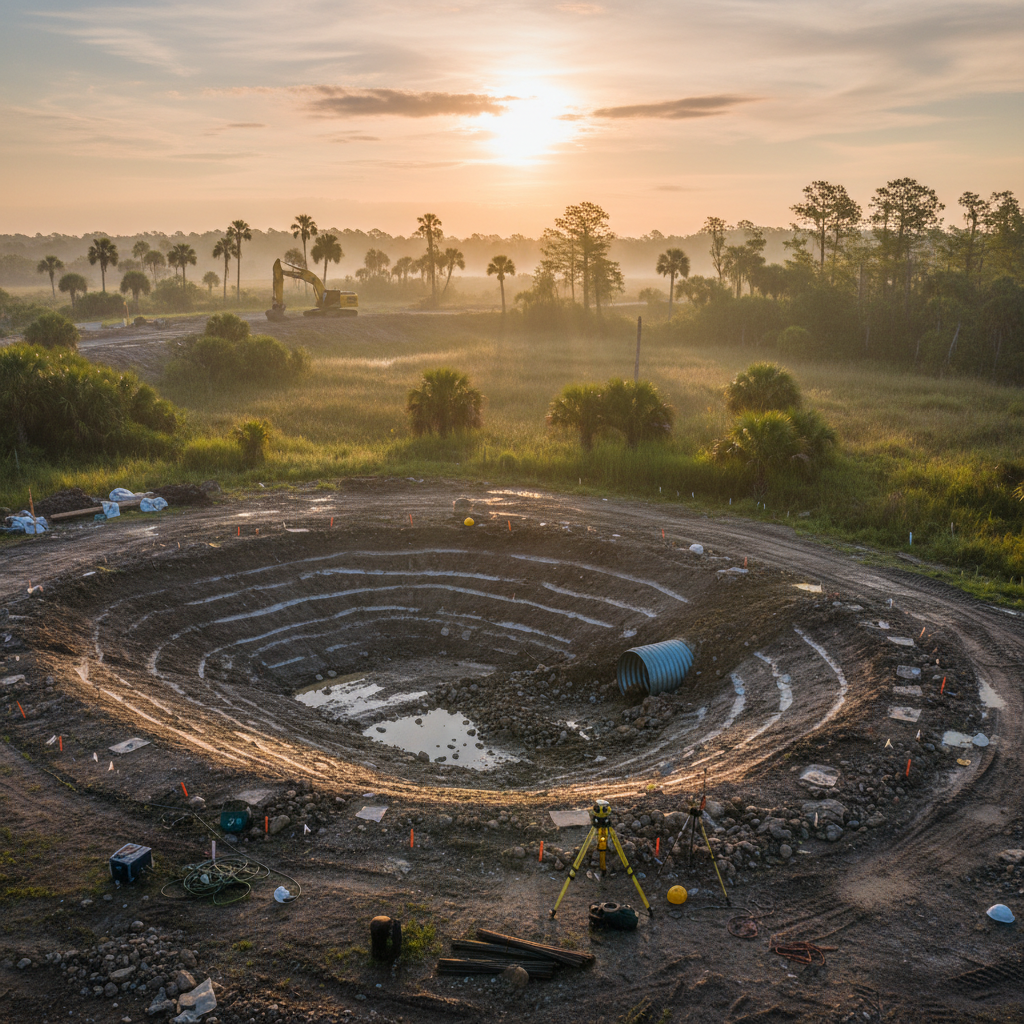
Understanding Stormwater Retention Pond Design Criteria
Effective stormwater management begins with understanding the design criteria for retention ponds. These criteria are influenced by factors such as site topography, rainfall patterns, and land use. In Florida, the design must accommodate intense rainfall events, requiring precise calculations of pond volume and outflow rates. Engineers must also consider the pond’s ability to support aquatic life and integrate with the surrounding landscape. Key design elements include: Calculating the retention volume based on historical rainfall data. Ensuring adequate infiltration and percolation rates to prevent overflow. Incorporating safety features such as emergency spillways.
Permitting Requirements for Stormwater Retention Ponds in Florida
Retention vs. Detention Pond Features
| Feature | Retention Pond | Detention Pond |
|---|---|---|
| Primary Function | Permanent water storage | Temporary water storage |
| Water Quality Improvement | High | Moderate |
| Infiltration | Encouraged | Limited |
| Flood Control | Moderate | High |
| Maintenance Requirements | Regular | Occasional |
Obtaining the necessary permits is a critical step in the development of stormwater retention ponds. In Florida, this process involves multiple agencies, including the Florida Department of Environmental Protection (FDEP) and local water management districts. The Environmental Resource Permit (ERP) is a key requirement, ensuring that the pond design meets environmental protection standards. Permit applications must include detailed engineering plans, hydrological studies, and environmental impact assessments. The review process can be extensive, requiring coordination with various stakeholders to address any concerns or revisions.
Soil Considerations and Infiltration Strategies
The success of a stormwater retention pond heavily depends on the site’s soil characteristics. Florida’s diverse soil types, ranging from sandy to clayey, influence the pond’s infiltration capacity. Engineers must conduct thorough soil testing to determine the most effective design approach. Infiltration strategies may include: Amending soil to improve permeability. Utilizing underdrain systems to enhance drainage. Designing vegetative buffers to aid in filtration.
Managing Excess Runoff and Coastal Risks
Florida’s coastal regions present unique challenges for stormwater management. High water tables and the risk of storm surges necessitate robust designs to manage excess runoff. Retention ponds must be designed to withstand these conditions, incorporating features such as reinforced embankments and adjustable outflow structures. Coastal risk management involves: Assessing potential impacts of sea level rise. Implementing adaptive management strategies. Coordinating with local agencies for emergency response planning.
Maintenance and Long-Term Management of Retention Ponds
Regular maintenance is essential to ensure the long-term functionality of stormwater retention ponds. This includes routine inspections, sediment removal, and vegetation management. Maintenance plans should be developed in conjunction with local regulations and tailored to the specific needs of the site. Key maintenance activities include: Monitoring water quality and sediment levels. Inspecting structural components for damage. Managing invasive species and promoting native vegetation.
RSP Engineers’ Approach to Stormwater Retention Pond Design
At RSP Engineers, we leverage our extensive expertise in Florida civil engineering to deliver tailored solutions for stormwater retention pond design. Our approach includes comprehensive site assessments, innovative design strategies, and meticulous permitting coordination. We prioritize sustainable practices and compliance with all relevant regulations to ensure successful project outcomes.
Common Issues in Stormwater Retention Pond Projects
Despite careful planning, challenges can arise during the design and implementation of stormwater retention ponds. Common issues include unexpected soil conditions, regulatory changes, and community opposition. Addressing these challenges requires proactive communication, adaptive design modifications, and thorough stakeholder engagement.
Contact RSP Engineers
For expert guidance on stormwater retention pond design and permitting in Florida, contact RSP Engineers. Our team of Florida Licensed Engineers is ready to assist with your commercial site development needs, ensuring compliance and sustainability.
Conclusion
Designing stormwater retention ponds for Florida commercial sites requires a comprehensive understanding of engineering principles, regulatory frameworks, and environmental factors. By addressing these elements, engineers can create effective systems that manage runoff, protect water quality, and mitigate coastal risks. RSP Engineers is committed to delivering innovative solutions that meet these challenges head-on.
FAQs
-
In Florida, an Environmental Resource Permit (ERP) is typically required, along with local water management district approvals.
-
Soil conditions determine the pond’s infiltration capacity, influencing design elements such as pond depth and underdrain systems.
-
Maintenance includes sediment removal, vegetation management, and structural inspections to ensure long-term functionality.